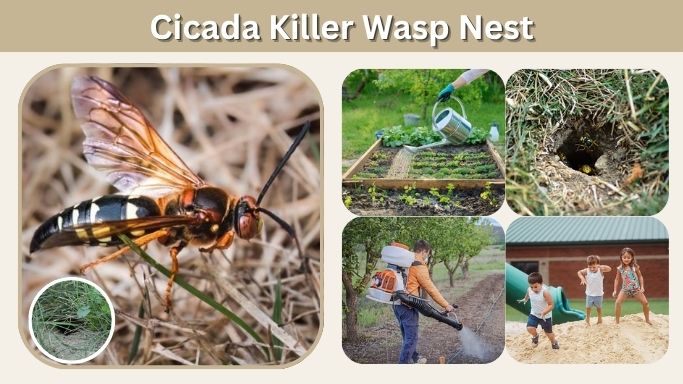
A cicada killer wasp nest can look scary because these wasps are large, fast, and often fly low over lawns. However, cicada killers are solitary ground-nesting wasps, not aggressive social wasps like yellowjackets. Their nests are usually underground burrows in dry, sunny soil. Understanding what the nest looks like, where they build it, and when removal is necessary helps you handle the problem safely.
What Is a Cicada Killer Wasp Nest?
A cicada killer wasp nest is an underground burrow made by a female cicada killer. These wasps dig tunnels in loose soil and use them as nursery chambers for their young. The female hunts cicadas, paralyzes them, and carries them into the burrow as food for the developing larvae. Purdue Extension describes cicada killers as large solitary wasps that live in the ground and provision nests with cicadas for their larvae.
Why They Build Ground Nests
Female cicada killers build nests to raise their young. They do not create paper nests, mud tubes, or hanging colonies. Instead, each female digs her own burrow in the soil.
Inside the burrow, she creates small chambers. She places a paralyzed cicada inside, lays an egg, and seals the chamber. When the larva hatches, it feeds on the cicada. This is why these wasps are called cicada killers.
Are Cicada Killer Wasps Social?
Cicada killers are solitary wasps. This means they do not live in a large colony with a queen, workers, and guards. Even when many burrows appear in one yard, each nest is usually made by an individual female.
This is very different from yellowjackets or hornets. Social wasps defend their nests aggressively, but cicada killers are usually much less defensive. Purdue notes that females are relatively harmless and usually sting only if handled.
Why Many Nests Appear Together
Sometimes homeowners see many cicada killer nests in one lawn or garden bed. This happens because several females may choose the same good nesting area. They prefer sunny, dry, loose soil with sparse grass.
Even though many wasps may fly in the same area, they are not all part of one big colony. They are nesting close together because the ground conditions are attractive.
What Does a Cicada Killer Wasp Nest Look Like?
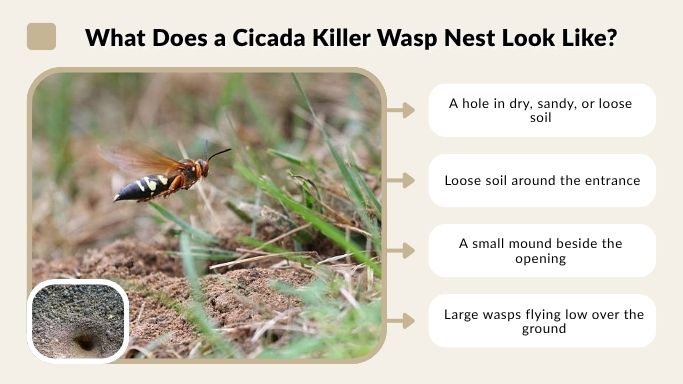
A cicada killer wasp nest usually looks like a small hole in the ground with loose soil around it. The entrance may be near sidewalks, driveways, patios, flower beds, sandy patches, or thin lawn areas. It often looks like a small mound with a tunnel opening.
Common Nest Signs
The entrance is often the easiest clue. You may notice a round or oval hole with soil pushed out beside it. The loose dirt may form a U-shaped or fan-shaped mound.
Common signs include:
- A hole in dry, sandy, or loose soil
- Loose soil around the entrance
- A small mound beside the opening
- Large wasps flying low over the ground
- Wasps entering and leaving one hole
- Dead or paralyzed cicadas nearby
- Several holes in sunny lawn areas
The burrow entrance may look alarming, but it is not the same as a yellowjacket nest entrance. Cicada killer activity is usually more focused around individual tunnels.
Nest Size and Shape
The visible part of the nest is usually just the entrance and soil mound. The tunnel continues underground. A single female may dig a main tunnel and several side chambers for eggs and cicadas.
Some burrows may look larger because the wasp removes a lot of soil while digging. If the soil is loose or sandy, the mound may spread out more clearly.
Nest Images and Pictures
If you search for cicada killer wasp nest pictures, you will usually see ground holes with loose dirt around them. Many images show nests in lawns, garden edges, playground sand, or along concrete borders.
The nest is not a hanging paper ball. It is not a mud nest on a wall. If the structure is above ground, papery, or attached to a building, it is probably a different wasp species.
Where Do Cicada Killer Wasps Nest?
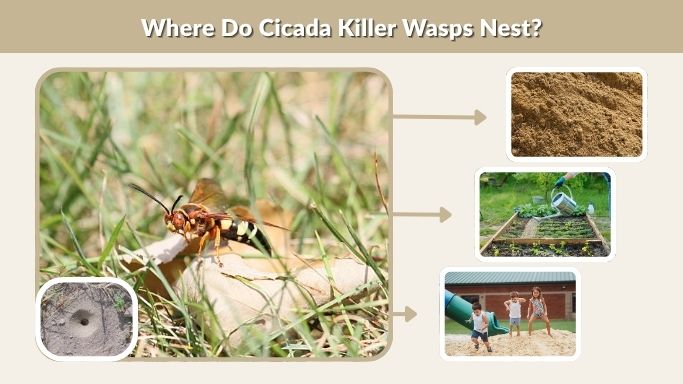
Cicada killer wasps nest in the ground, especially in sunny areas where the soil is easy to dig. They are commonly seen in lawns, gardens, sandy soil, and open patches with thin vegetation. The University of Maryland Extension says they are attracted to landscapes with suitable nesting conditions and that improving those conditions can help reduce future nesting.
Favorite Nesting Areas
Cicada killers often choose places where the ground is dry and exposed. They avoid thick, healthy turf because dense grass makes digging harder.
Common nesting places include:
- Bare lawn patches
- Sandy soil
- Garden beds
- Edges of sidewalks
- Driveway borders
- Patio cracks
- Playground sand areas
- Under shrubs
- Around loose landscaping soil
They are especially common in places where grass is weak, soil is light, and the area gets plenty of sun.
Underground Cicada Killer Wasp Nests
An underground cicada killer wasp nest is the normal nest type. The female wasp digs below the surface, then creates chambers where larvae develop.
The underground design protects the young from weather and predators. It also keeps the cicadas stored in a protected place. Because the nest is below the soil, many homeowners only notice it after seeing loose dirt or wasps flying near the ground.
Cicada Killer Wasp Nests in Texas and Illinois
Cicada killer wasps can appear in many parts of the United States, including Texas, Illinois, and other states where cicadas are common. The eastern cicada killer is widespread in eastern North America and is often seen during summer.
In warmer regions, activity may begin earlier. In cooler areas, they may be most noticeable during mid to late summer. Local weather, cicada activity, and soil conditions affect when nests appear.
Are Cicada Killer Wasp Nests Dangerous?
Cicada killer wasp nests look dangerous, but they are usually less risky than nests of social wasps. The wasps are large and intimidating, yet they are not normally aggressive toward people. The biggest concern is usually fear, lawn damage, or nesting in high-traffic areas.
Do Cicada Killers Sting?
Female cicada killers can sting, but they usually do so only if grabbed, stepped on, or handled roughly. Males cannot sting, although they may fly around people in a territorial way.
This behavior can feel scary because males may hover close to humans, pets, or lawn equipment. However, they are mostly trying to defend their mating area, not attack.
Are They Dangerous to Pets?
Cicada killers are not usually dangerous to pets unless a dog or cat tries to catch or bite one. A sting may cause pain or swelling. Pets that are allergic to stings may have a stronger reaction.
If a pet is stung and shows facial swelling, vomiting, weakness, breathing trouble, or collapse, contact a veterinarian quickly.
Are They Harmful to Lawns?
Cicada killer nests can disturb soil and create small mounds in lawns. One or two nests may cause little damage. Many nests in the same area can make the lawn look messy and uneven.
The bigger issue is usually the condition that attracts them. Thin grass, bare soil, and sandy patches make nesting easier. Improving the lawn can reduce future nesting.
Cicada Killer Wasp Nest vs Other Wasp Nests
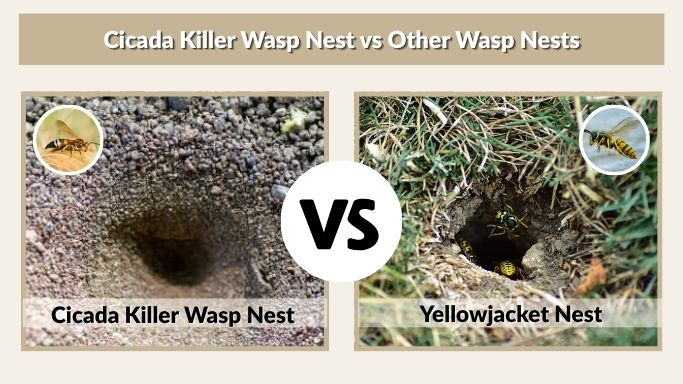
Correct identification matters before taking action. Cicada killer nests can be confused with yellowjacket holes, mud dauber nests, or other digger wasp burrows. The treatment and risk level are different for each one.
Cicada Killer vs Yellowjacket Nest
Yellowjackets are social wasps and can be aggressive near their nests. Their nests may also be underground, but they usually have many workers entering and exiting quickly.
Cicada killers are larger and usually seen one at a time near a burrow. Yellowjackets are smaller and more likely to swarm when disturbed.
| Feature | Cicada Killer Wasp Nest | Yellowjacket Nest |
| Nest type | Solitary ground burrow | Social colony nest |
| Aggression | Usually low | Often high near nest |
| Wasp size | Very large | Smaller |
| Visible activity | One female or a few nearby | Many workers entering and leaving |
| Main purpose | Raise larvae with cicadas | House a colony |
| Removal urgency | Often optional | Often more urgent near people |
Cicada Killer vs Mud Dauber Nest
Mud daubers make mud nests on walls, sheds, porches, and other structures. Cicada killers do not make mud nests above ground.
If you see a tube-like mud structure attached to a wall, it is not a cicada killer nest. If you see a soil hole with loose dirt in a sunny lawn, it may be a cicada killer burrow.
Cicada Killer vs Digger Wasp Nest
Cicada killers are a type of digger wasp. Other digger wasps may also nest in soil, but they may be smaller and hunt different insects.
If the wasp is very large, black and reddish with yellow markings, and carrying cicadas, it is likely a cicada killer.
How to Get Rid of a Cicada Killer Wasp Nest
Many cicada killer nests do not need removal. These wasps are beneficial because they help control cicada populations and are not usually aggressive. However, removal may be needed if nests are near children’s play areas, walkways, patios, pets, or people with sting allergies.
When Removal Is Needed
Removal may be reasonable when nests are in unsafe or inconvenient places. A few nests in a quiet corner of the yard can often be left alone until the season ends.
Consider removal if:
- Nests are near doors or walkways
- Children play close to the burrows
- Pets dig at the holes
- Someone in the home has a sting allergy
- Many burrows are damaging the lawn
- Wasps are causing serious fear or disruption
If you are unsure whether the nest belongs to cicada killers or yellowjackets, do not disturb it. Identification is important for safety.
Natural Control Methods
The best long-term control is making the yard less attractive. Cicada killers prefer exposed, dry, loose soil. A thicker, healthier lawn makes digging harder.
Natural prevention steps include:
- Water dry lawn areas properly
- Grow thicker turf
- Fill bare soil patches
- Add mulch to exposed garden soil
- Reduce sandy open areas
- Keep soil compact enough to discourage digging
- Repair lawn edges near sidewalks and driveways
Ask Extension notes that cultural practices such as improving turf growth can help prevent or reduce cicada killer nesting over time.
Chemical Nest Treatment
If treatment is necessary, use only a product labeled for ground-nesting wasps and follow the label exactly. University of Maryland Extension recommends dusting entrance holes with a registered insecticidal dust labeled for ground-nesting bees and wasps when chemical control is used.
Avoid pouring gasoline, ammonia, bleach, or random household chemicals into nests. These methods are unsafe, may harm soil and groundwater, and can create dangerous fumes.
Cicada Killer Wasp Nest Removal Safety
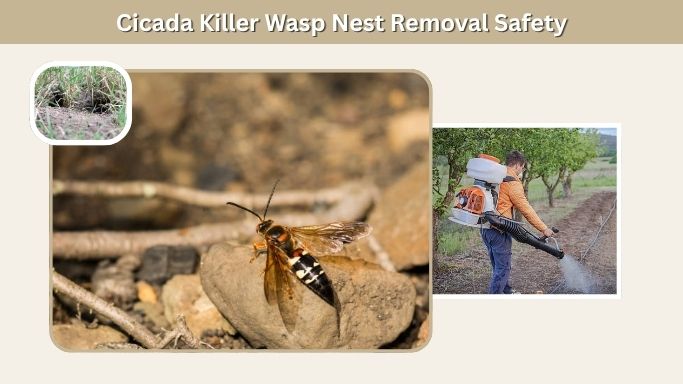
Safety matters because even a normally calm wasp can sting if trapped or threatened. If the nest is close to people or you are not confident, calling a pest control professional is the safer option.
What Not to Do
Many people make the problem worse by attacking the nest during the day or using unsafe substances. Cicada killers may not be very aggressive, but careless removal can still cause stings.
Avoid these mistakes:
- Do not grab or swat the wasps
- Do not flood nests without knowing the species
- Do not pour gasoline into the ground
- Do not use fire near a nest
- Do not block holes while wasps are active
- Do not let children poke the burrow
- Do not allow pets to dig at nests
If the nest is actually a yellowjacket nest, disturbing it can be much more dangerous.
Best Time to Treat a Nest
If treatment is needed, evening is often safer because wasp activity is lower. Wear protective clothing and avoid standing directly over the hole.
However, if there are many nests or the wasps are near a busy area, professional help is better. A pest control expert can confirm the species and use the correct method.
Should You Call a Professional?
Call a professional if the nest is close to doors, playgrounds, pets, or people with allergies. Also call for help if there are many burrows or if you cannot confirm whether the insects are cicada killers or yellowjackets.
Professional removal is also useful when nests return every year in the same area.
How to Prevent Cicada Killer Wasp Nests
Preventing nests is often easier than removing them every summer. Since cicada killers prefer bare, sunny, loose soil, changing the yard conditions can make your property less attractive.
Improve Lawn Thickness
A thick lawn is one of the best natural defenses. Dense grass covers the soil and makes it harder for females to dig burrows.
Water dry patches, reseed bare spots, and improve soil health. If your lawn has thin areas every summer, those spots may continue attracting cicada killers.
Cover Bare Soil
Bare soil in garden beds, under shrubs, or along hard surfaces can invite nesting. Mulch can help cover exposed soil and reduce digging opportunities.
For sandy areas, consider adding groundcover plants or improving the soil structure. The goal is to remove easy nesting places.
Monitor Early Summer Activity
Cicada killers usually become noticeable in summer when adults emerge. The University of Kentucky Entomology notes that adults are most commonly seen in July and August.
Check sunny lawn edges and sandy patches early. If you see small new burrows, improving the area quickly may reduce further nesting.
FAQs
What does a cicada killer wasp nest look like?
A cicada killer wasp nest looks like a hole in the ground with loose soil around it. The entrance is often in dry, sunny, sandy, or bare soil. It may appear near sidewalks, patios, driveways, garden beds, or thin lawn areas.
Where do cicada killer wasps nest?
Cicada killer wasps nest underground. They prefer loose, dry, sunny soil where digging is easy. Common nesting spots include bare lawn patches, sandy areas, garden beds, walkway edges, patio borders, and exposed soil under shrubs or landscaping.
How many cicada killer wasps are in a nest?
Usually, one female cicada killer uses one burrow. However, many females may nest close together if the area has good soil conditions. This can make it look like a colony, but cicada killers are solitary wasps, not social colony wasps.
Should I remove a cicada killer wasp nest?
You do not always need to remove it. Cicada killers are usually not aggressive and are beneficial because they hunt cicadas. Removal may be needed if the nest is near children, pets, walkways, doors, or someone with a sting allergy.
How do you get rid of cicada killer wasp nests?
The best long-term method is to make the area less attractive by growing thicker grass, covering bare soil, and reducing dry sandy patches. If treatment is necessary, use a labeled product for ground-nesting wasps or call a pest control professional.