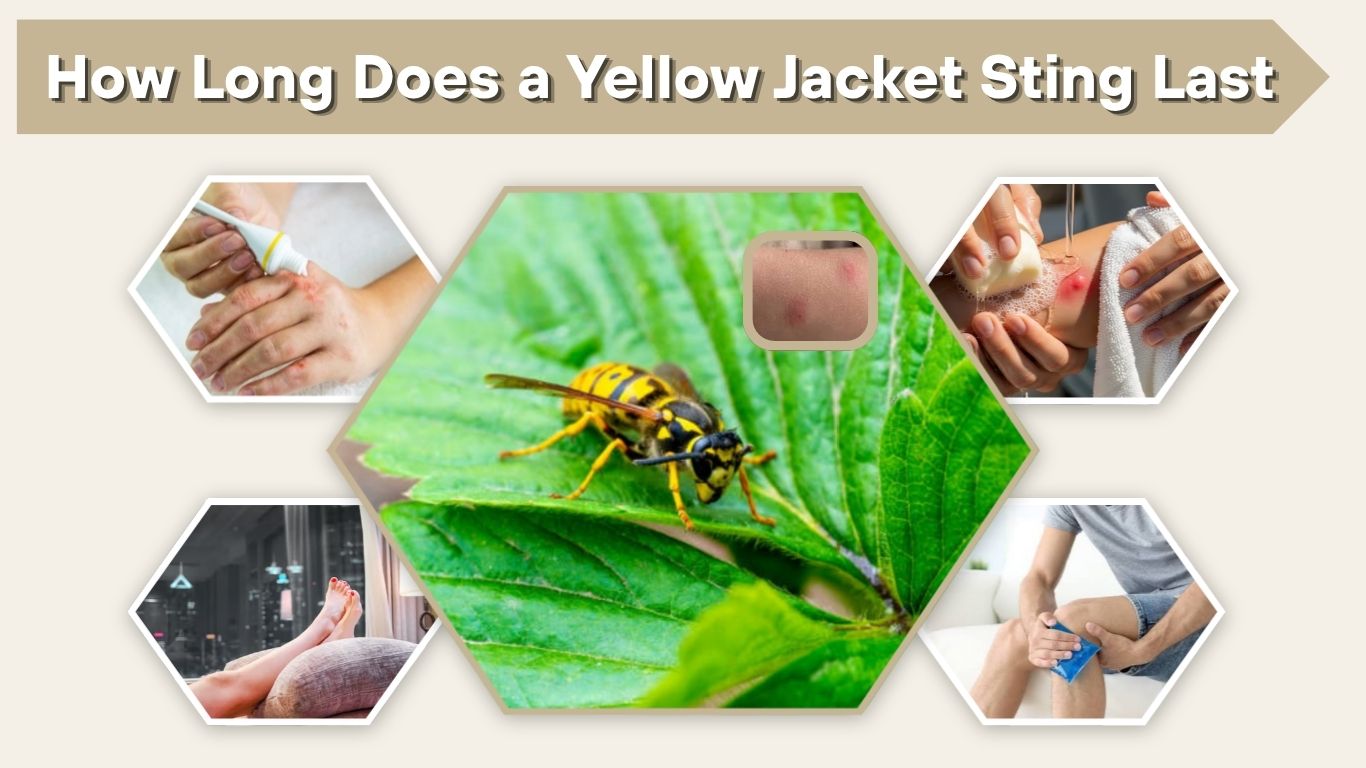
A yellow jacket sting usually causes sharp pain right away, followed by redness, swelling, and itching around the sting site. For most people, the worst pain lasts only 1–2 hours, while swelling and redness may last several days. In stronger local reactions, swelling can increase for 24–48 hours and may take up to a week to fully go away. Knowing the normal timeline helps you treat the sting properly and spot signs of an allergic reaction early.
How Long Does a Yellow Jacket Sting Last?
A yellow jacket sting does not feel the same for everyone. Some people only have mild pain and swelling for a few hours, while others develop a larger local reaction that lasts several days.
In most cases, the burning pain is strongest right after the sting and improves within a few hours. Redness and swelling may linger for several more days, and swelling often goes away within a week. Cleveland Clinic notes that yellow jacket sting pain can last around one to two hours, while redness and swelling may remain for several days.
Normal Yellow Jacket Sting Timeline
| Symptom | Common Duration |
| Sharp pain or burning | 1–2 hours |
| Redness | 1–3 days |
| Itching | A few days |
| Mild swelling | 1–3 days |
| Larger local swelling | Up to 7 days or more |
Why Yellow Jacket Stings Hurt
Yellow jackets inject venom through their stinger. This venom irritates the skin and triggers the body’s immune response. That reaction causes pain, swelling, redness, warmth, and itching. Unlike honey bees, yellow jackets can sting more than once, so multiple stings may cause stronger symptoms.
How Long Does Swelling From a Yellow Jacket Sting Last?
Swelling from a yellow jacket sting may last from a few hours to about a week. Mild swelling often improves within one to three days. However, a larger local reaction may continue to expand for the first 24–48 hours before it starts to shrink.
Seattle Children’s explains that swelling from a bee or yellow jacket sting can increase for 48 hours and may last up to 7 days. Mayo Clinic also states that stronger sting reactions may get worse over the next day or two and can last up to seven days.
Normal Swelling Signs
Normal swelling after a yellow jacket sting may include:
- A raised bump near the sting
- Redness around the area
- Mild warmth
- Itching after the pain fades
- Swelling that slowly improves after 2–3 days
When Swelling May Be a Large Local Reaction
A large local reaction means the swelling spreads more than expected but stays around the sting area. For example, a sting on the hand may cause much of the hand to swell. This can look alarming, but it is not always an emergency if there are no breathing problems, facial swelling, dizziness, or widespread hives.
Kaiser Permanente notes that extreme redness and swelling from insect stings can appear within 24–48 hours and may last 7–10 days.
How Long Does Yellow Jacket Sting Pain Last?
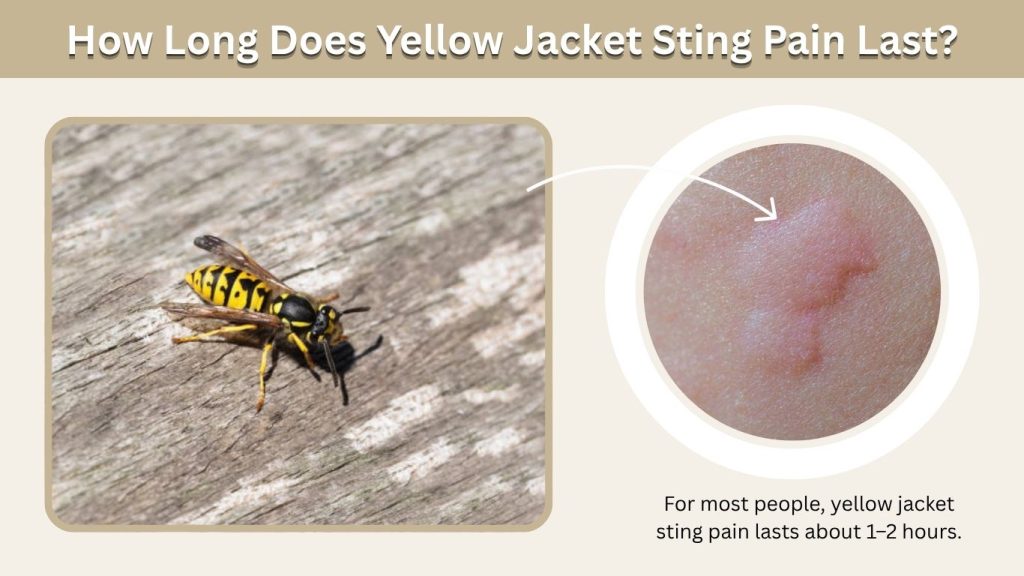
Pain from a yellow jacket sting is usually short-lived. The first few minutes may feel sharp, hot, or burning. After that, the pain often becomes a dull soreness.
For most people, yellow jacket sting pain lasts about 1–2 hours. Some tenderness may remain for a day, especially if the sting is on a sensitive area like the finger, ankle, neck, or face.
What Pain Feels Like
Common pain symptoms include:
- Sudden sharp sting
- Burning sensation
- Tenderness when touched
- Throbbing in the first hour
- Mild soreness after swelling begins
If pain gets worse after two or three days instead of improving, it may be a sign of infection or another complication.
How Long Does Itching From a Yellow Jacket Sting Last?
Itching often begins after the sharp pain fades. It may last a few days and can feel worse as the swelling changes. Scratching the sting can break the skin and raise the risk of infection, so it is better to use cold compresses, anti-itch cream, or an oral antihistamine if needed.
Mayo Clinic recommends cold compresses, elevation, hydrocortisone cream, or calamine lotion to help reduce itching and swelling after insect stings.
Yellow Jacket Sting Symptoms by Reaction Type
Not all yellow jacket sting reactions are the same. Most are mild, but some people develop stronger local reactions or serious allergic symptoms.
| Reaction Type | Symptoms | How Long It May Last |
| Mild local reaction | Pain, small bump, redness, mild swelling | A few hours to 3 days |
| Large local reaction | Bigger swelling, warmth, itching, redness | 5–10 days |
| Allergic reaction | Hives, breathing trouble, throat swelling, dizziness | Emergency situation |
| Multiple stings | More pain, more swelling, possible toxic reaction | Needs medical advice |
How to Treat a Yellow Jacket Sting at Home
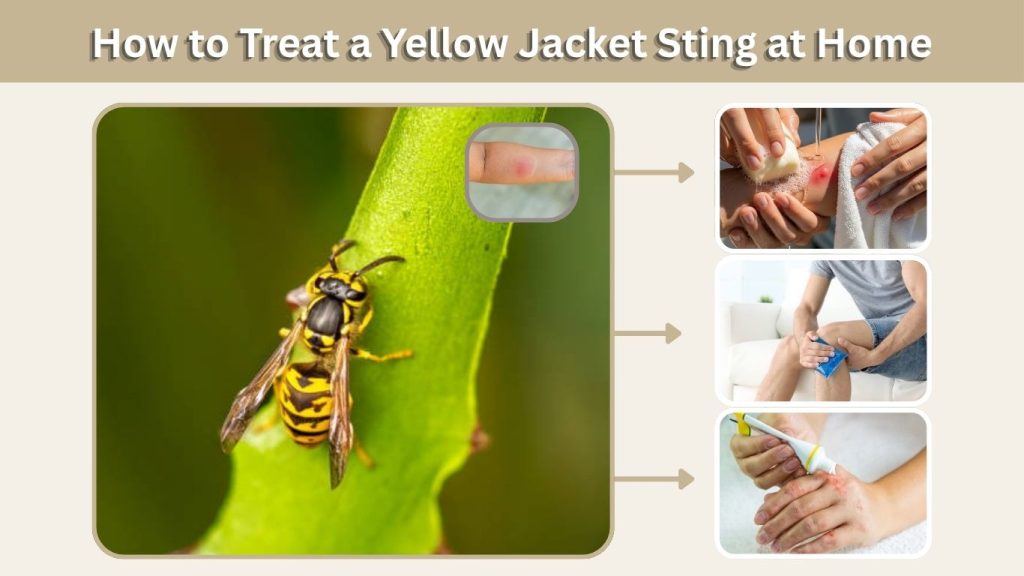
Most yellow jacket stings can be treated at home if symptoms stay local and mild. Quick care can reduce pain and swelling.
First Aid Steps
- Move away from the area to avoid more stings.
- Wash the sting site with soap and water.
- Apply a cold compress for 10–20 minutes.
- Elevate the arm or leg if the sting is on a limb.
- Use hydrocortisone cream or calamine lotion for itching.
- Take an oral antihistamine for stronger itching if safe for you.
- Use acetaminophen or ibuprofen for pain if you normally tolerate them.
Yellow jackets usually do not leave a stinger behind, but if you see anything stuck in the skin, gently remove it.
When to Seek Medical Help
A yellow jacket sting can become serious if it causes an allergic reaction or infection. Do not wait if symptoms move beyond the sting area or affect breathing.
Emergency Symptoms
Get emergency help if you notice:
- Trouble breathing
- Swelling of the lips, tongue, throat, or face
- Dizziness or fainting
- Widespread hives
- Chest tightness
- Nausea, vomiting, or severe weakness
- Confusion
- Rapid heartbeat
Johns Hopkins Medicine notes that some people who are allergic to insect stings can develop anaphylaxis, a severe reaction that can be fatal.
Signs of Possible Infection
Call a doctor if the sting area becomes more painful after a few days, develops pus, has spreading redness, or feels increasingly hot. Fever, red streaks, or worsening swelling after initial improvement may also need medical attention.
Why Yellow Jacket Sting Swelling May Last Longer
Swelling can last longer when the sting is on thin or loose skin, such as the eyelid, lips, fingers, or ankle. It can also last longer if you scratch the area, get stung multiple times, or naturally react strongly to insect venom.
A large local reaction does not always mean you are dangerously allergic, but it may mean future stings could cause strong swelling again. People with repeated large reactions or any systemic symptoms should speak with a healthcare professional.
How to Reduce Swelling Faster
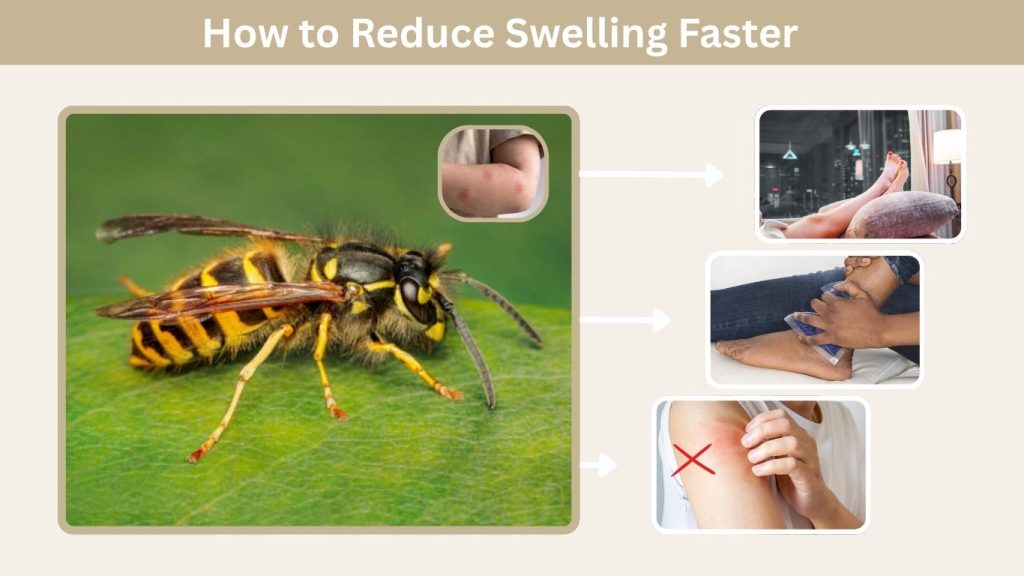
You may not be able to make swelling disappear instantly, but you can help it improve more comfortably.
Helpful steps include:
- Use cold packs several times during the first day.
- Keep the affected arm or leg raised.
- Avoid scratching the sting.
- Remove tight rings, bracelets, or shoes if swelling is near them.
- Use anti-itch lotion or cream.
- Stay hydrated.
- Monitor the swelling for changes.
If swelling keeps spreading after 48 hours or does not start improving after several days, medical advice is a good idea.
FAQs
How long does a yellow jacket sting last?
A yellow jacket sting usually hurts most for 1–2 hours. Redness, itching, and swelling may last a few days. In larger local reactions, swelling can increase for 24–48 hours and may take up to a week or slightly longer to fully go away.
How long does swelling last after a yellow jacket sting?
Mild swelling may improve within one to three days. Larger swelling can last around 5–10 days, especially if the sting is on the hand, foot, face, or near a joint. Swelling should gradually improve rather than worsen after the first few days.
How long does yellow jacket sting itching last?
Itching may last several days after the sting. It often starts after the sharp pain fades. Cold compresses, calamine lotion, hydrocortisone cream, and antihistamines can help reduce itching. Avoid scratching because broken skin may increase the chance of infection.
Is it normal for a yellow jacket sting to swell the next day?
Yes, swelling can get worse the next day. Many local reactions peak within 24–48 hours before improving. However, swelling with breathing trouble, facial swelling, dizziness, or widespread hives is not normal and should be treated as an emergency.
When should I worry about a yellow jacket sting?
Worry if you have trouble breathing, throat or tongue swelling, dizziness, fainting, widespread hives, chest tightness, or vomiting. Also contact a doctor if redness spreads, pus appears, pain worsens after a few days, or swelling does not begin to improve.