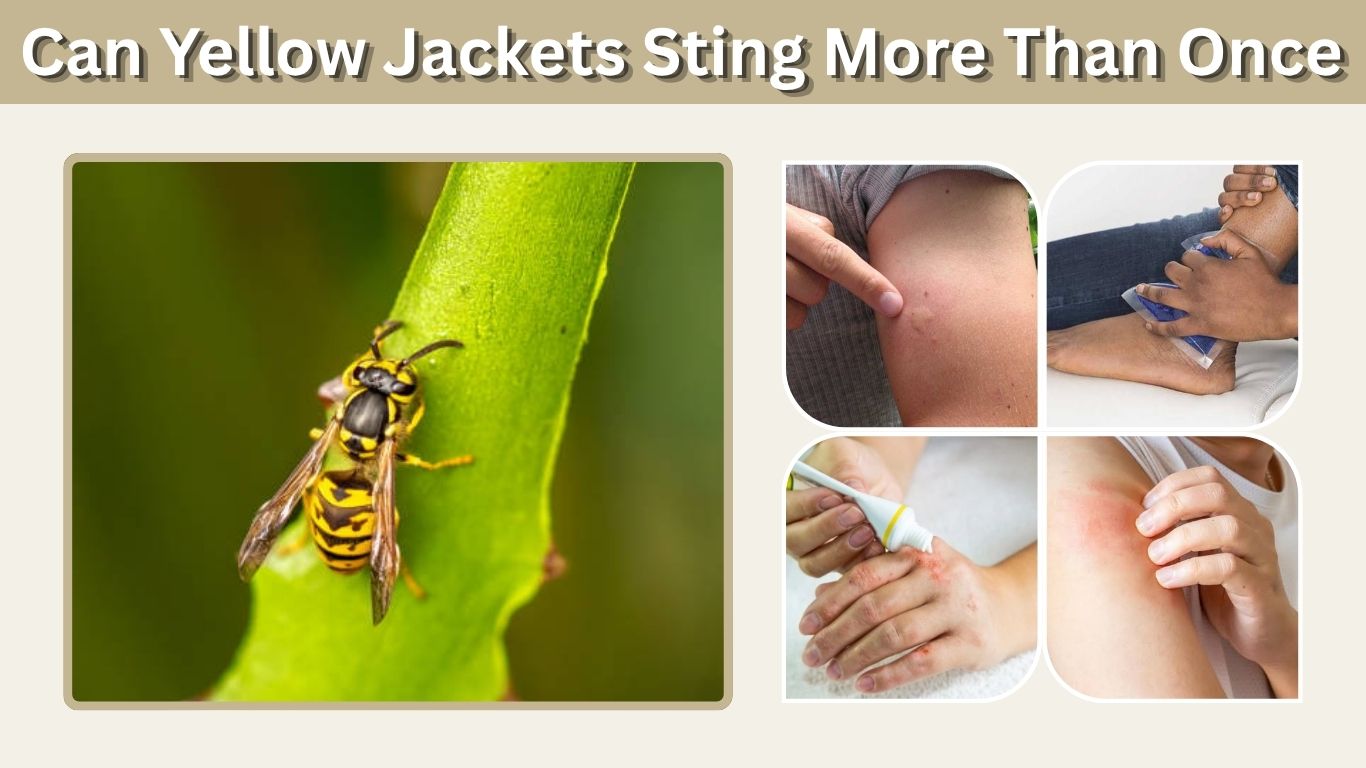
Yes, yellow jackets can sting more than once. Unlike honey bees, they usually do not lose their stinger after one sting, so the same yellow jacket can sting repeatedly. This makes them more dangerous when they feel threatened, especially near nests, food, garbage, or outdoor gatherings. A single sting is often painful but manageable, while multiple stings can cause stronger swelling, more pain, and a higher risk of allergic reaction.
Can Yellow Jackets Sting More Than Once?
Yellow jackets can sting more than once because their stinger usually stays attached to their body. A honey bee has a barbed stinger that often gets stuck in skin, but a yellow jacket has a smoother stinger that can be pulled out and used again. North Dakota State University explains that yellowjackets can sting more than once because their stinger stays with the insect, unlike honey bees.
This is why yellow jackets can be aggressive around nests or food sources. If one yellow jacket stings, others may also become defensive, especially if the colony is disturbed.
Quick Answer
| Question | Answer |
| Can yellow jackets sting more than once? | Yes |
| Do they lose their stinger? | Usually no |
| Are they bees? | No, they are wasps |
| Can one yellow jacket sting repeatedly? | Yes |
| Are multiple stings dangerous? | They can be, especially for allergic people |
Why Yellow Jackets Can Sting Repeatedly
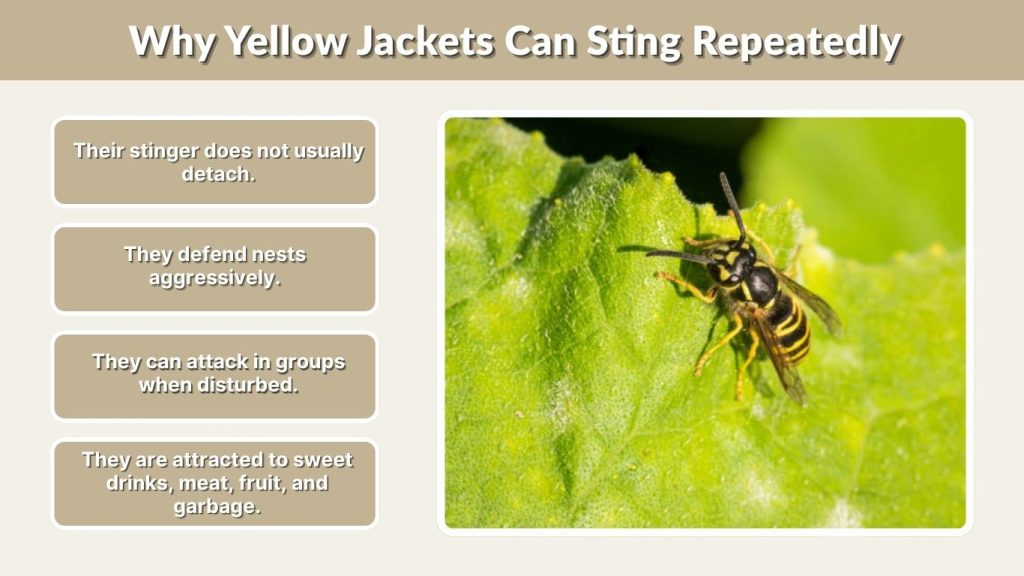
Yellow jackets are wasps, not bees. Their stinger is designed differently from a honey bee’s stinger. Since it does not usually remain stuck in the skin, the yellow jacket can fly away and sting again.
Cleveland Clinic also notes that unlike a honeybee, which can only sting once, a yellow jacket can sting repeatedly.
Main Reasons They Sting More Than Once
Yellow jackets may sting repeatedly because:
- Their stinger does not usually detach.
- They defend nests aggressively.
- They can attack in groups when disturbed.
- They are attracted to sweet drinks, meat, fruit, and garbage.
- They may become more defensive in late summer and fall.
Yellow Jacket vs Honey Bee Sting
Many people call yellow jackets “bees,” but they are not true bees. They are social wasps. This matters because their behavior and stinging ability are different.
| Feature | Yellow Jacket | Honey Bee |
| Type | Wasp | Bee |
| Body shape | Smooth, narrow waist | Hairier, rounder body |
| Can sting more than once? | Yes | Usually no |
| Stinger left in skin? | Usually no | Often yes |
| Aggression level | More defensive near nests | Usually less aggressive unless threatened |
Can a Yellow Jacket Sting You More Than Once in One Attack?
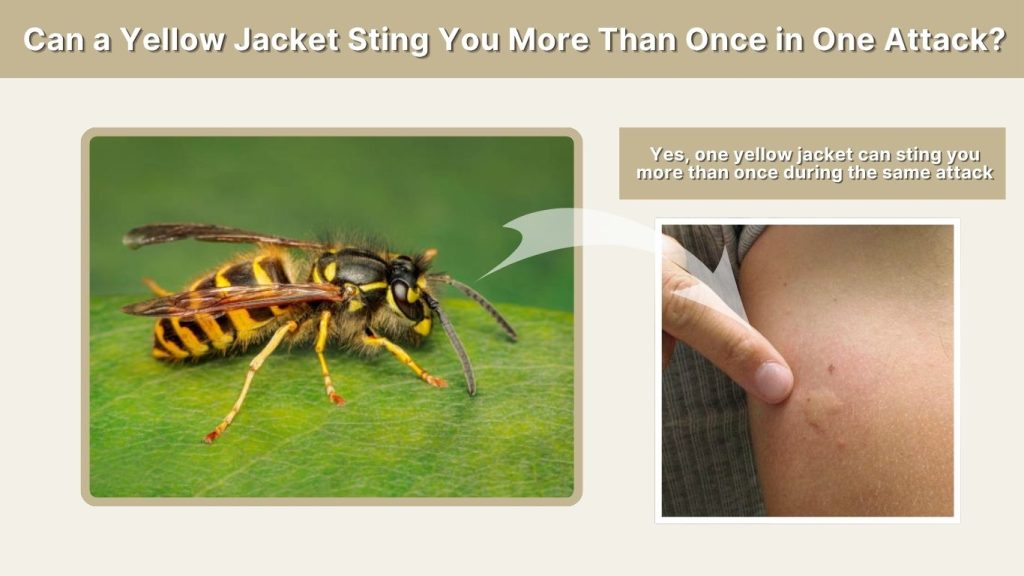
Yes, one yellow jacket can sting you more than once during the same attack. It may sting, pull its stinger out, and sting again. This can happen quickly if the insect is trapped against your skin, caught in clothing, or defending its nest.
Multiple yellow jackets can also sting at the same time. This is more common when someone steps near an underground nest, disturbs a wall nest, or swats at them near food.
Common Situations That Lead to Multiple Stings
Multiple stings may happen when:
- You step on or near a ground nest.
- You mow over a hidden nest.
- A yellow jacket gets trapped under clothing.
- You swat at several yellow jackets near food.
- You disturb a nest in a wall, tree stump, or log.
- You drink from a can or bottle with a yellow jacket inside.
What Happens After a Yellow Jacket Sting?
A yellow jacket sting usually causes immediate sharp pain, followed by redness, swelling, warmth, and itching. WebMD lists common local symptoms as redness, swelling, pain, itching, and warmth at the sting site.
Most mild symptoms improve within a few hours to a few days. However, stronger local reactions can last longer, especially after repeated stings.
Common Symptoms
- Sharp burning pain
- Red bump or welt
- Swelling around the sting
- Itching
- Warmth
- Tenderness
- Mild soreness for a day or two
Are Multiple Yellow Jacket Stings Dangerous?
Multiple yellow jacket stings can be dangerous for some people. The risk depends on how many stings occurred, the person’s sensitivity, and whether they are allergic to insect venom.
For most non-allergic people, one sting causes local pain and swelling. But repeated stings inject more venom, which can lead to more intense pain, larger swelling, nausea, weakness, or other symptoms. People with venom allergies can have a severe reaction even from one sting.
Mayo Clinic says stings from bees, yellow jackets, wasps, hornets, and fire ants may cause a severe allergic reaction called anaphylaxis.
What to Do If a Yellow Jacket Stings You
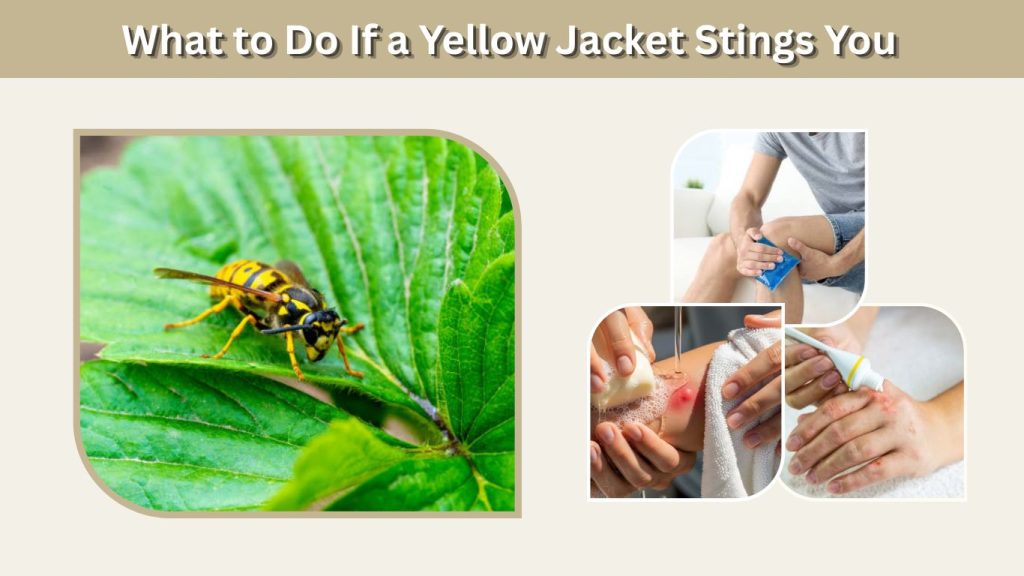
Move away from the area first. If you stay near the nest or food source, the yellow jacket may sting again, and other yellow jackets may join.
First Aid Steps
- Leave the area calmly and quickly.
- Wash the sting site with soap and water.
- Apply a cold compress for 10–20 minutes.
- Keep the affected arm or leg raised if swollen.
- Use hydrocortisone cream or calamine lotion for itching.
- Take an antihistamine if itching or swelling is bothersome.
- Use acetaminophen or ibuprofen for pain if safe for you.
- Watch for allergic reaction symptoms.
Mayo Clinic recommends washing the area, applying a cold compress, and using pain relievers or antihistamines when needed for mild insect stings.
When to Get Medical Help
Most yellow jacket stings can be treated at home, but some symptoms need urgent care. A severe allergic reaction can happen quickly and may be life-threatening.
Emergency Warning Signs
Get emergency help if you notice:
- Trouble breathing
- Swelling of the lips, tongue, throat, or face
- Dizziness or fainting
- Widespread hives
- Chest tightness
- Vomiting or severe nausea
- Rapid heartbeat
- Confusion
- Weakness after multiple stings
Mayo Clinic lists symptoms of anaphylaxis such as skin rash, nausea, vomiting, and a rapid weak pulse, and insect venom is a common trigger.
How to Avoid Being Stung Again
Yellow jackets are often attracted to food, sugary drinks, open trash, and outdoor cooking areas. They are also very defensive near their nests, which may be underground, inside walls, under decks, or in hollow logs.
Prevention Tips
- Keep food and drinks covered outdoors.
- Check open cans and bottles before drinking.
- Seal garbage cans tightly.
- Avoid wearing strong perfumes outdoors.
- Do not swat at yellow jackets.
- Move away slowly if one flies near you.
- Wear shoes in grassy areas.
- Call a pest professional for nests near your home.
- Avoid mowing or digging near suspected nests.
FAQs
Can yellow jackets sting more than once?
Yes, yellow jackets can sting more than once. Their stinger usually does not detach from their body, so they can sting repeatedly. This is one reason yellow jackets are considered more aggressive and risky than honey bees when they feel threatened.
Can a yellow jacket sting you more than once?
Yes, the same yellow jacket can sting you more than once, especially if it is trapped, handled, stepped on, or defending a nest. Multiple yellow jackets may also sting if the colony is disturbed.
Do yellow jackets leave a stinger in your skin?
Yellow jackets usually do not leave a stinger in your skin. Honey bees often leave a barbed stinger behind, but yellow jackets usually keep their stinger and can use it again. If you see anything stuck in the skin, remove it gently.
Are yellow jacket stings worse than bee stings?
Yellow jacket stings can feel worse because yellow jackets may sting repeatedly. A single sting may cause similar pain, swelling, and redness to other insect stings, but multiple stings can increase venom exposure and make symptoms stronger.
What should you do after multiple yellow jacket stings?
Move away from the area, wash the stings, apply cold compresses, and monitor symptoms closely. Seek medical help right away if you have breathing trouble, facial swelling, dizziness, widespread hives, vomiting, or severe weakness.