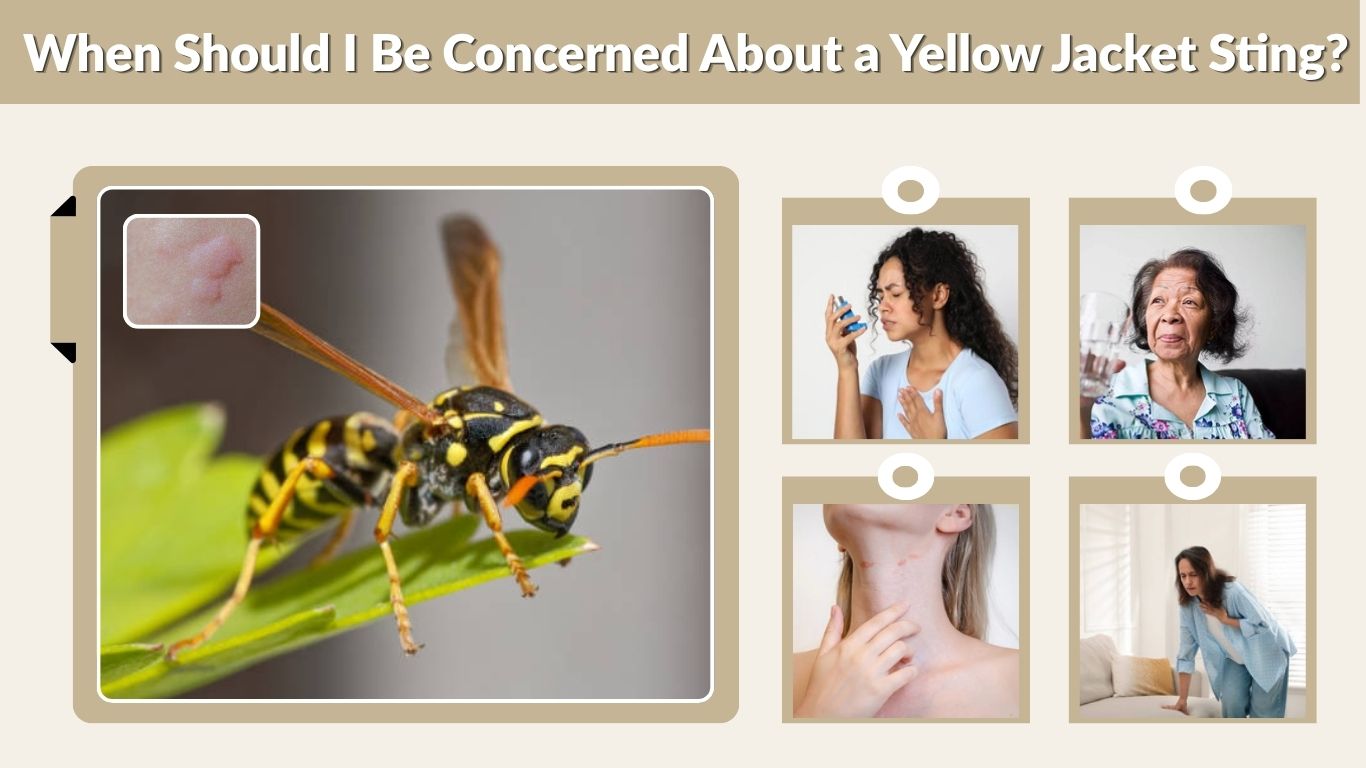
A yellow jacket sting is usually painful, red, swollen, and itchy, but most mild stings can be treated at home with soap, water, ice, and over-the-counter medicine. The time to be concerned is when symptoms spread beyond the sting area, swelling affects breathing or swallowing, pain gets worse instead of better, or the person has signs of a severe allergic reaction. Yellow jacket stings can be more serious than simple bug bites because yellow jackets can sting more than once and may trigger dangerous allergic reactions in sensitive people. Cleveland Clinic notes that yellow jacket stings commonly cause pain, swelling, redness, and itching, but allergic reactions can lead to anaphylactic symptoms.
What Is Normal After a Yellow Jacket Sting?
A normal yellow jacket sting reaction usually stays near the sting site. You may feel a sharp burning pain right away. After that, the area may become red, swollen, warm, itchy, or tender. Mild swelling can last for a few hours to several days.
For most people, home care is enough. Wash the area with soap and water, apply an ice pack wrapped in cloth, and avoid scratching. Poison Control recommends washing the sting area, using ice for pain and swelling, and considering cortisone cream, antihistamine cream, or an oral antihistamine for itching.
Common mild symptoms
- Sharp pain or burning
- Redness around the sting
- Mild swelling
- Itching
- Tenderness
- Warm skin near the sting
These symptoms are uncomfortable but not usually dangerous if they stay local and slowly improve.
When Is Yellow Jacket Sting Swelling Concerning?
Swelling around the sting is common. However, swelling becomes more concerning when it spreads quickly, affects the face or throat, or makes it hard to move fingers, toes, or joints.
A large local reaction can cause swelling that spreads beyond the sting area. For example, a sting on the hand may cause much of the hand or arm to swell. This can be alarming, but it is not always an emergency if there are no breathing problems, dizziness, throat symptoms, or widespread hives.
You should be more concerned if swelling keeps getting worse after 24 to 48 hours, becomes very painful, or is paired with fever, pus, or spreading redness.
Emergency Warning Signs After a Yellow Jacket Sting
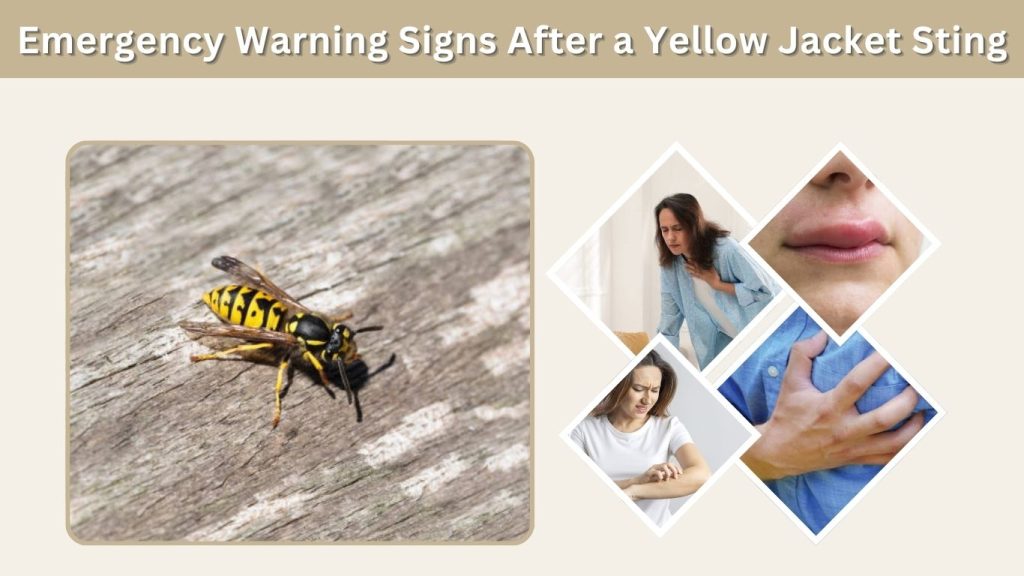
The most serious concern after a yellow jacket sting is anaphylaxis. This is a severe allergic reaction that can be life-threatening. Mayo Clinic explains that anaphylaxis after an insect sting usually happens within 15 minutes to an hour and may include rash, itching, trouble breathing, swollen tongue, trouble swallowing, or chest tightness.
Call emergency help right away if you notice:
- Trouble breathing
- Wheezing
- Tightness in the chest or throat
- Swelling of the tongue, lips, face, or throat
- Trouble swallowing
- Dizziness or fainting
- Fast or weak pulse
- Widespread hives
- Nausea, vomiting, or diarrhea
- Confusion or sudden weakness
If the person has an epinephrine auto-injector, use it as directed and still seek emergency care. Anaphylaxis can return even after symptoms improve.
When to Be Concerned About a Sting in the Mouth or Throat
A yellow jacket sting inside the mouth, tongue, lips, or throat should be taken seriously. Even without a venom allergy, swelling in these areas can make breathing or swallowing difficult.
This can happen when a yellow jacket gets into a drink can, fruit, or outdoor food. If someone is stung in the mouth, watch closely for voice changes, drooling, trouble swallowing, throat tightness, or breathing problems.
Seek urgent medical care for any sting inside the mouth or throat, especially if swelling starts quickly.
When Multiple Yellow Jacket Stings Are Dangerous
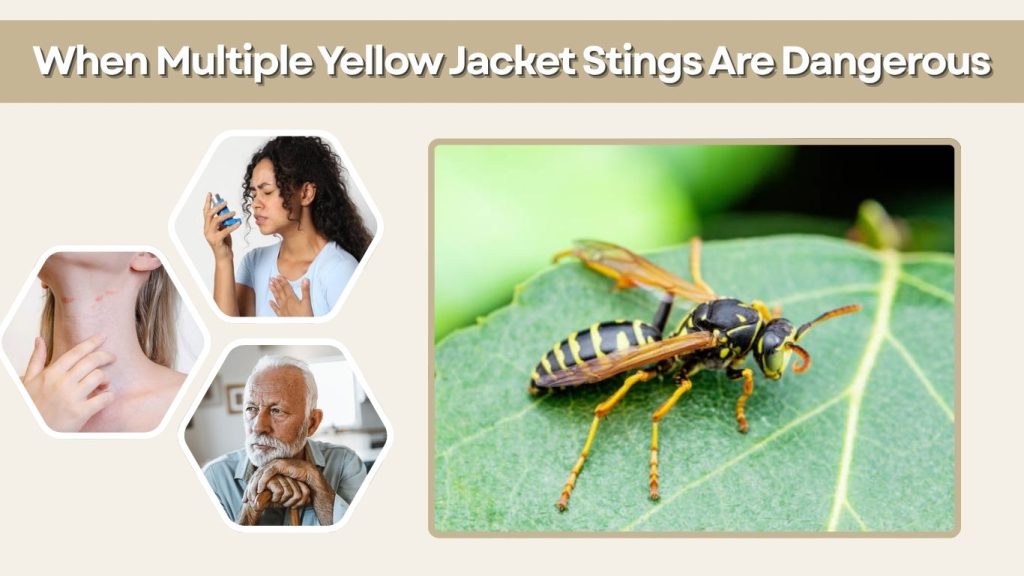
One sting is usually manageable for a non-allergic adult. Multiple yellow jacket stings are more concerning because more venom enters the body. Yellow jackets can sting repeatedly, unlike honeybees that often sting once.
Multiple stings may cause stronger pain, swelling, nausea, headache, weakness, or a toxic reaction. Children, older adults, and people with heart, breathing, or immune problems may be at higher risk.
Get medical advice if someone has many stings, even if they are not allergic.
Signs the Sting May Be Infected
A yellow jacket sting can become infected if bacteria enter through the broken skin, especially if the area is scratched. Infection symptoms usually develop later, not immediately after the sting.
Possible infection signs
- Redness that spreads after a day or two
- Skin that feels hot and painful
- Pus or drainage
- Red streaks moving away from the sting
- Fever or chills
- Increasing swelling instead of improvement
A sting that looks worse after 48 hours should be checked by a healthcare provider.
Who Should Be Extra Careful?
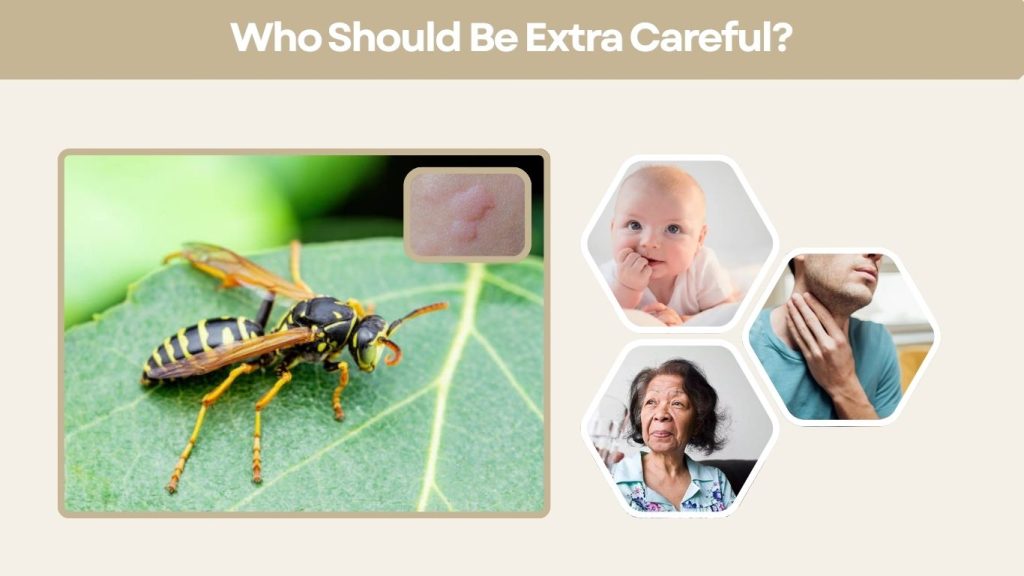
Some people should be more cautious after a yellow jacket sting. A mild reaction can still become serious in high-risk situations.
Higher-risk people include:
- Anyone with a known wasp or yellow jacket allergy
- People who have had anaphylaxis before
- Children
- Older adults
- People stung many times
- People stung in the mouth, throat, face, or neck
- People with asthma or breathing problems
- People with weakened immune systems
People with a known insect venom allergy should carry prescribed epinephrine and know how to use it. Cleveland Clinic advises people who know they are allergic to yellow jacket stings to always carry an EpiPen.
What to Do While Watching Symptoms
If symptoms are mild and local, treat the sting at home and monitor it. Mark the edge of swelling with a pen so you can see whether it spreads. Take a photo every few hours if the reaction looks unusual.
Basic care steps
- Wash the area with soap and water.
- Apply ice for 10 to 20 minutes at a time.
- Raise the affected area.
- Avoid scratching.
- Use an antihistamine for itching if safe for you.
- Use pain medicine if needed and safe for you.
- Watch for breathing, throat, or whole-body symptoms.
Do not cut the sting, squeeze it, burn it, or try to suck out venom.
FAQs
When should I worry about a yellow jacket sting?
Worry if you have trouble breathing, throat tightness, swelling of the face or tongue, dizziness, widespread hives, vomiting, fainting, or fast-spreading swelling. These can be signs of a serious allergic reaction.
Is swelling normal after a yellow jacket sting?
Yes, mild swelling is normal. It becomes concerning if it spreads quickly, affects the face or throat, worsens after 24 to 48 hours, or comes with fever, pus, or severe pain.
How long should a yellow jacket sting hurt?
Sharp pain often starts immediately and may improve within a few hours. Tenderness, itching, and swelling can last several days. Pain that keeps getting worse may need medical attention.
Should I go to the ER for a yellow jacket sting?
Go to the ER if you have breathing trouble, throat swelling, chest tightness, fainting, widespread hives, or a sting inside the mouth or throat. Multiple stings may also need urgent care.
Can a yellow jacket sting be serious without an allergy?
Yes. A sting in the mouth or throat, many stings, or an infected sting can be serious even without a known allergy. Watch symptoms carefully and seek medical help if they worsen.