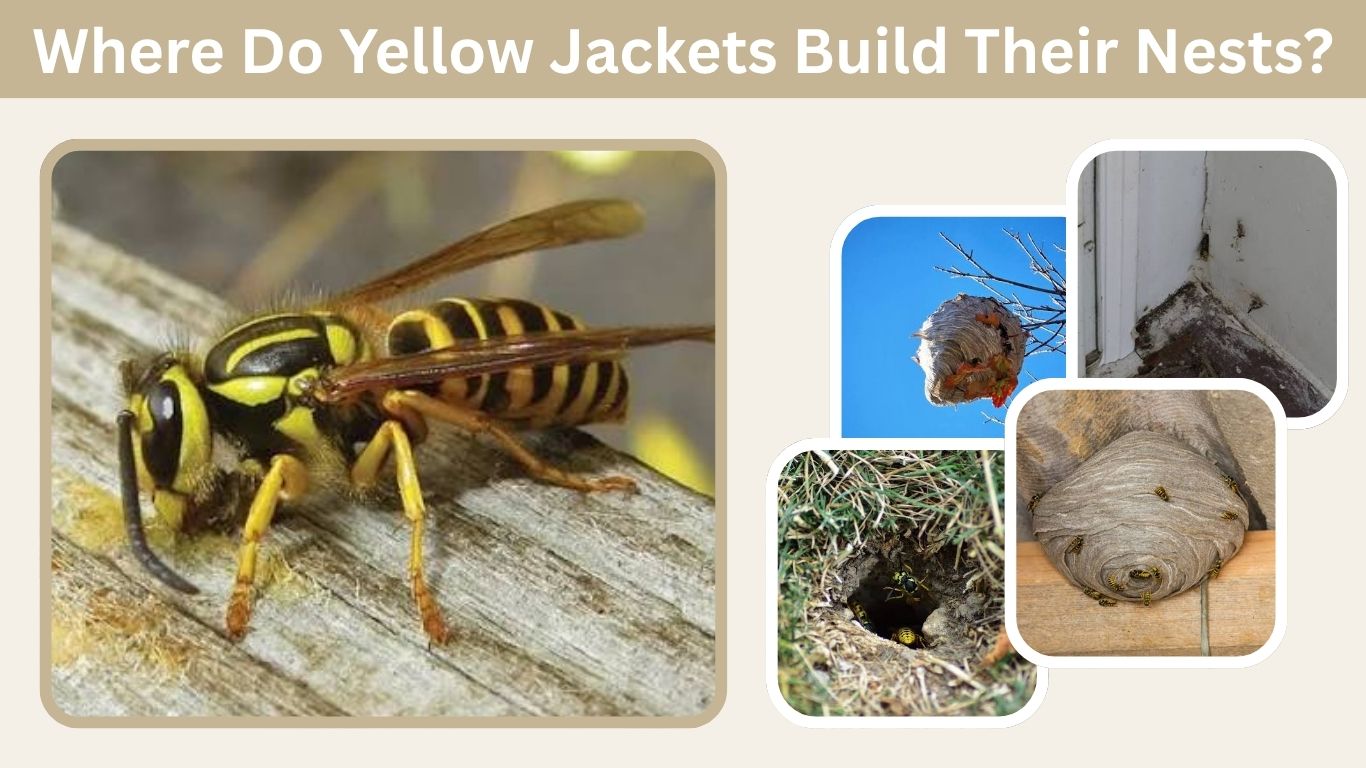
Yellow jackets build nests in protected places where rain, predators, and human activity are less likely to disturb the colony. Many species nest underground in abandoned rodent burrows, while others choose wall cavities, attics, hollow trees, sheds, or spaces beneath decks. The exact location depends on the yellow jacket species and the available shelter. A nest may be difficult to notice early in the season, but it can hold hundreds or thousands of wasps by late summer.
Where Do Yellow Jackets Build Their Nests?
Yellow jackets can build nests both below and above ground. They usually select enclosed locations with a small entrance, enough interior space, and protection from weather.
Common nesting locations include:
- Abandoned rodent burrows
- Holes beneath tree roots
- Wall voids and siding gaps
- Attics, soffits, and roof spaces
- Hollow trees and fallen logs
- Sheds and garages
- Retaining walls and rock piles
- Decks, porches, and outdoor steps
- Chimneys and unused vents
- Abandoned equipment, vehicles, or grills
The opening people see may not be directly beside the nest. Yellow jackets can travel through a long burrow or structural cavity before reaching the colony.
Do Yellow Jackets Build Nests in the Ground?
Ground nesting is extremely common among yellow jackets. They often occupy an existing underground cavity instead of digging an entire nest site from the beginning.
Abandoned Animal Burrows
Old mouse, mole, chipmunk, or other small-animal burrows provide ready-made shelter. A queen may enter a narrow opening in spring and begin constructing the first paper cells deeper inside the cavity.
As the colony grows, workers may remove soil and other material to enlarge the space. The entrance often looks like a simple hole with many yellow jackets flying in and out.
Tree Roots and Garden Areas
Yellow jackets may nest beneath exposed tree roots, garden beds, shrubs, compost areas, or dense groundcover. These places provide shade and protection while hiding the nest entrance.
Homeowners should be especially careful when mowing, trimming weeds, digging, or using landscaping equipment near repeated wasp activity.
Why Yellow Jackets Nest Underground
Underground spaces provide several advantages:
- Stable temperature
- Protection from rain
- Shelter from predators
- A concealed entrance
- Space for the colony to expand
A ground nest can be dangerous because vibrations from footsteps, lawn mowers, and gardening tools may cause defensive behavior.
Do Yellow Jackets Build Nests Above Ground?
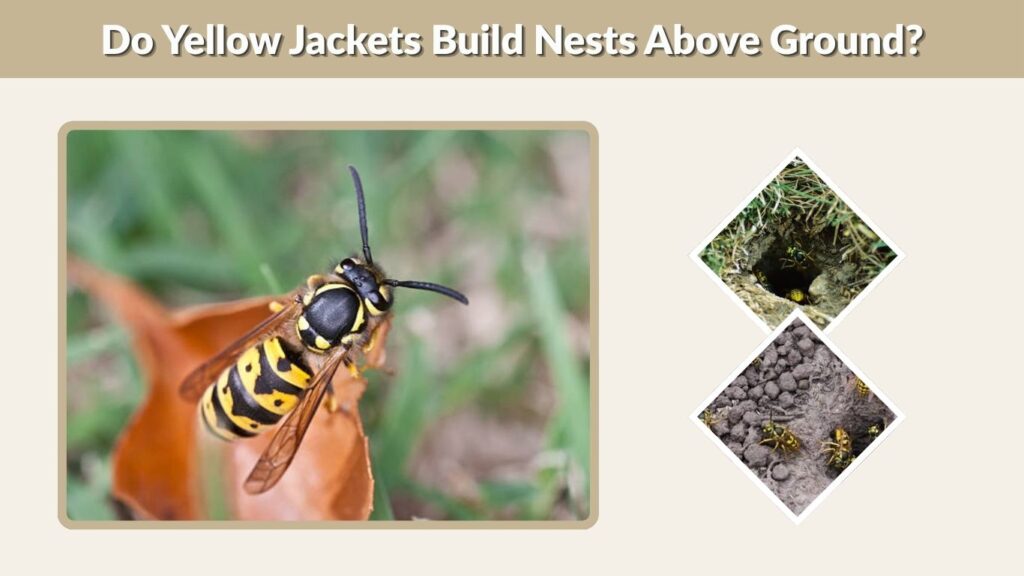
Some yellow jacket species regularly nest above ground, especially when suitable wall cavities, trees, or buildings are available.
Walls and House Cavities
Yellow jackets may enter through gaps in siding, cracked mortar, vents, utility openings, or spaces beneath roof edges. They can build inside:
- Exterior walls
- Drywall cavities
- Cinder blocks
- Brick walls
- Attics
- Soffits
- Ceilings
A hidden wall nest may produce buzzing or scratching sounds. Yellow jackets may also appear indoors through light fixtures, vents, outlets, or small ceiling gaps.
Never seal the outside entrance while the colony is active. Trapped wasps may search for another exit and enter the living area.
Trees and Hollow Logs
Yellow jackets can nest inside hollow trees, decaying stumps, fallen logs, and openings beneath loose bark. They usually prefer an enclosed cavity rather than building a fully exposed hanging nest.
An active tree nest may be identified by frequent traffic entering a knot, crack, or hollow section of the trunk.
Bushes and Dense Vegetation
Yellow jackets occasionally nest within thick bushes or protected vegetation. However, a visible open paper comb attached to a branch is more likely to belong to paper wasps.
Because several wasp species can look similar, avoid approaching an unknown nest for identification.
Chimneys and Vents
Unused chimneys, roof vents, exhaust openings, and damaged vent covers can offer protected nesting sites. Yellow jackets may enter through the top of a chimney or gaps around flashing.
A nest near a vent can become especially troublesome if wasps find a path into indoor rooms.
Do Yellow Jackets Build Nests in Cars or Grills?
Yellow jackets occasionally use objects that remain undisturbed for long periods.
Vehicles and Equipment
An unused car, tractor, trailer, boat, or piece of machinery may contain protected cavities suitable for nesting. Possible locations include:
- Engine compartments
- Wheel wells
- Seat cavities
- Dashboard spaces
- Storage compartments
- Abandoned equipment panels
Inspect equipment carefully before moving or repairing it, especially when yellow jackets are repeatedly flying around one section.
Outdoor Grills
A grill that has not been used for weeks may provide an enclosed, sheltered space. Yellow jackets may enter through ventilation holes, grease openings, or gaps around the lid.
Do not ignite a grill when you suspect an active nest. Keep people away and arrange for the nest to be safely evaluated.
What Kind of Nest Do Yellow Jackets Build?
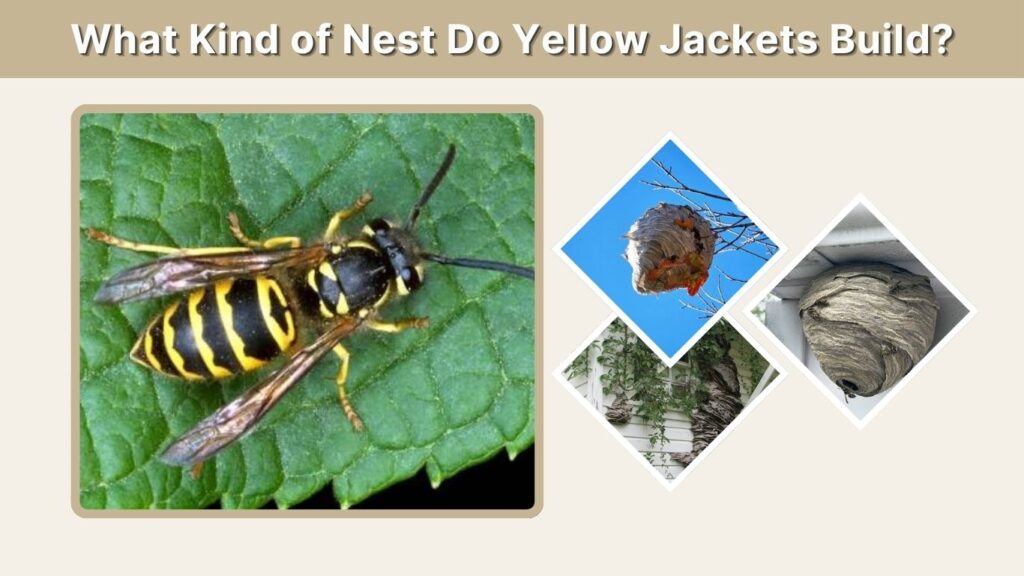
Yellow jackets build paper nests rather than mud nests. They collect weathered wood fibers, chew them, and mix them with saliva to create a lightweight paper-like material.
Inside the Nest
The nest contains multiple horizontal combs made of hexagonal cells. These cells hold eggs, larvae, and pupae. A protective paper envelope surrounds the combs and helps regulate the internal temperature.
Underground or wall nests may not be visible because the entire structure is hidden inside the cavity.
Yellow Jacket Nest vs. Paper Wasp Nest
Although both insects use paper material, their nests usually look different.
| Feature | Yellow jacket nest | Paper wasp nest |
| Structure | Enclosed in a paper covering | Open comb without full covering |
| Common location | Ground cavities and enclosed voids | Eaves, railings, and branches |
| Entrance | Small opening leading into the cavity | Exposed cells are usually visible |
| Colony size | Often large by late summer | Usually smaller |
How Do Yellow Jackets Build Their Nests?
Nest building begins with a single fertilized queen. After surviving winter in a protected hiding place, she becomes active during spring.
The Queen Builds the First Cells
The queen chooses a protected cavity and begins scraping fibers from wood, fences, bark, or other weathered surfaces. She chews the fibers into pulp and forms a small paper nest.
She builds several cells, lays eggs, and feeds the developing larvae.
Workers Expand the Colony
When the first female workers mature, they take over most nest-building, food gathering, and larval care. The queen then concentrates mainly on laying eggs.
Workers continually add new combs and layers as the population increases. They may also enlarge an underground cavity by carrying out soil, stones, and other debris.
When Do Yellow Jackets Start Building Nests?
Nest development usually begins in spring when overwintered queens become active. The exact timing depends on local climate and temperature.
| Season | Typical colony activity |
| Early spring | Queen searches for a nesting site |
| Mid to late spring | Queen builds starter cells and raises workers |
| Summer | Workers rapidly enlarge the nest |
| Late summer | Colony reaches its greatest size and activity |
| Fall | New queens and males are produced |
| Winter | Workers and the original queen usually die |
In warmer climates, colonies may remain active longer than they do in regions with severe winters.
How Fast Do Yellow Jackets Build a Nest?
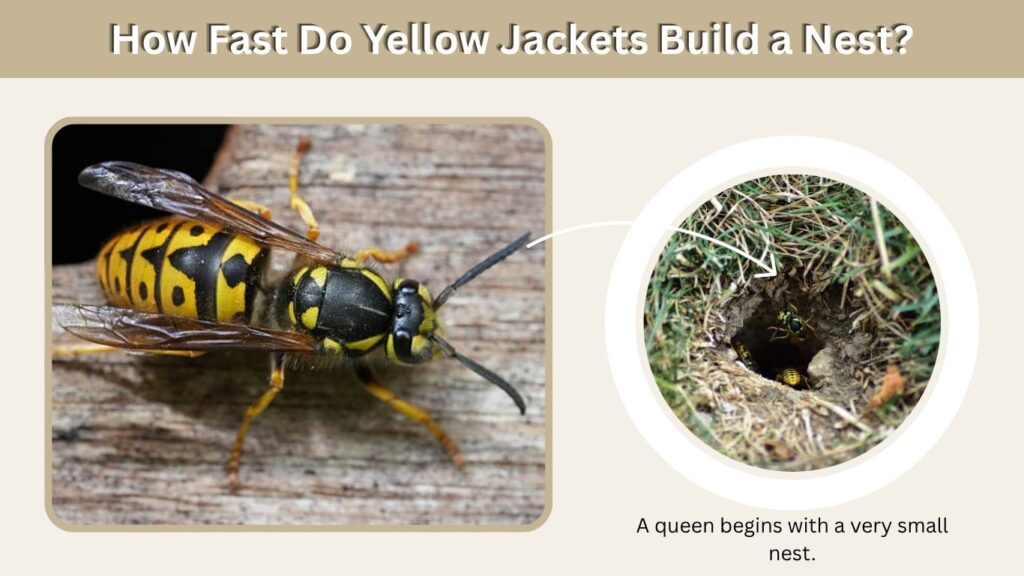
A queen begins with a very small nest containing only a few cells. Growth is relatively slow until the first workers emerge.
Once many workers are available, construction becomes much faster. A colony can expand significantly during summer because numerous workers collect food, gather wood fibers, care for larvae, and build new cells simultaneously.
The final size depends on:
- Species
- Weather
- Food availability
- Nesting space
- Colony health
- Length of the warm season
Some nests remain fairly small, while successful colonies can contain hundreds or thousands of individuals by late summer.
How to Prevent Yellow Jackets From Building Nests
Prevention is most effective before queens establish colonies in spring.
Seal Structural Openings
Inspect the exterior of the home and repair likely entrance points, including:
- Cracks in siding
- Damaged mortar
- Gaps around utility pipes
- Broken vent screens
- Openings around windows
- Loose soffits or fascia
- Holes beneath roof edges
Do not seal an opening when yellow jackets are actively using it.
Reduce Food Sources
Yellow jackets are attracted to sugary drinks, meat, pet food, fruit, and garbage. Keep outdoor trash containers closed and clean spills around patios and eating areas.
Pick up fallen fruit and avoid leaving pet food outdoors for long periods.
Maintain the Yard
Fill abandoned animal burrows when they are confirmed to be empty. Remove unnecessary debris, decaying wood, and unused equipment that can provide hidden nesting spaces.
Frequently using and inspecting sheds, grills, trailers, and outdoor storage areas may also discourage queens from settling there.
FAQs
Do yellow jackets always build nests underground?
No. Many species commonly nest underground, but others use wall voids, attics, hollow trees, sheds, chimneys, and other protected above-ground cavities. The nesting location depends on the species and available shelter.
Do yellow jackets reuse old nests?
Yellow jackets generally do not reuse an old paper nest. New queens normally establish new colonies each spring. However, they may choose the same wall, yard, or tree if suitable openings remain available.
How many nests does one yellow jacket queen build?
A successful queen normally establishes and leads one colony during the season. She creates the starter nest, raises the first workers, and then focuses mainly on egg production while workers expand the structure.
How can I tell whether yellow jackets are nesting nearby?
Watch for repeated flights into the same hole, wall gap, tree opening, roof edge, or piece of equipment. A steady pattern of insects entering and leaving one location usually indicates a nearby nest.
Are yellow jacket nests dangerous?
They can be dangerous when located near doors, walkways, playgrounds, gardens, or occupied rooms. Yellow jackets may aggressively defend their colony and can sting repeatedly. Keep people and pets away from an active nest and seek professional assistance when removal is necessary.