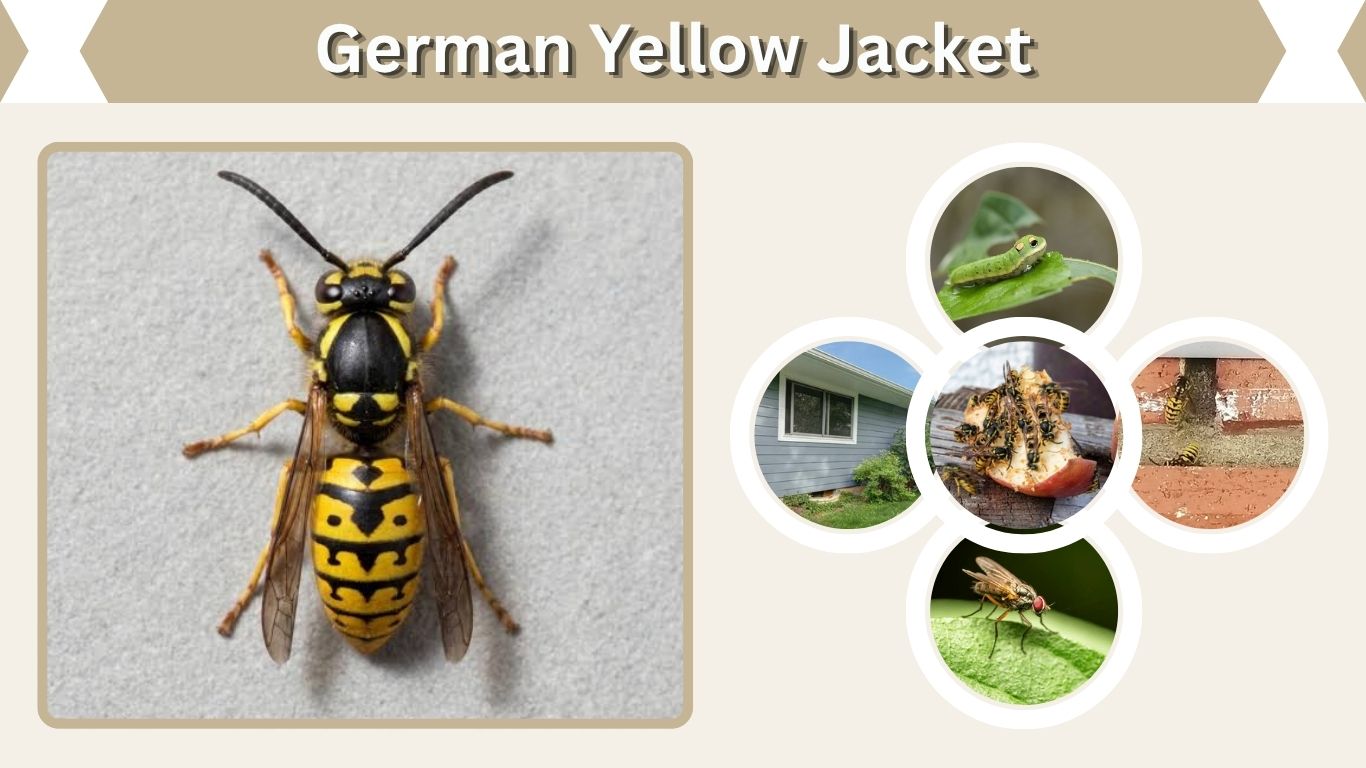
The German yellow jacket (Vespula germanica) is a social wasp recognized by its bold yellow-and-black body, scavenging behavior, and strong defense of its nest. It is also called the German wasp or European wasp in different parts of the world. Although it helps control other insects, this species can become troublesome when colonies develop inside walls, attics, underground cavities, or other places close to people.
German Yellow Jacket Overview
German yellow jackets live in organized colonies containing a queen, female workers, developing larvae, and, later in the season, reproductive males and new queens. They construct enclosed paper nests and may gather around garbage, fallen fruit, meat, sweet drinks, and outdoor dining areas.
| Feature | Description |
| Scientific name | Vespula germanica |
| Other names | German wasp, European wasp |
| Worker size | Approximately ½–⅝ inch |
| Queen size | Approximately ¾ inch |
| Colors | Bright yellow and black |
| Diet | Insects, carrion, fruit, nectar, sap and sugary foods |
| Nest location | Walls, attics, crawlspaces, ground cavities and hollow trees |
| Social structure | Queen, workers, males and larvae |
| Sting ability | Can sting repeatedly |
The German yellow jacket is native to Europe, northern Africa, and parts of temperate Asia. Human activity has helped it become established in several regions outside its native range, including portions of North and South America, Australia, New Zealand, and South Africa. It is therefore treated as an invasive species in many places.
German Yellow Jacket Identification
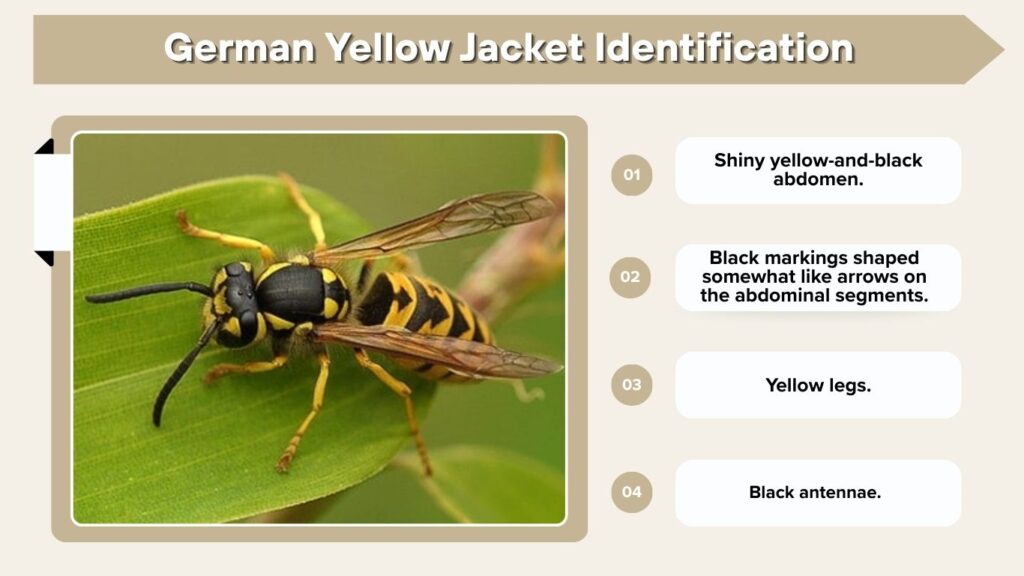
German yellow jackets have compact bodies, relatively short legs, narrow waists, and bright yellow-and-black markings. Their bodies look smoother and less hairy than those of honey bees.
Main Identification Features
Look for these characteristics:
- Shiny yellow-and-black abdomen
- Black markings shaped somewhat like arrows on the abdominal segments
- Yellow legs
- Black antennae
- Yellow face with small dark markings
- Clear wings folded lengthwise over the back
- Compact, powerful body rather than the slender form of a paper wasp
Workers generally measure about 14–16 millimeters, although body size varies. Identification based only on color can be difficult because several yellow-jacket species have similar markings.
Facial Markings
Female German yellow jackets frequently have three small black marks on the yellow facial plate located above the jaws. These marks may sometimes connect or appear irregular, so they should not be used as the only identification feature.
When viewed from above, the yellow marking around the eye is interrupted, and the first antennal segment is generally black. Close inspection may require a clear photograph or help from an insect specialist.
German Yellow Jacket Queen vs Worker
Queens and workers belong to the same colony, but they perform different functions.
German Yellow Jacket Queen
A queen is visibly larger and has a fuller abdomen than a worker. A newly mated queen is normally the only colony member that survives winter in a cold climate.
In spring, she chooses a sheltered cavity, builds the first paper cells, lays eggs, and feeds the first larvae herself. Once the first workers mature, the queen remains inside the nest and concentrates mainly on laying eggs.
German Yellow Jacket Workers
Workers are sterile females responsible for:
- Expanding and repairing the nest
- Hunting insects
- Collecting meat and sugary foods
- Feeding larvae
- Protecting the queen
- Guarding the entrance
- Defending the colony
A small spring nest may contain only a queen and a few developing larvae. By late summer, a successful colony can contain thousands of workers.
German Yellow Jacket Nest
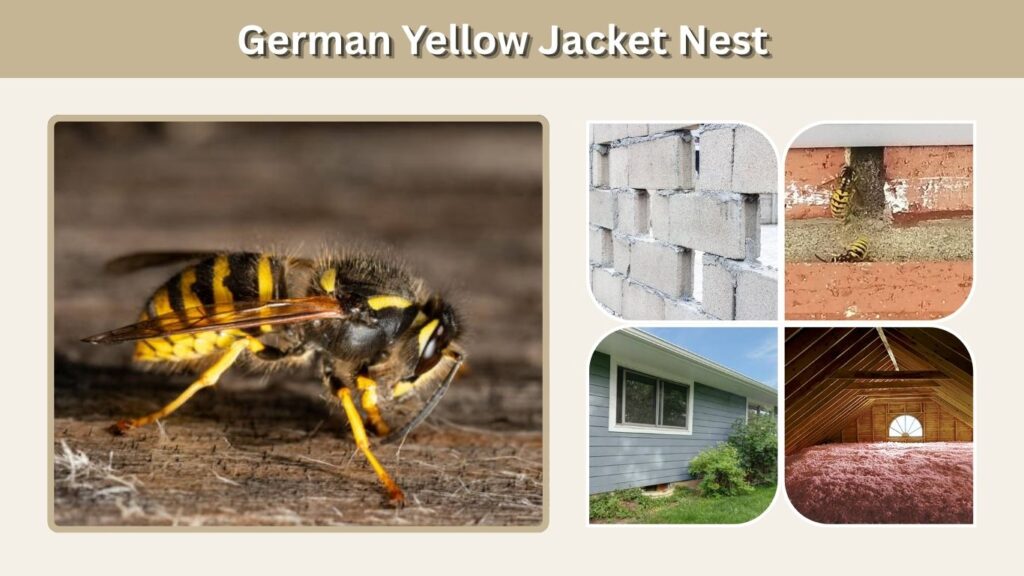
German yellow jackets build nests from weathered wood fibers mixed with saliva. The finished material resembles gray or brown paper.
Inside the nest are several horizontal combs containing hexagonal brood cells. A protective paper envelope surrounds these combs, leaving one or more entrances through which workers travel.
Where Do German Yellow Jackets Nest?
Common nesting locations include:
- Wall voids
- Attics
- Crawlspaces
- Sheds and garages
- Spaces beneath siding
- Hollow trees
- Abandoned rodent burrows
- Underground cavities
- Disused vehicles or equipment
German yellow jackets are particularly associated with buildings. In contrast, many other yellow-jacket species more commonly establish underground nests.
German Yellow Jacket Nest in a Wall
A steady stream of wasps entering and leaving a small exterior opening may indicate a wall nest. Buzzing, scratching sounds, unusual odors, or wasps appearing indoors can also suggest activity inside a structural cavity.
Never seal an active entrance. Blocking the exterior opening may force surviving workers to chew another path, potentially allowing them to enter the living space. A wall nest should usually be inspected and treated by a licensed pest-control professional.
German Yellow Jacket Life Cycle
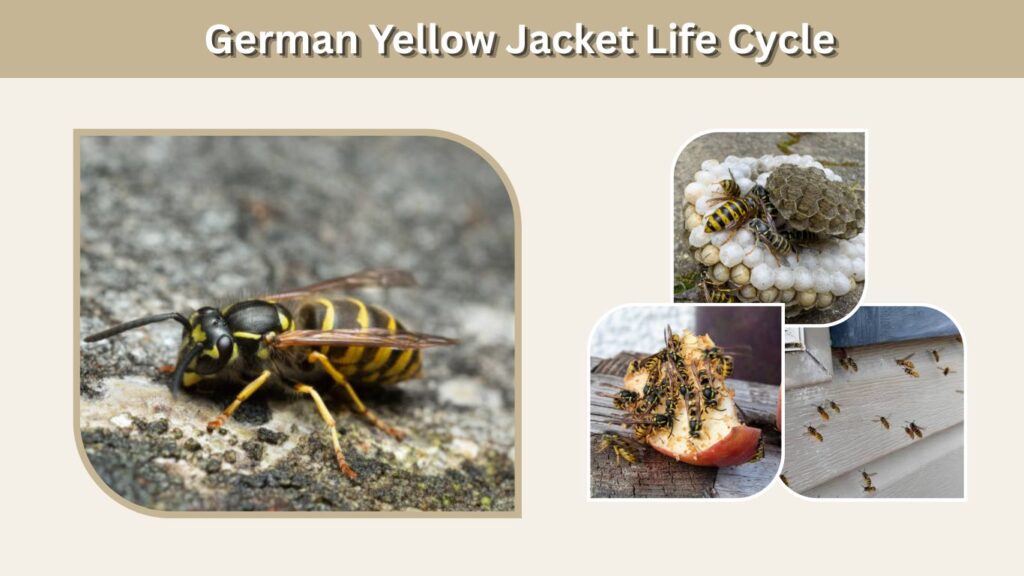
The colony normally follows an annual cycle in regions with cold winters.
Spring
A fertilized queen leaves her protected overwintering site. She begins a small nest, lays eggs, gathers food, and raises the first group of workers without assistance.
Summer
The workers take over feeding, construction, cleaning, and defense. The queen remains in the nest and produces additional workers. Colony growth can become rapid during warm weather.
Late Summer and Fall
The colony produces males and new queens. After mating, the young queens search for protected places in which to overwinter. Workers may become more noticeable around food as natural resources decline.
Winter
Cold weather kills the workers, males, and original queen. The abandoned nest is normally not reused. Only newly fertilized queens survive to begin fresh colonies the following spring.
What Do German Yellow Jackets Eat?
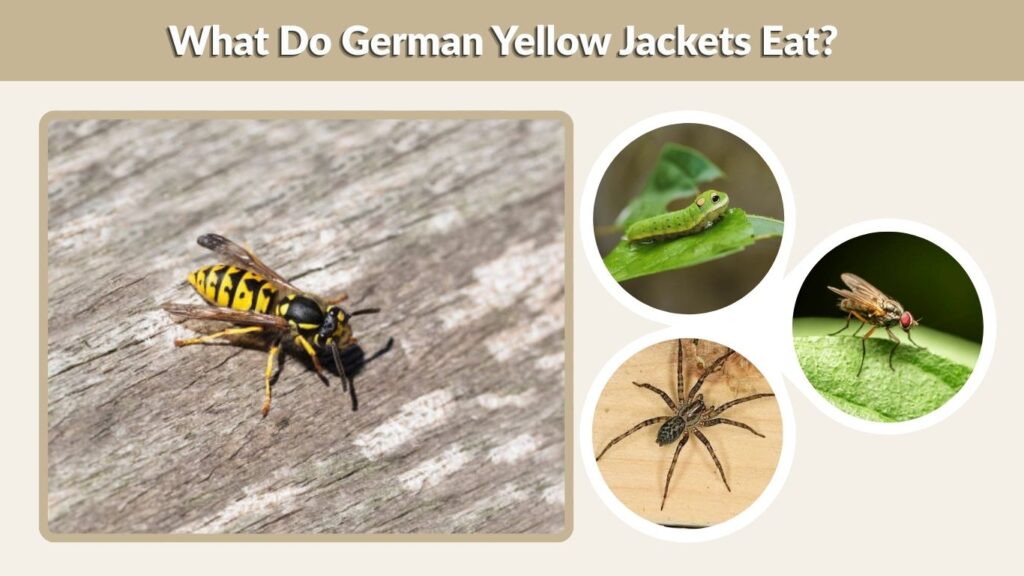
German yellow jackets are predators, scavengers, and sugar feeders.
Workers capture flies, caterpillars, spiders, and other small animals to feed the developing larvae. They also collect carrion, discarded meat, pet food, and food from garbage containers.
Adult wasps primarily need carbohydrates. They obtain them from nectar, ripe fruit, tree sap, aphid honeydew, soft drinks, juice, sweets, and sugary fluids produced by larvae. Their willingness to eat human food frequently brings them into conflict with people at picnics and outdoor restaurants.
Are German Yellow Jackets Dangerous?
German yellow jackets do not normally hunt people, but they aggressively defend an active colony. Vibrations from mowing, drilling, construction, or striking a wall may trigger a defensive response.
Unlike honey bees, they do not usually leave their stingers behind. One worker can therefore sting repeatedly. Guard wasps can release an alarm chemical that recruits nestmates, creating a risk of multiple stings when a colony is disturbed.
German Yellow Jacket Sting Treatment
For a mild, localized reaction:
- Move away from the nest area immediately.
- Wash the affected skin with soap and water.
- Apply a cold pack for about 10 minutes at a time.
- Avoid scratching the site.
- Ask a medical professional about suitable antihistamines or pain relievers when needed.
Seek emergency medical help for breathing or swallowing difficulty, throat tightness, faintness, confusion, rapidly spreading swelling, or other signs of a severe allergic reaction. Medical attention is also important after numerous stings or a sting inside the mouth.
German vs Eastern Yellow Jacket
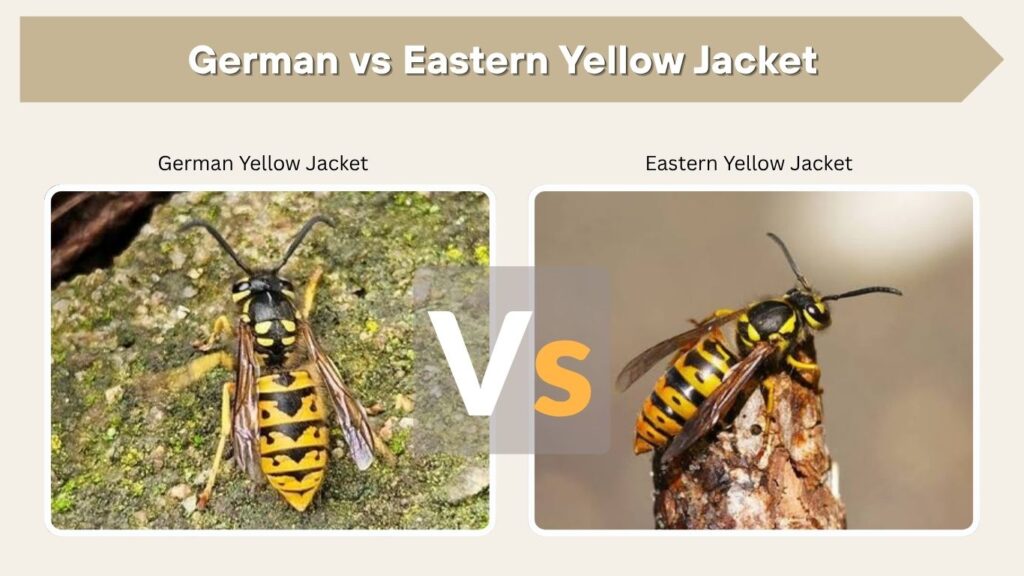
The German and Eastern yellow jackets are separate species, although they share similar colors, diets, and defensive behavior.
| Feature | German Yellow Jacket | Eastern Yellow Jacket |
| Scientific name | Vespula germanica | Vespula maculifrons |
| Origin in North America | Introduced | Native |
| Common nest site | Wall and structural cavities | Underground cavities |
| Abdominal marking | Separate or diamond-like dark markings | More anchor-shaped central marking |
| Human contact | Common around buildings and food | Common near lawns and ground nests |
| Colony defense | Strong | Strong |
Nest location is a helpful clue but does not guarantee identification. German yellow jackets can nest underground, while Eastern yellow jackets may occasionally use other protected cavities.
German Wasp vs Yellow Jacket
There is no biological difference between a German wasp and a German yellow jacket. Both names refer to Vespula germanica. “German wasp” and “European wasp” are common names in Europe, Australia, and other regions, while “German yellow jacket” is frequently used in North America.
It is a true wasp, not a bee. Compared with paper wasps, it has a shorter, more compact body and builds a fully enclosed nest. Paper wasps have longer legs and create exposed combs with visible cells.
How to Get Rid of German Yellow Jackets
Reduce foraging activity by sealing garbage, covering outdoor food, cleaning spilled drinks, collecting fallen fruit, and feeding pets indoors. Traps may capture some workers, but they do not reliably eliminate a mature colony.
Do not flood, burn, strike, excavate, or seal an active nest. These actions may provoke mass stinging or drive wasps into a building. Professional removal is especially appropriate when the nest is inside a wall, near a doorway, above ground level, or close to children, pets, or anyone with a sting allergy.
FAQs
Are German yellow jackets aggressive?
They are strongly defensive near their colony but generally do not seek people out solely to attack them. Disturbing a nest, trapping a worker against the skin, or threatening a food source can provoke stinging. Defensive activity often increases as the colony grows.
Do German yellow jackets sting more than once?
Yes. Their stingers normally remain attached to their bodies, allowing them to sting repeatedly. A disturbed nest may also release many defensive workers, which is why people should leave the area quickly rather than trying to fight or swat them.
Are German yellow jackets invasive?
They are invasive outside their native range in Europe, northern Africa, and temperate Asia. Introduced populations can compete with native insects, prey on other invertebrates, disrupt outdoor activities, and create economic costs associated with nest control and public safety.
What are the predators of German yellow jackets?
Predators can include birds, mammals, spiders, predatory insects, and other animals capable of reaching the adults or larvae. Skunks, raccoons, shrews, and similar mammals may excavate underground nests to consume the protein-rich brood.
Does a German yellow jacket nest return every year?
The old colony normally dies in winter, and its nest is not reused. However, a new queen may select the same wall, attic, or ground cavity the following spring if the opening remains accessible and the location continues to provide suitable shelter.