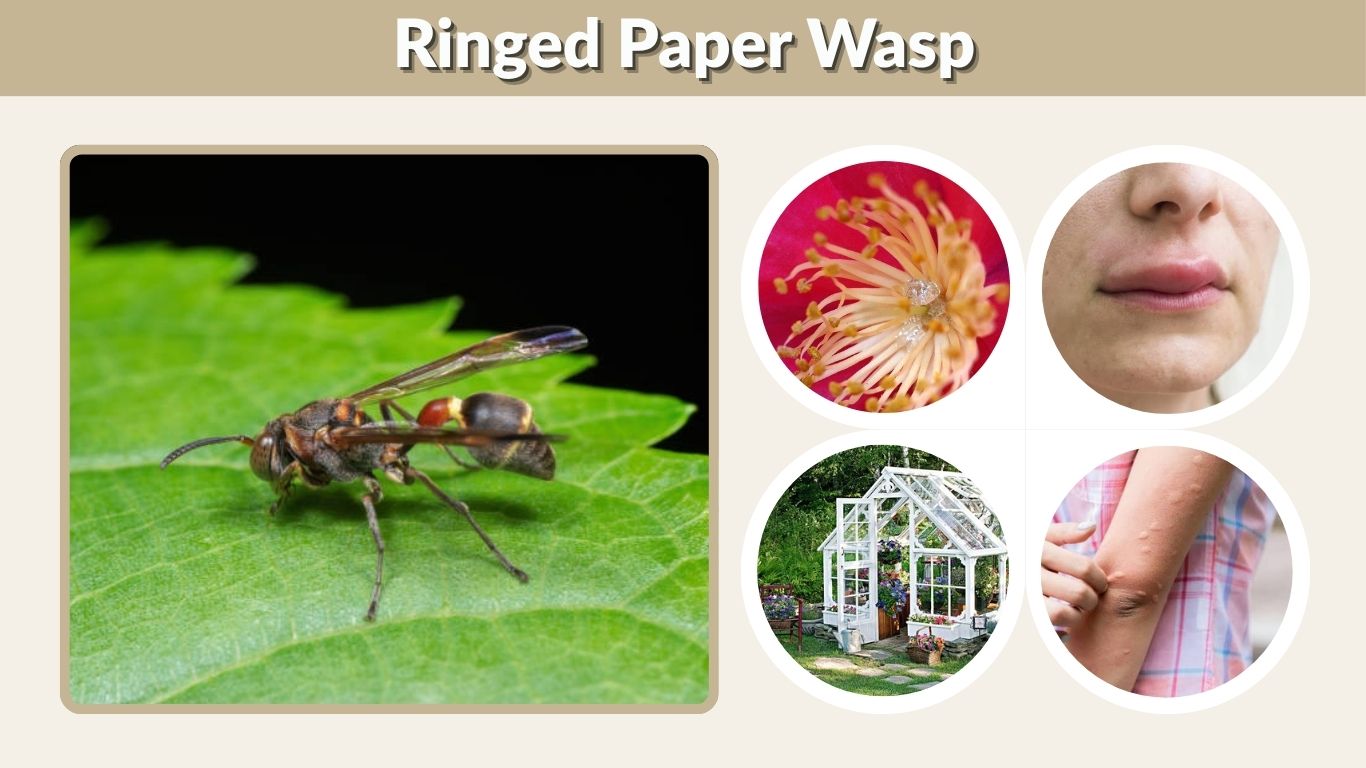
The ringed paper wasp is a large social wasp recognized by its reddish-brown body, dark wings, and distinctive yellow abdominal ring. Its scientific name is Polistes annularis. Although its appearance can be intimidating, this wasp plays a beneficial role by hunting caterpillars and other plant-eating insects. Problems usually occur when a colony builds its nest near doors, walkways, decks, or other busy areas.
Ringed Paper Wasp Overview
Ringed paper wasps belong to the family Vespidae and are native to North America. They are especially associated with the eastern and southeastern United States. The species is sometimes called the ring paper wasp, red paper wasp, or Jack Spaniard wasp.
| Feature | Description |
| Scientific name | Polistes annularis |
| Common name | Ringed paper wasp |
| Color | Reddish-brown, black, and yellow |
| Nest type | Open, umbrella-shaped paper comb |
| Diet | Nectar, caterpillars, and other insects |
| Temperament | Usually calm away from its nest |
| Range | Primarily eastern North America |
How to Identify a Ringed Paper Wasp
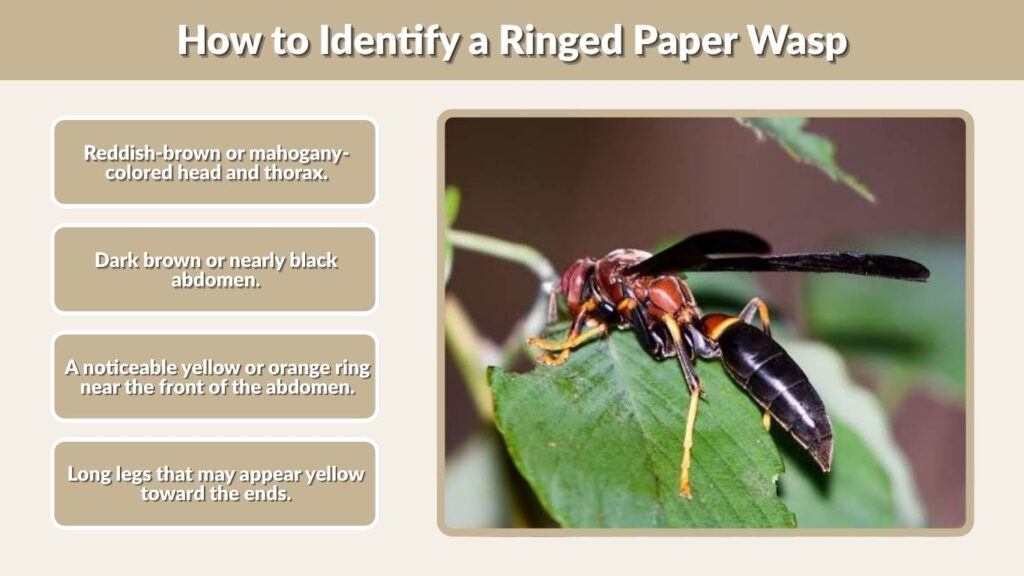
This species has the long legs, narrow waist, and slender body typical of paper wasps. It is usually darker and more reddish than common yellow-and-black paper wasps.
Identification Features
- Reddish-brown or mahogany-colored head and thorax
- Dark brown or nearly black abdomen
- A noticeable yellow or orange ring near the front of the abdomen
- Long legs that may appear yellow toward the ends
- Long, dark, narrow wings folded over the body while resting
- Thin waist connecting the thorax and abdomen
- Long antennae, often with orange-colored tips
The contrasting ring around the abdomen is responsible for both its common and scientific names. The Latin species name annularis means ringed or ring-shaped.
Ring Paper Wasp vs. Yellow Ringed Paper Wasp
“Ring paper wasp” is generally an abbreviated variation of ringed paper wasp, rather than a different species. The phrase yellow ringed paper wasp also describes the yellow or golden band visible against the insect’s darker abdomen.
Color can vary between individuals. Some appear mainly reddish-brown, while others have a nearly black abdomen with a brighter yellow ring. Identification should therefore consider the wasp’s complete pattern, body shape, and geographic location.
Where Do Ringed Paper Wasps Live?
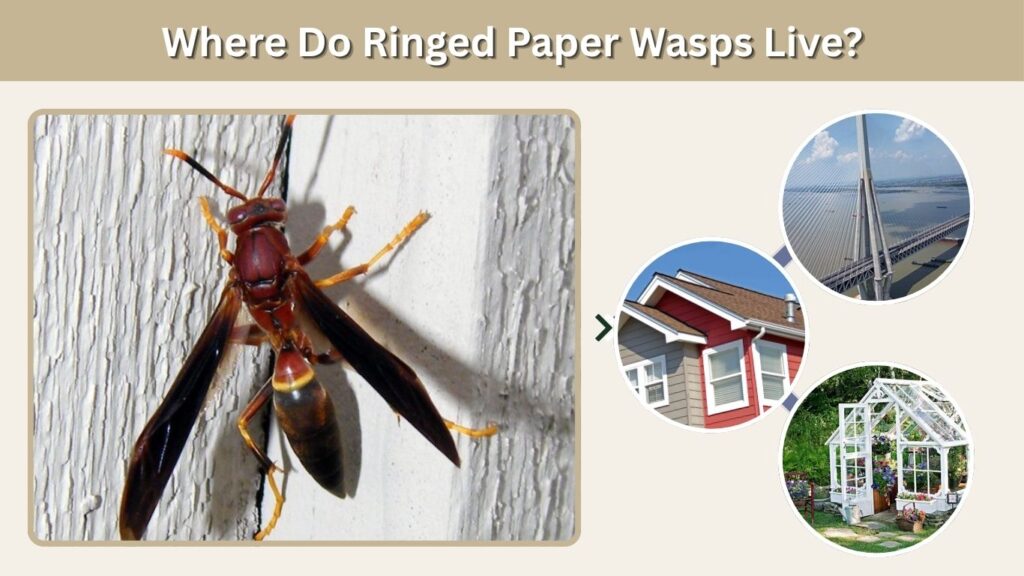
Ringed paper wasps occur mainly across the eastern half of the United States, with many observations coming from southern and southeastern states. They inhabit woodlands, forest edges, parks, wetlands, farms, suburban properties, and areas near rivers, ponds, or streams.
They commonly place their nests beneath protective overhangs that reduce direct sunlight and shield the colony from heavy rain. Natural nesting locations include rock ledges, tree branches, hollow structures, and vegetation overlooking water.
Around buildings, nests may appear beneath:
- Roof eaves
- Decks and porches
- Bridges
- Barn roofs
- Window ledges
- Outdoor structures
- Sheltered beams
What Does a Ringed Paper Wasp Nest Look Like?
A ringed paper wasp nest is an exposed comb consisting of numerous downward-facing hexagonal cells. Unlike hornet and yellowjacket nests, it does not have a complete paper envelope surrounding the comb. The nest commonly hangs from a narrow stalk called a pedicel.
How the Nest Is Built
Female wasps collect weathered wood and plant fibers. They chew these materials and mix them with saliva, producing a soft pulp that dries into a thin, paper-like structure.
A new colony normally begins in spring when one or more overwintered females start constructing a nest. The dominant female lays most of the eggs, while subordinate females may help enlarge the comb, collect food, defend the colony, and care for developing larvae.
Why Several Nests May Appear Together
Ringed paper wasps sometimes form groups of nests beneath the same cliff, bridge, roof, or overhang. Suitable sites may be limited because the wasps prefer sheltered locations near water with reduced exposure to direct sunlight.
A group of nests does not necessarily form one enormous colony. Each comb may contain its own social group, even when several nests are positioned close together.
Are Ringed Paper Wasps Aggressive?
Ringed paper wasps are not normally aggressive while searching for food. A wasp visiting flowers or hunting among plants usually attempts to escape rather than attack a person.
However, these are social wasps that defend their colony. Standing close to the nest, striking the structure, creating vibrations, or attempting removal may trigger defensive behavior. Paper wasps are most likely to sting when their nest or bodies are directly threatened.
They may also become trapped inside clothing or be accidentally grabbed while gardening, creating another situation in which stinging is possible.
Ringed Paper Wasp Sting
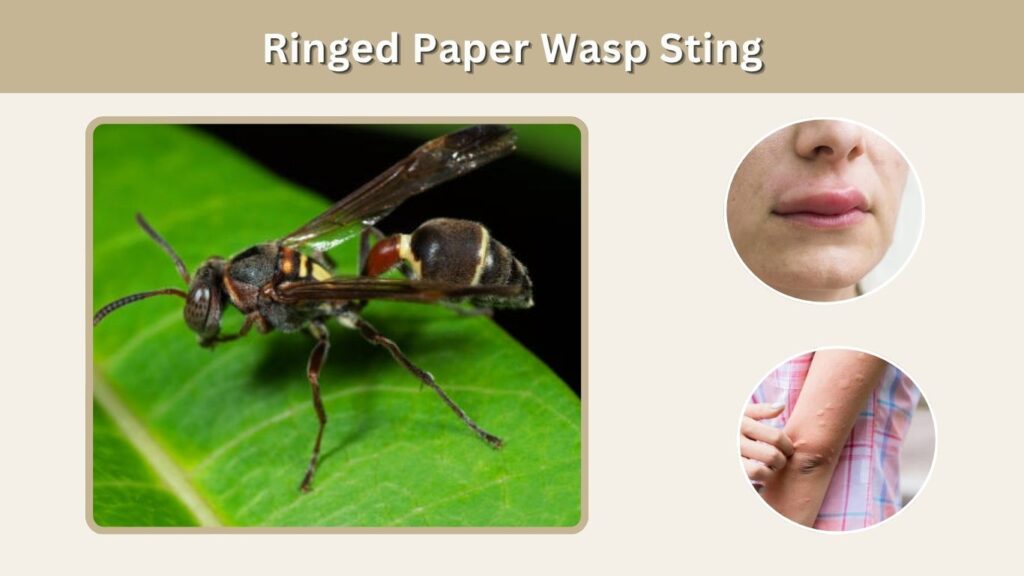
A ringed paper wasp sting can cause immediate sharp pain, redness, warmth, itching, and swelling around the affected area. Unlike honey bees, paper wasps can generally withdraw their stingers and sting more than once.
What to Do After a Sting
Move away from the nest immediately to prevent additional stings. Wash the affected skin with soap and water, apply a cold pack wrapped in cloth, and avoid scratching the area. Most mild reactions improve with basic home care.
Obtain emergency medical assistance when symptoms include:
- Difficulty breathing or wheezing
- Swelling of the lips, tongue, face, or throat
- Widespread hives
- Dizziness, fainting, or confusion
- Weak or rapid pulse
- Vomiting or severe stomach symptoms
These symptoms may indicate anaphylaxis, which requires immediate emergency treatment.
What Do Ringed Paper Wasps Eat?
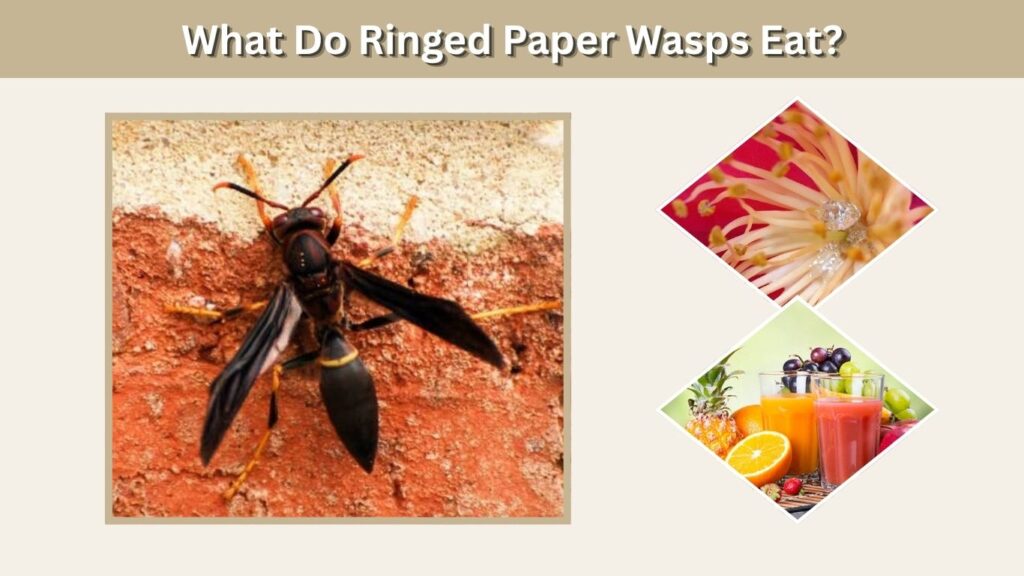
Adult ringed paper wasps obtain energy from nectar and other sugary liquids. They visit flowers and may occasionally drink sap, fruit juices, or other sweet substances.
Developing larvae need protein. Adult workers capture caterpillars and other insects, chew the prey into small portions, and carry it back to the nest. Caterpillars are an especially important food source for this species.
This hunting behavior makes ringed paper wasps beneficial around gardens and landscapes. A colony can remove insects that would otherwise feed on leaves and ornamental plants.
Should You Remove a Ringed Paper Wasp Nest?
A nest located far from people can usually be left undisturbed. The wasps provide natural insect control, and unnecessary removal eliminates a useful predator.
Removal may be appropriate when the nest is beside a doorway, play area, walkway, patio, or another frequently used location. Professional treatment is the safest option for large nests, difficult locations, or households containing someone with a known sting allergy. Never attempt to manage a nest yourself when you are allergic to wasp venom.
FAQs
Do ringed paper wasps sting people?
Yes. They can sting when handled, trapped, stepped on, or disturbed near their nest. Wasps encountered away from the colony are generally less defensive and normally prefer to escape.
Is a ringed paper wasp dangerous?
It is not usually dangerous when left alone. However, its sting can be painful, and people with venom allergies may experience a severe or life-threatening reaction requiring emergency care.
Where do ringed paper wasps build nests?
They build exposed paper combs beneath sheltered overhangs. Common locations include cliffs, bridges, tree branches, roof eaves, porches, barns, decks, and other structures near water.
What is the yellow ring on a ringed paper wasp?
The ring is a yellow or orange band near the front of its otherwise dark abdomen. This marking is one of the species’ most recognizable identification features.
Are ringed paper wasps beneficial?
Yes. Adults hunt caterpillars and other insects to feed their larvae. This behavior helps control some leaf-eating garden pests, while adults also visit flowers for nectar.