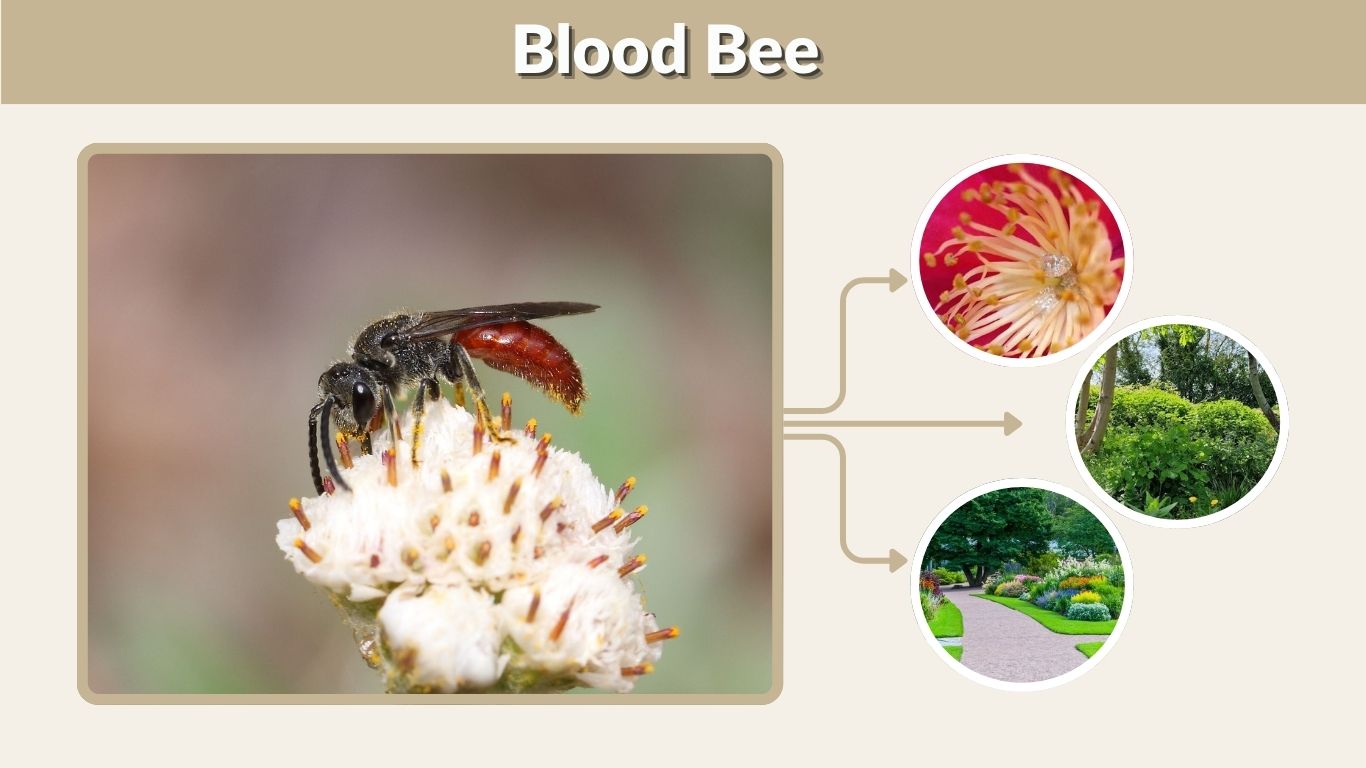
A blood bee is a small bee belonging to the genus Sphecodes, often recognizable by its black head and thorax and reddish abdomen. Despite the dramatic name, blood bees do not drink blood. They are cuckoo bees that use other bees’ nests and food provisions to raise their offspring. They also differ from honey bees because they do not maintain honey-producing hives. This guide explains their appearance, habitat, feeding habits, and nesting behavior, while clarifying the separate question of what color bee blood is.
What Is a Blood Bee?
“Blood bee” is a common name for members of Sphecodes, a genus in the sweat bee family, Halictidae. It refers to a group of species rather than one particular bee. Many have conspicuous red abdominal markings, although coloration varies between species and sexes.
Blood Bee Identification
Typical identification features include:
- Head and thorax: Usually black.
- Abdomen: Often partly or mostly red.
- Body covering: Less hairy than many familiar pollen-collecting bees.
- Pollen-carrying hairs: Females lack the specialized collecting hairs found on many other bees.
- Behavior: Often flies low over bare ground while searching for host nests.
- Variation: Some males are entirely black.
A red abdomen can suggest a blood bee, but it does not establish the species. Many Sphecodes require expert examination rather than identification from an ordinary photograph.
Why Are They Called Blood Bees?
The name describes their reddish coloration, not their diet. The red is part of the bee’s external appearance; it is not exposed to blood.
Blood bees are also called cuckoo sweat bees because they exploit nests prepared by other bees. “Cuckoo bee” describes this reproductive strategy and applies to several different bee groups.
Blood Bee Habitat and Distribution
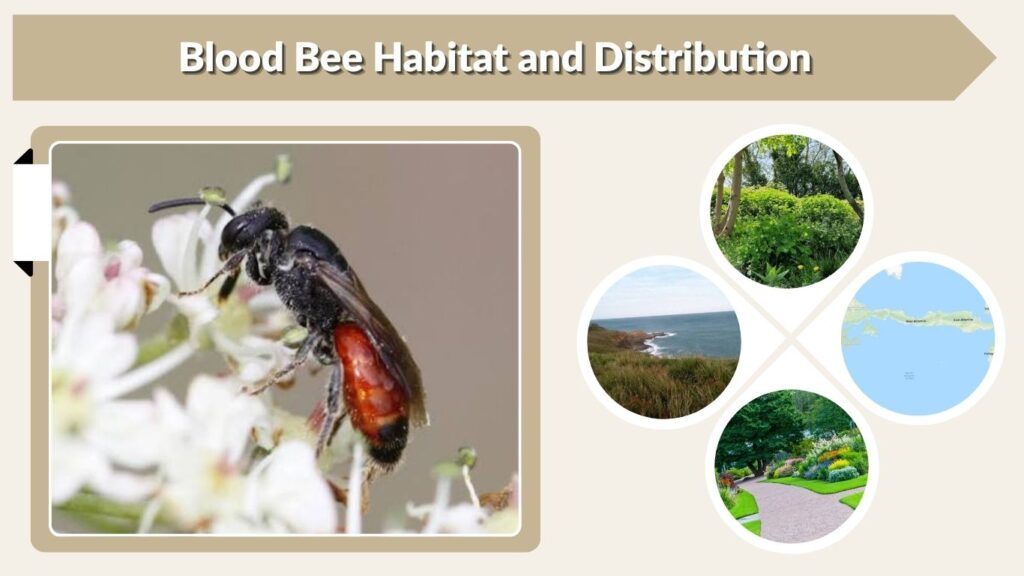
Blood bees occur in multiple regions, including Europe and North America. Their presence depends strongly on suitable host bees. A flower-rich location alone may not support them if the particular bees whose nests they use are absent.
Where to Look for Blood Bees
Look around the sunny ground where small bees are nesting. Depending on the species, suitable habitats can include grasslands, heathland, woodland edges, gardens, and sandy areas.
For example, the box-headed blood bee occurs in a wide range of British habitats, including gardens and calcareous grassland. Other species have more specialized associations.
Why They Fly Close to the Ground
A female flying slowly over bare soil may be searching for nest entrances. She is not necessarily digging a nest herself.
Watch from a distance for repeated visits to small holes. This behavior can help you recognize a potential cuckoo bee, although it cannot establish the exact species.
What Do Blood Bees Eat?
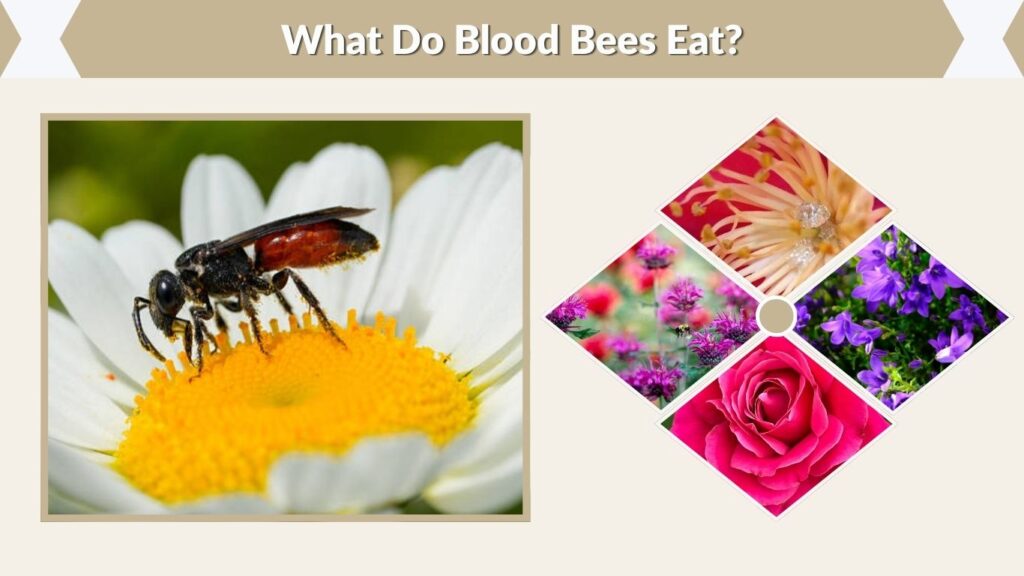
Blood bees have different feeding arrangements as adults and larvae. Adults obtain energy from flowers, while their developing offspring use food gathered by host bees. Their parasitic lifestyle concerns reproduction, not feeding on human or animal blood.
Adult Blood Bee Diet
Adults visit flowers for nectar. The box-headed blood bee, for example, has been recorded taking nectar from plants in the daisy, carrot, rose, bellflower, and spurge families.
Unlike pollen-provisioning females of many other bees, blood bees do not collect pollen loads to stock their own brood cells.
What Their Larvae Eat
Blood bee larvae consume the pollen-and-nectar provisions that another bee prepared for its offspring.
This is called cleptoparasitism: using another animal’s stored food. Although the host’s offspring may be killed during the takeover, the food cache is the developing blood bee’s principal resource.
Blood Bee Nests and Life Cycle
Blood bees depend on other bees’ nesting work. Their reproductive behavior differs from the familiar honey bee colony, and details vary among species and hosts. Some enter unguarded nests, while others may encounter and fight resident bees.
How Blood Bees Use Host Nests
A typical sequence involves:
- A female searches for a suitable host nest.
- She enters and locates a provisioned brood cell.
- She destroys or removes the host egg or young larva.
- She lays her own egg in the cell.
- Her offspring develop using the host’s stored food.
In Sphecodes, the adult female commonly removes the host offspring herself. Interactions with adult host bees can range from little confrontation to aggressive encounters.
Is There a Blood Bee Hive?
Blood bees do not establish their own honey bee-style hives containing wax honeycomb and a workforce producing honey.
Their hosts may nest alone or have social arrangements, but a blood bee’s use of those nests does not make it a honey bee. Several bees visiting holes in one patch of soil also do not necessarily represent a single colony.
How Long Do Blood Bees Live?
There is no single reliable lifespan for every blood bee species. Development and adult activity depend on species, climate, and host biology.
Flight-season records describe when adults can be observed, not how long one individual survives. For example, seeing a species from spring through autumn does not mean every adult lives throughout that period.
White-Lipped Blood Bee and Other Examples
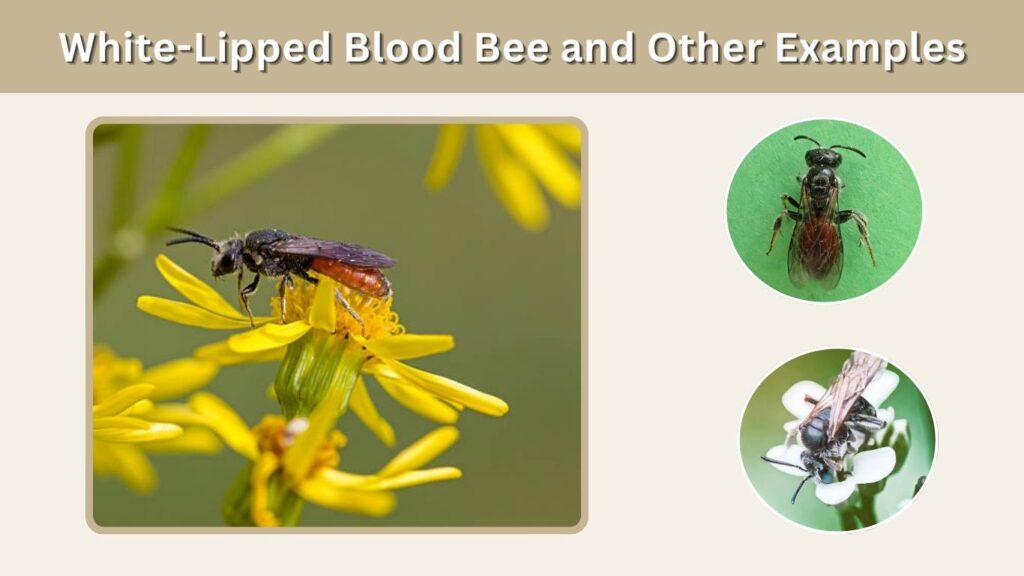
Common names vary between regions and recording systems. Scientific names are therefore useful when comparing photographs or reading species accounts. Two examples illustrate how blood bees differ in size, appearance, and host selection.
White-Lipped or Great Blood Bee
The white-lipped blood bee, Sphecodes albilabris, is also called the great blood bee. It is relatively large, measuring approximately 11–15 millimeters.
British identification guidance describes a robust bee with red markings extending toward the abdominal tip. Its recorded host is Colletes cunicularius, and suitable habitat includes sandy ground associated with that host.
Box-Headed Blood Bee
The box-headed blood bee, Sphecodes monilicornis, uses several sweet bee hosts, including species of Halictus and Lasioglossum.
Its name refers to the relatively square-looking female head. However, similar-looking blood bees make identification challenging, especially without clear views of diagnostic features.
What Color Is Bee Blood?
“Bee blood” means something different from “blood bee.” Bees have a circulating body fluid called hemolymph rather than mammalian-style blood. This fluid transports substances through the body and contributes to immune defense.
Honey Bee Blood Color
Honey bee hemolymph is generally transparent or pale yellow, not red like human blood. Research on honey bee development describes this coloration and examines the proteins involved in its biological functions.
The red abdomen of a blood bee therefore does not indicate red blood inside it.
How Bee Circulation Works
Bees have an open circulatory system: hemolymph moves through the body cavity rather than remaining inside a complete network of arteries and veins.
Oxygen reaches tissues through a separate system of branching air tubes called tracheae. This differs from human circulation, where red blood cells transport oxygen.
FAQs
These answers address common misunderstandings about blood bees, their behavior, and bee body fluid.
Do Blood Bees Drink Blood?
No. Adults feed on nectar, while larvae consume provisions collected by host bees. Their common name refers to their reddish appearance.
Do Blood Bees Make Honey?
No. Sphecodes bees do not produce harvestable honey. Their larvae use host-collected pollen and nectar rather than honey stores maintained by their own colony.
Can Blood Bees Sting?
Females can sting, so avoid handling or trapping them against your skin. Their name does not indicate unusual aggression toward people.
Are Blood Bees Wasps?
No. They are bees in the family Halictidae. Their relatively sparse hair and red-and-black appearance can make them look wasp-like.
Should I Remove Blood Bees From My Garden?
Their presence alone is not a reason for removal. They are part of natural bee communities. Observe them without disturbing nest entrances, and seek identification before taking action.