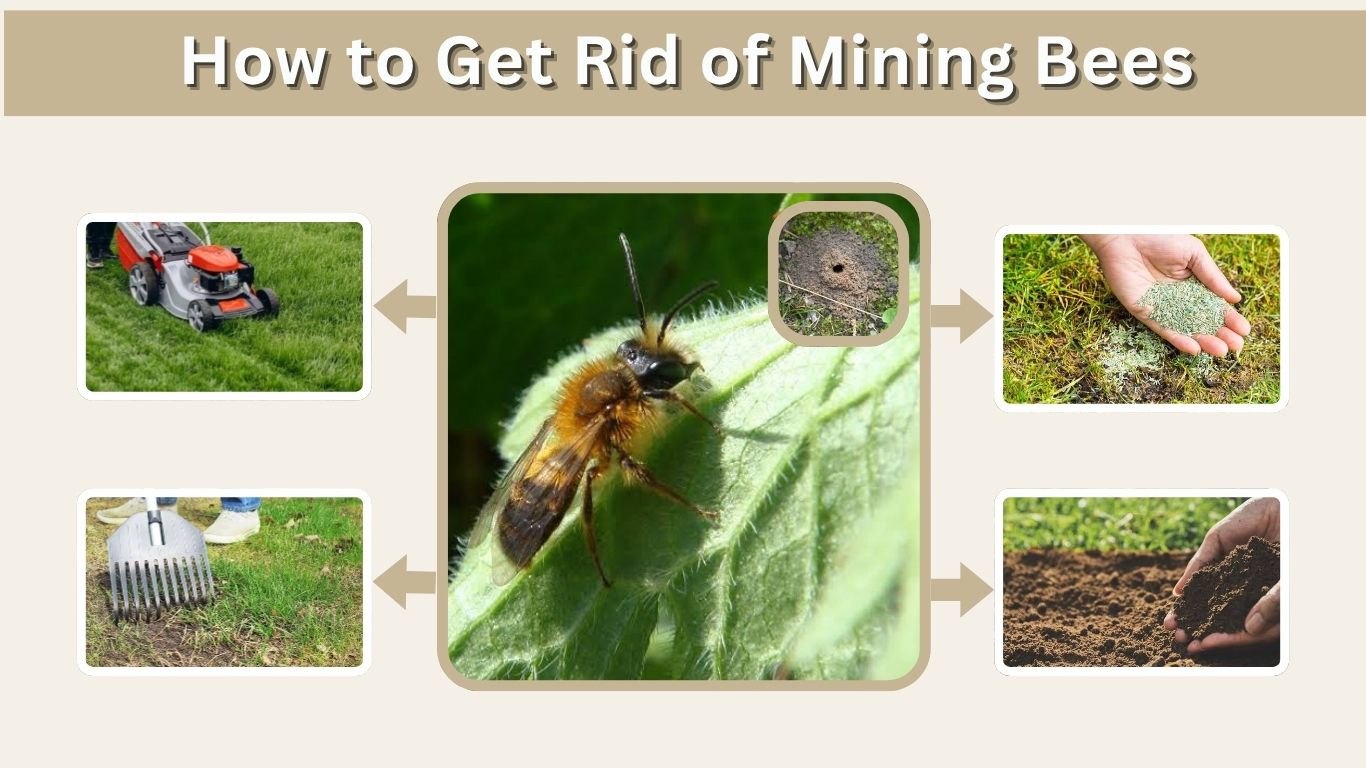
Mining bees are solitary ground-nesting bees that often appear in lawns, gardens, flower beds, and patches of bare soil during spring or early summer. Although dozens of small holes can make an area look heavily infested, mining bees are generally peaceful pollinators and rarely sting unless handled or trapped. In most cases, there is no need to kill them. You can usually encourage mining bees to leave by changing soil conditions, improving lawn coverage, and blocking suitable nesting areas after the active season.
What Are Mining Bees?
Mining bees are ground-nesting bees, many of which belong to the genus Andrena. Unlike honey bees, they do not normally live together in a large social colony. Each female usually excavates her own underground nest and provides individual cells with pollen and nectar for her offspring.
Large numbers may nest close together when a particular patch of soil provides ideal conditions.
How to Identify Mining Bees
Look for these common signs:
- Numerous small holes in bare or thin soil
- Small piles or mounds of loose soil around entrances
- Bees flying close to the ground
- Individual bees entering separate holes
- Activity concentrated during a few weeks of the year
- Nest sites in sunny, well-drained ground
Mining bees can vary considerably in color. Depending on the species, they may appear brown, black, gray, reddish, or covered with pale hairs.
Are Mining Bees Dangerous?
Mining bees are generally much less aggressive than social wasps.
Males may fly around people or patrol nesting areas, but male bees cannot sting. Females can sting, although they usually do so only when physically threatened.
Simply walking near their nests typically does not cause a coordinated attack because mining bees do not defend a communal colony in the way some social insects do.
How to Get Rid of Mining Bees Naturally
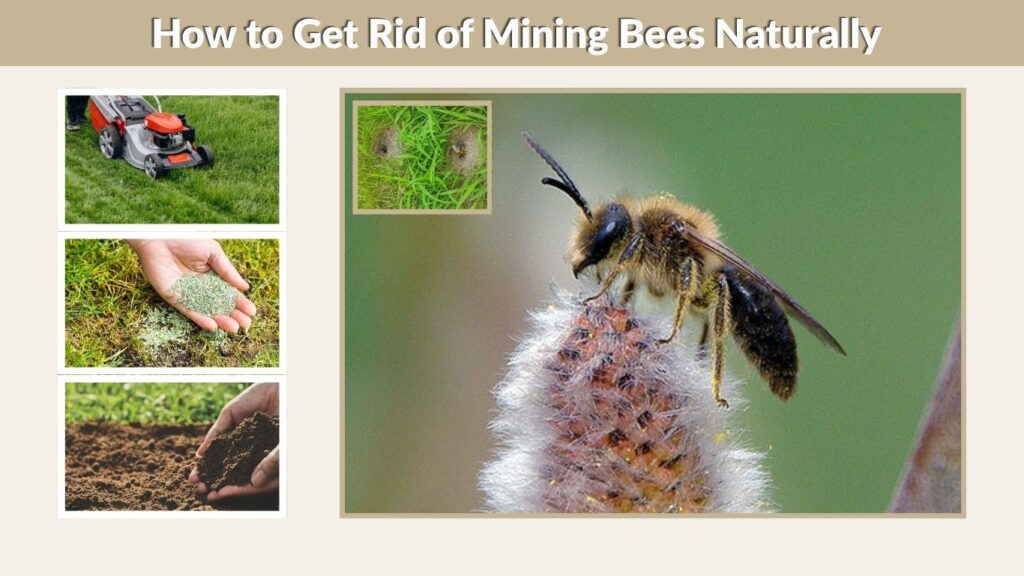
The best approach is usually to make the area unattractive for future nesting rather than trying to destroy existing bees. Mining bees often select dry, exposed soil with sparse vegetation. Improving those conditions can discourage them naturally.
1. Water the Nesting Area
Mining bees commonly prefer relatively dry, well-drained soil.
Water the affected ground regularly enough to keep the upper soil moderately moist. Avoid flooding individual holes or attempting to drown the bees.
Consistent irrigation can make the location less attractive when females search for nesting sites.
This method works particularly well when combined with lawn repair.
2. Grow Thicker Grass
A thin lawn provides exposed soil where females can easily excavate nests. Establishing dense turf can dramatically reduce the amount of suitable nesting space.
You can:
- Overseed bare areas
- Repair damaged turf
- Improve lawn fertilization appropriately
- Mow at a suitable height
- Water new grass consistently
- Reduce unnecessary soil disturbance
Healthy vegetation creates roots and ground cover that make excavation more difficult.
3. Cover Bare Soil
Mining bees often nest in exposed garden soil, pathways, slopes, and lawn patches.
After bee activity has ended, cover suitable nesting areas with grass, groundcover plants, mulch, or another appropriate landscaping material.
Avoid sealing active nest entrances while bees are still developing underground.
4. Change the Ground Conditions
If mining bees repeatedly return to the same location, the soil itself may be especially attractive.
Consider increasing plant coverage or modifying how the area is maintained. A formerly dry, bare patch can often be converted into a vegetated bed or healthier lawn.
The goal is not to trap bees underground but to prevent future females from selecting the site.
How to Get Rid of Mining Bees in the Ground
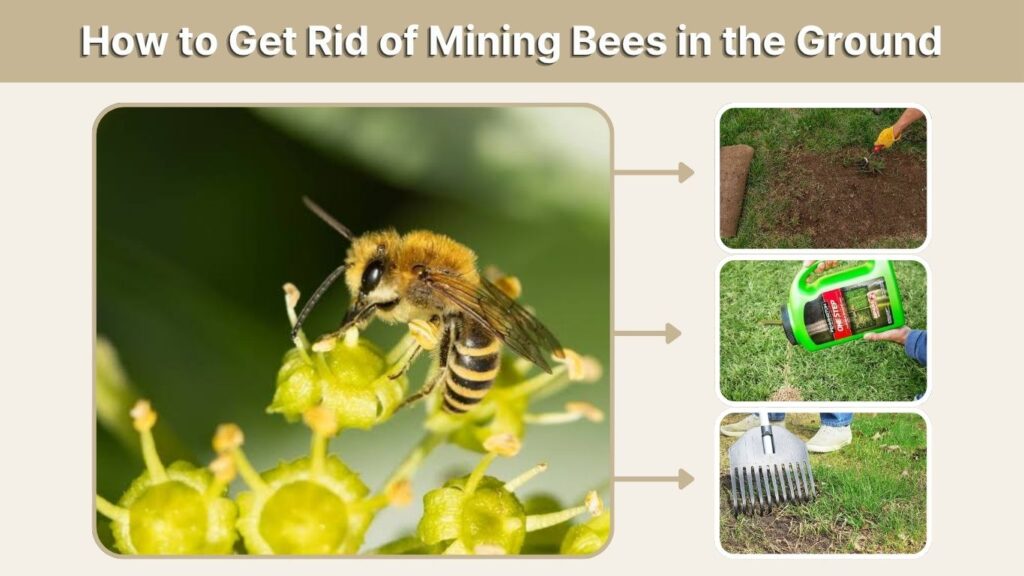
Ground nests can appear alarming because hundreds of bees may seem to occupy one lawn. In reality, you may be seeing many independent nests concentrated together.
Most populations remain active above ground for only a relatively short seasonal period.
Wait Until the Nesting Season Ends
When possible, simply allow the current nesting cycle to finish.
Adults usually disappear after their breeding period. The immature bees develop underground and emerge during a later season.
Once surface activity has stopped, repair the area by filling depressions, adding vegetation, reseeding the lawn, or changing moisture conditions.
This approach avoids harming beneficial pollinators while reducing the likelihood that the site will be reused.
Repair Bare Lawn Areas
For lawn infestations, focus on the conditions that attracted the bees.
Remove excessive thatch if necessary, improve turf density, reseed thin patches, and maintain appropriate irrigation.
A thick lawn is one of the most effective long-term ways to discourage ground-nesting bees from using residential turf.
Use Temporary Barriers After Activity Ends
In small problem areas, you can cover or landscape exposed soil once the bees are no longer actively entering nests.
For example, a garden bed might be planted more densely, while a pathway could receive an appropriate permanent surface.
Do not place plastic or other airtight materials over active nests, as this can trap and kill developing insects.
How to Get Rid of Mining Bees Without Killing Them
Nonlethal management is usually the best choice because mining bees are valuable pollinators. Many species help pollinate fruit trees, wildflowers, garden plants, and native vegetation.
They also rarely cause structural damage because their nests are normally excavated in soil rather than wood.
Use Habitat Modification
Focus on four changes:
- Increase vegetation coverage.
- Reduce exposed soil.
- Maintain appropriate soil moisture.
- Repair bare or unhealthy lawn sections.
These changes address why mining bees selected the site in the first place.
Avoid Disturbing Active Nests
Do not dig up nests, pour liquids into entrances, or repeatedly collapse the holes.
Disturbance may kill developing bees without solving the underlying problem. If the same dry bare soil remains available, other ground-nesting insects may eventually occupy it.
Let Them Complete Their Life Cycle
Mining bees are strongly seasonal.
What appears to be a permanent infestation may disappear naturally within several weeks. If the nests are located in an area that does not create a safety problem, waiting is often the simplest solution.
Should You Use Insecticide on Mining Bees?
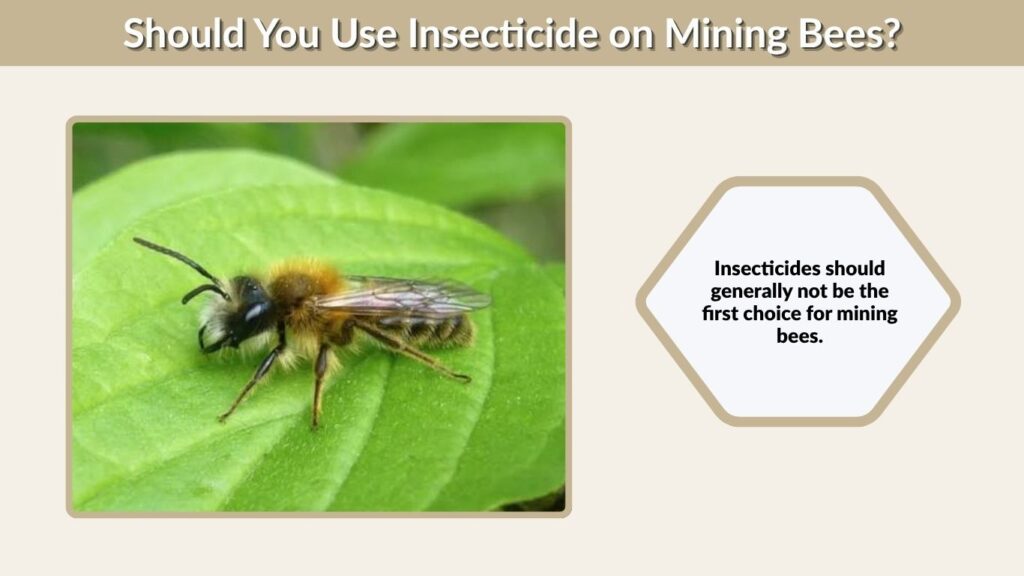
Insecticides should generally not be the first choice for mining bees. These insects are important pollinators, and unnecessary pesticide use can affect other bees and beneficial insects visiting nearby flowers.
Habitat modification provides a more sustainable solution because it removes the nesting conditions rather than simply killing active adults.
Avoid Homemade Chemical Treatments
Do not pour gasoline, bleach, ammonia, boiling water, or harsh household chemicals into bee nests.
These treatments can contaminate soil, damage lawns and plants, create safety hazards, and kill organisms that were not causing a problem.
If bees are creating a genuine safety concern near a school, doorway, playground, or another high-traffic location, contact a qualified pest or wildlife professional who can correctly identify the insect before recommending control.
How to Get Rid of Ashy, Tawny, and Ivy Mining Bees
Ashy mining bees, tawny mining bees, and ivy mining bees are different ground-nesting species, but the basic management principles remain similar.
They are generally solitary and important pollinators.
Ashy Mining Bees
Ashy mining bees are recognizable by their dark bodies and pale gray or whitish hairs. They frequently use lawns and other open ground.
Dense vegetation and reduced bare soil can make a property less attractive for nesting.
Tawny Mining Bees
Tawny mining bees have distinctive reddish or fox-colored hairs, particularly on females.
They can produce obvious soil mounds in lawns but normally do not seriously damage healthy grass.
Allow activity to finish before reseeding or repairing affected areas.
Ivy Mining Bees
Ivy mining bees are often closely associated with flowering ivy because adults collect its pollen.
They may form large nesting aggregations, but each female maintains her own nest.
Because they are useful late-season pollinators, tolerance is preferable wherever the nests do not create a safety problem.
Mining Bees vs. Ground Wasps
Before attempting control, make sure the insects are actually mining bees. Yellowjackets and some other social wasps can also nest underground and may behave very differently.
Key Differences
- Mining bees: Usually many separate small holes.
- Yellowjackets: Often many insects entering one main entrance.
- Mining bees: Generally calm around people.
- Yellowjackets: May aggressively defend their colony.
- Mining bees: Individual females maintain separate nests.
- Yellowjackets: Workers share and defend one colony.
If insects aggressively swarm when you approach a single ground entrance, avoid disturbing the area until the species is identified.
How to Prevent Mining Bees From Returning
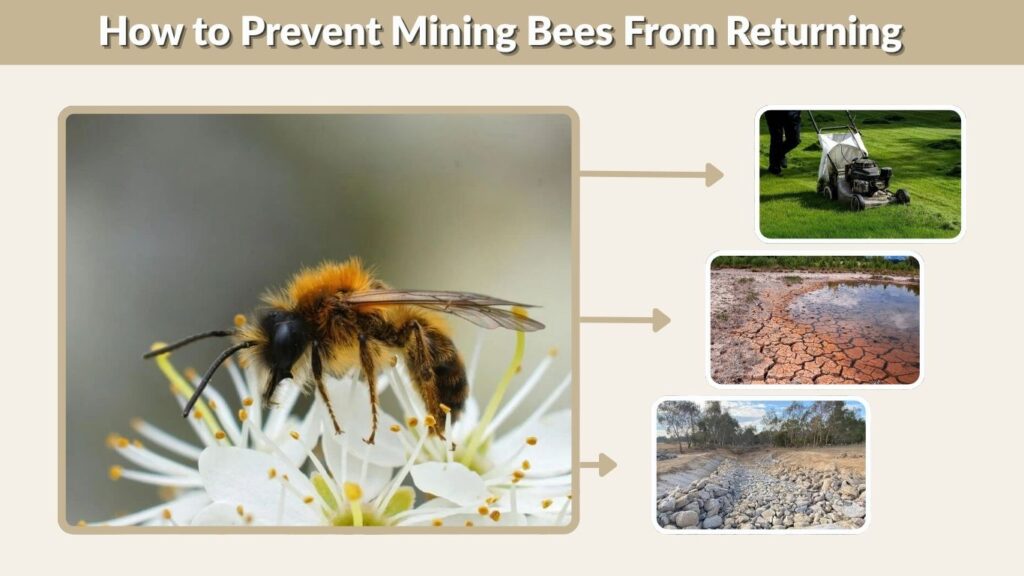
Long-term prevention depends on eliminating preferred nesting conditions. Simply filling existing holes may not work because the next generation can excavate new entrances nearby.
Prevention Tips
- Maintain thick, healthy grass.
- Overseed bare lawn patches.
- Water excessively dry areas appropriately.
- Grow groundcover over exposed soil.
- Repair soil erosion.
- Reduce unnecessary bare patches.
- Avoid repeatedly disturbing active nest areas.
- Maintain vegetation throughout previously affected locations.
After one or two seasons of improved ground coverage, nesting activity may decrease substantially.
When Should You Call a Professional?
Professional help is rarely necessary for ordinary mining bees. However, identification becomes important when insects are highly defensive or nests occur in locations where people cannot avoid them.
A professional can determine whether you actually have mining bees, yellowjackets, another ground-nesting bee, or a different insect.
Consider assistance when nests are immediately beside entrances, play areas, heavily used walkways, or locations frequented by people who are particularly vulnerable to stings.
FAQs
What is the best way to get rid of mining bees?
The best long-term method is to make the nesting area unsuitable by growing thicker vegetation, repairing bare lawn patches, and maintaining appropriate soil moisture.
How do I get rid of mining bees without killing them?
Allow the active nesting period to end, then reseed bare ground, improve lawn density, plant groundcover, and change soil conditions so future bees are less likely to nest there.
Will water get rid of mining bees?
Regular watering can discourage mining bees because many species prefer relatively dry soil. Keep the area moderately moist rather than flooding their nests.
Do mining bees damage lawns?
Mining bees may create small holes and soil mounds, but they generally cause little permanent lawn damage. Their tunnels can sometimes even contribute to soil aeration.
Do mining bees come back every year?
They may return to the same general area if soil conditions remain favorable. Improving grass coverage and reducing exposed, dry soil can help prevent repeated nesting.