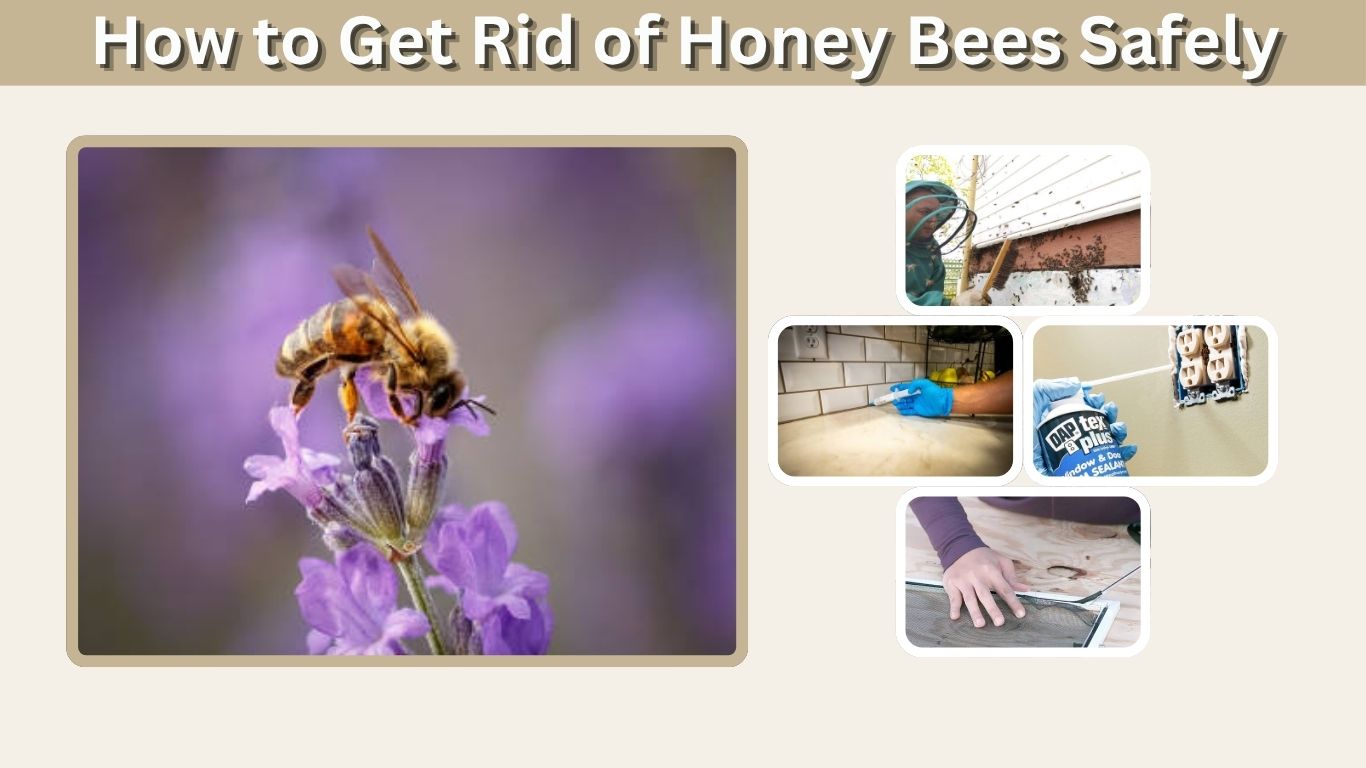
Honey bees are valuable pollinators, but a colony inside a wall, roof, tree cavity, or other part of your home can create safety and structural concerns. Searches around this topic especially focus on removing honey bees from homes, wall cavities, nests, outdoor areas, pools, and swarms. The safest approach is usually relocation or professional removal rather than simply killing the bees. This guide explains how to get rid of honey bees responsibly and prevent them from returning.
First, Determine What Kind of Bee Problem You Have
Before trying to remove anything, determine whether you have a temporary swarm, an established colony, or simply a few honey bees visiting flowers or water. These situations require very different responses. Honey bee swarms can look alarming but are often temporary, while colonies inside walls or roofs require much more careful removal. Extension guidance notes that swarms are usually less dangerous than established defensive colonies.
Signs of a Honey Bee Colony
Look for the following signs:
- Bees repeatedly entering the same hole or crack
- Heavy bee traffic throughout the day
- Bees entering siding, roofing, vents, or wall openings
- Buzzing sounds inside a wall or ceiling
- Bees remaining in the same location for days or weeks
- Visible wax comb in a cavity or exposed location
- Honey or wax odors near walls or ceilings
A dense ball of bees hanging from a branch, fence, or similar surface is more likely to be a swarm than an established hive.
Swarm vs Established Hive
A swarm occurs when part of an existing colony leaves with a queen to find a new nesting site. The bees temporarily cluster while scouts search for a suitable cavity. Swarms may move on naturally, although a beekeeper can often collect them.
An established colony is different. Bees have already begun constructing comb, raising brood, and storing honey. Removing that colony generally requires access to the nesting cavity and removal of more than just the adult bees.
How to Get Rid of a Swarm of Honey Bees
If thousands of honey bees suddenly appear on a tree branch, fence, shrub, or building, avoid spraying or disturbing them. Swarming is a natural part of honey bee reproduction, and the cluster may remain temporarily while scout bees search for a permanent nesting location.
What You Should Do
- Keep children and pets away.
- Do not shake or strike the swarm.
- Avoid spraying it with water or pesticides.
- Keep doors and nearby windows closed if necessary.
- Contact a local beekeeper or swarm-removal service.
- Photograph the swarm from a safe distance to help with identification.
A beekeeper may be able to collect the queen and workers and relocate the entire swarm into a managed hive.
Why Relocation Is Usually Better
Honey bees provide important pollination services, and established beekeepers often have the equipment and experience needed to handle swarms safely. Extension guidance recommends contacting local beekeepers for hive or swarm extraction when practical.
How to Get Rid of Honey Bees in a Wall
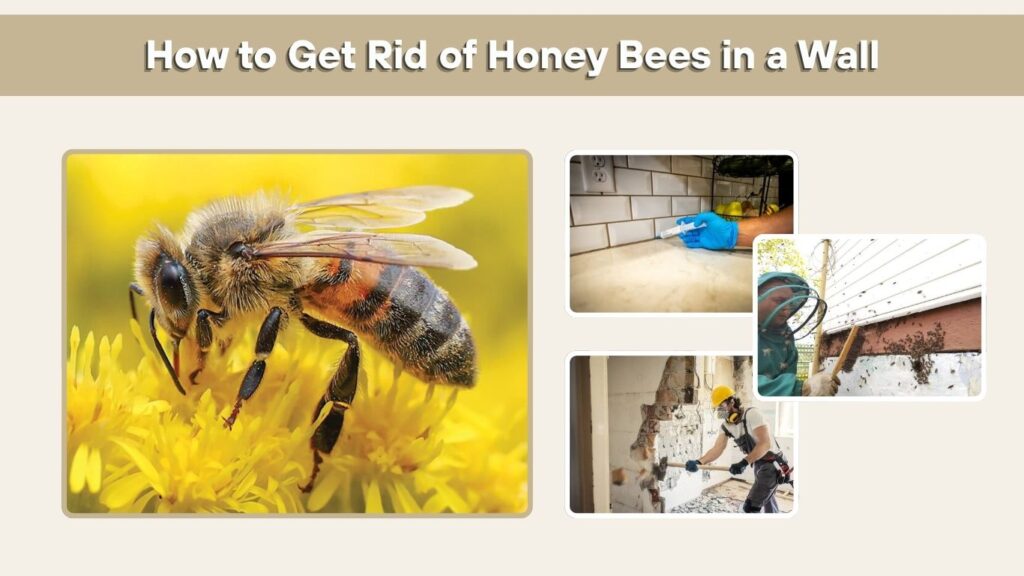
Wall colonies are among the most complicated honey bee problems. Your keyword set shows substantial interest specifically in honey bees inside walls, behind siding, and within houses.
Simply closing the entrance is usually a bad idea.
Why You Should Not Seal the Entrance Immediately
If you seal an active entrance while thousands of bees are still inside, they may search for another exit and potentially enter the living space. University Extension specifically advises never plugging entrance holes to active honey bee nests.
An established colony may also contain large amounts of:
- Honey
- Beeswax
- Brood
- Pollen
- Dead bees
- Comb material
Even if adult bees disappear, abandoned comb and honey can remain inside the structure.
Professional Wall Removal
A beekeeper experienced in structural removals or a qualified pest-management professional can determine where the comb is located and choose an appropriate removal method.
In many cases, proper removal involves opening part of the structure, removing bees and comb, cleaning the cavity, and repairing and sealing the original entry points afterward.
This is more work than spraying an entrance, but it addresses the colony itself rather than only the visible bees.
How to Get Rid of Honey Bees Around the House
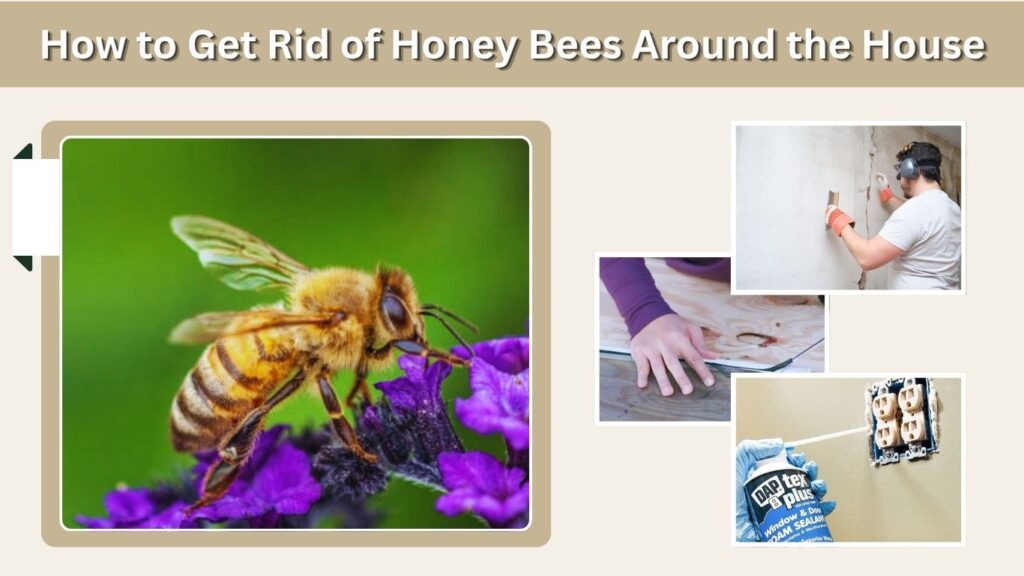
A few honey bees visiting your yard do not necessarily indicate an infestation. They may simply be collecting nectar, pollen, or water.
If bees are consistently entering your house, however, start by determining the source before using any treatment.
Make Your Home Less Attractive for Nesting
After any existing colony has been professionally removed:
- Seal cracks around exterior walls.
- Repair damaged window and vent screens.
- Caulk gaps around utility lines.
- Repair openings beneath siding.
- Screen suitable vents without blocking required ventilation.
- Inspect rooflines and soffits for openings.
- Seal gaps around windows and doors.
- Remove abandoned comb from previous colonies.
Do not seal an opening if an active colony is still using it. Exclusion comes after removal.
How to Get Rid of Honey Bees Outside
Outdoor honey bees usually do not need removal if they are simply visiting flowers. A colony in a tree or other location may also be left alone when it is well away from people and does not create a practical sting hazard.
Removal becomes more reasonable when a colony is close to entrances, playgrounds, walkways, pets, or people with serious sting allergies.
Honey Bees in a Tree
If bees have merely formed a temporary swarm on a branch, contact a beekeeper and allow them to collect it.
If bees are repeatedly entering a hollow section of the tree, they may have established a permanent colony. Removing a tree colony can be difficult because the honeycomb may be deep within the trunk. An experienced bee-removal professional is safer than trying to reach the colony yourself.
How to Get Rid of Honey Bees Around a Pool
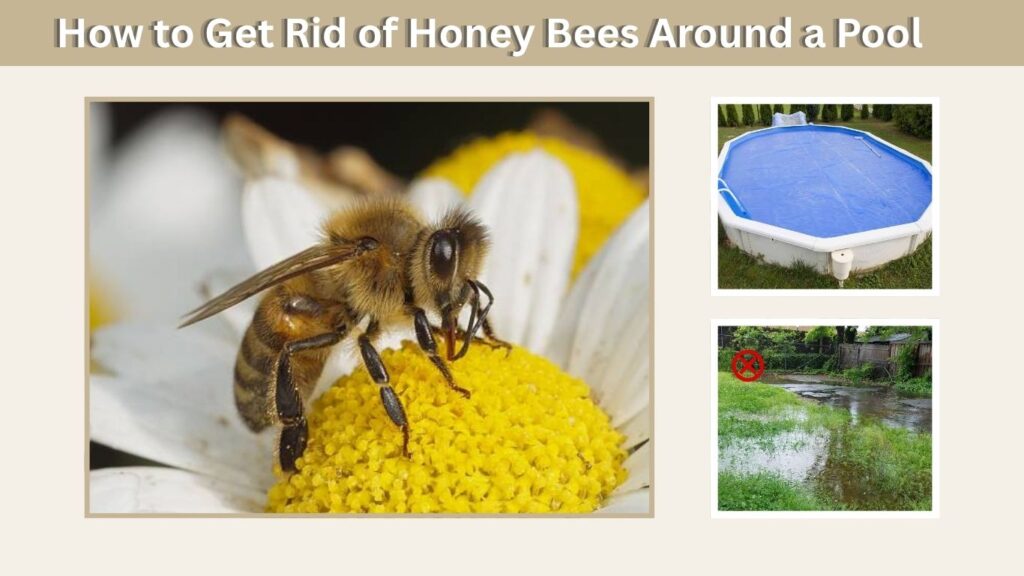
Honey bees need water, particularly during hot weather. Swimming pools may become attractive because they provide a consistent water source. Searches for removing honey bees around pools are another clear part of this topic.
Reduce Bee Activity Around the Pool
Instead of attempting to kill individual bees:
- Cover the pool when practical and not in use.
- Repair dripping faucets or plumbing nearby.
- Remove other unnecessary standing water.
- Clean sugary drink spills around seating areas.
- Avoid swatting bees that land near you.
- Check nearby structures for heavy bee traffic.
- Consider providing a reliable alternative water source farther from busy areas if local conditions make that practical.
If dozens or hundreds of bees continually visit the pool, a nearby colony may be present and worth locating.
Can You Get Rid of Honey Bees Naturally?
Some homeowners search for peppermint, vinegar, cinnamon, smoke, or other home remedies. These methods should not be considered reliable ways to eliminate an established honey bee colony.
Strong odors may temporarily affect individual bees, but they do not remove a queen, brood, honeycomb, and thousands of workers inside a protected cavity.
Natural Approach That Actually Helps
The most bee-friendly approach is usually:
Identify → relocate → remove comb → seal entry points.
For individual foraging bees, simply removing food or water attractants may be enough. For a swarm, contact a beekeeper. For an established structural colony, arrange professional removal.
This approach deals with the underlying problem while reducing unnecessary pesticide exposure to pollinators. EPA recommends strategies that minimize pesticide exposure to bees and emphasizes following pesticide labels whenever such products are used.
What About Africanized Honey Bees?
Africanized honey bees require extra caution. Visually, they can be extremely difficult to distinguish from other honey bees without specialized analysis, but colonies may respond much more defensively to disturbance.
If You Suspect an Aggressive Colony
Do not attempt to open, spray, knock down, smoke, or relocate it yourself. Keep people and pets away and contact an experienced pest-control or bee-removal professional.
If a large number of bees begin attacking, move quickly into an enclosed building or vehicle rather than stopping nearby to fight them off.
Should You Use Insecticide on Honey Bees?
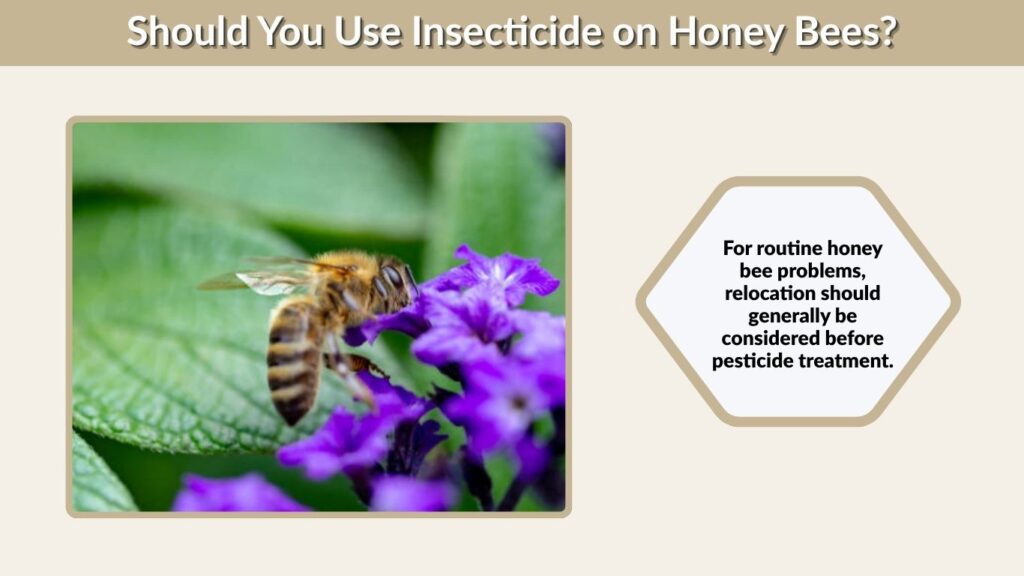
For routine honey bee problems, relocation should generally be considered before pesticide treatment. Honey bees are important pollinators, and killing a removable colony may be unnecessary.
If professional control requires an insecticide because relocation is impractical or a colony presents a significant hazard, only appropriately registered products should be used according to their labels. EPA notes that pesticide labels specify approved uses and measures intended to reduce risks to bees and other pollinators.
How to Prevent Honey Bees From Returning
Preventing another colony from occupying the same structure is easier once the existing bees and comb have been completely removed.
Long-Term Prevention Tips
- Inspect exterior walls every spring.
- Seal holes large enough for bees to enter.
- Replace damaged screens.
- Maintain soffits, fascia, roofing, and siding.
- Cover appropriate openings with suitable screening.
- Remove abandoned honeycomb.
- Repair structural gaps promptly.
- Monitor areas where colonies previously nested.
Old nesting cavities can remain attractive to future swarms, so proper cleanup and exclusion are important parts of successful removal.
FAQs
How Do You Get Rid of Honey Bees Without Killing Them?
Contact a local beekeeper or professional bee-removal service. Swarms can often be collected and relocated, while established colonies may require removal of both the bees and their comb.
How Do You Get Rid of Honey Bees in a Wall?
Do not seal the entrance while the colony is active. An experienced professional may need to access the wall cavity, remove the bees and comb, clean the area, and seal entry points afterward.
Will Honey Bees Leave on Their Own?
A temporary swarm may move away after scouts locate a suitable nesting cavity. An established colony containing comb, brood, and honey is much less likely to simply leave.
What Is the Best Way to Get Rid of a Honey Bee Nest?
For an accessible swarm or colony, professional relocation is usually preferable. Structural nests require particular care because remaining honeycomb can continue creating problems after adult bees are gone.
How Can I Keep Honey Bees From Nesting in My House Again?
After the existing colony is completely removed, seal cracks, repair screens, fix siding and roof gaps, and monitor previous entry locations. Preventing access to suitable cavities is one of the most effective long-term strategies.