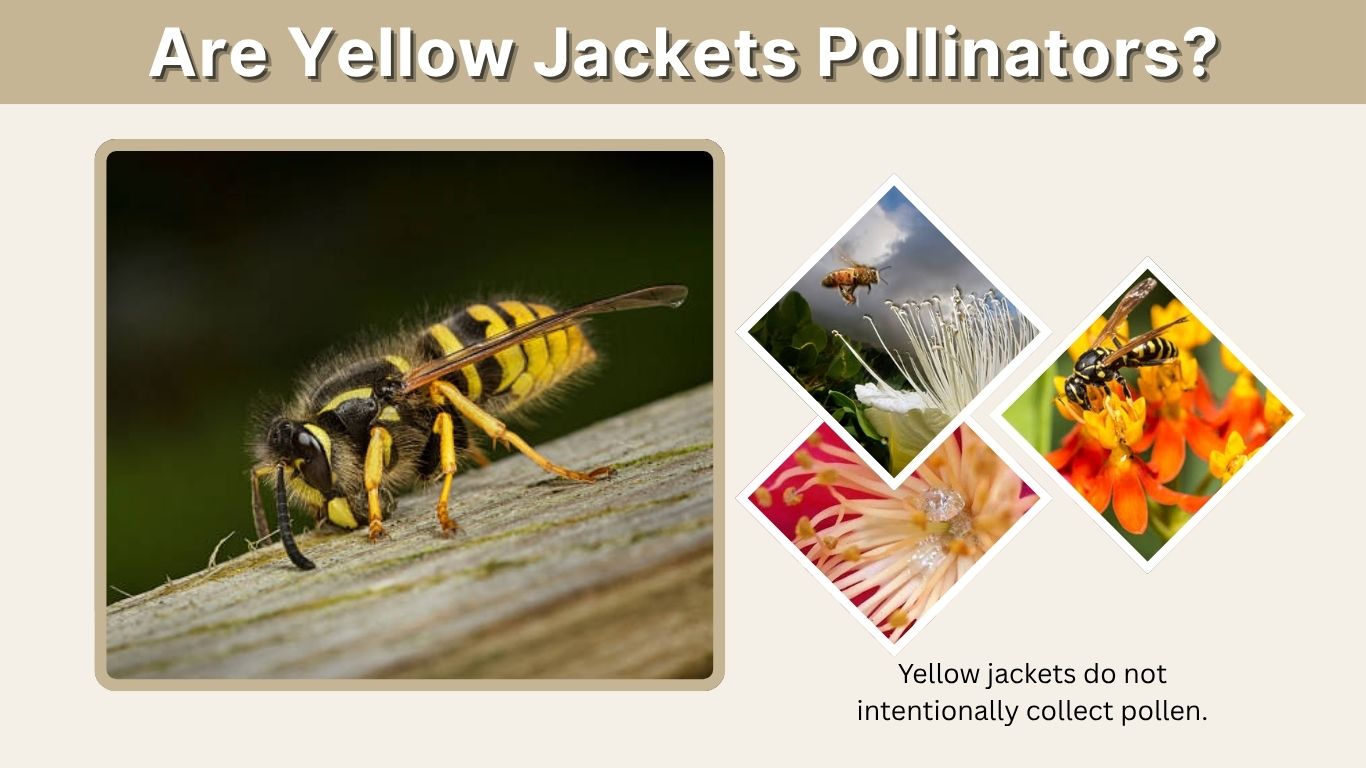
Yellow jackets are best known for their painful stings and habit of visiting outdoor meals, but they also have a beneficial side. Yellow jackets are pollinators, although they are not as efficient or important as bees. While searching flowers for nectar, pollen can stick to their bodies and move between blossoms. Yellow jackets also provide valuable natural pest control by hunting flies, caterpillars, and other insects. Understanding their ecological role can help you decide when a nest should be left alone and when it presents a genuine safety risk.
Are Yellow Jackets Pollinators?
Yes, yellow jackets are considered pollinators because adult workers visit flowers to drink nectar. As they walk across a flower’s reproductive structures, small amounts of pollen may attach to their bodies. When they visit another flower of the same species, some of that pollen can be transferred.
However, yellow jackets are generally incidental or secondary pollinators. Pollination is not their primary activity, and they lack the specialized pollen-carrying structures found on many bees. The USDA notes that yellow jackets occasionally visit flowers for sugar but do not have pollen baskets or specialized pollen brushes.
Wasps are sometimes overlooked in discussions about pollination, but research increasingly recognizes that they contribute to pollination in natural and managed ecosystems.
Are Yellow Jackets Bees or Wasps?
Yellow jackets are social wasps, not bees. In North America, the name generally refers to species in the genera Vespula and Dolichovespula. They live in colonies containing a queen, workers, and developing larvae.
Yellow jackets are sometimes called “yellow jacket bees” or “meat bees,” but these names are misleading. Their smooth, brightly patterned bodies, narrow waists, predatory diet, and ability to sting repeatedly distinguish them from most familiar bees.
| Feature | Yellow Jackets | Bees |
| Insect group | Social wasps | Bees |
| Main adult energy source | Nectar and other sugary foods | Nectar |
| Food collected for young | Insects and other protein | Pollen and nectar |
| Pollen structures | No pollen baskets | Many species have pollen baskets or dense hairs |
| Pollination efficiency | Low to moderate | Usually moderate to high |
| Body appearance | Relatively smooth and shiny | Often hairier |
| Sting behavior | Can sting repeatedly | Varies by species |
How Do Yellow Jackets Pollinate Flowers?
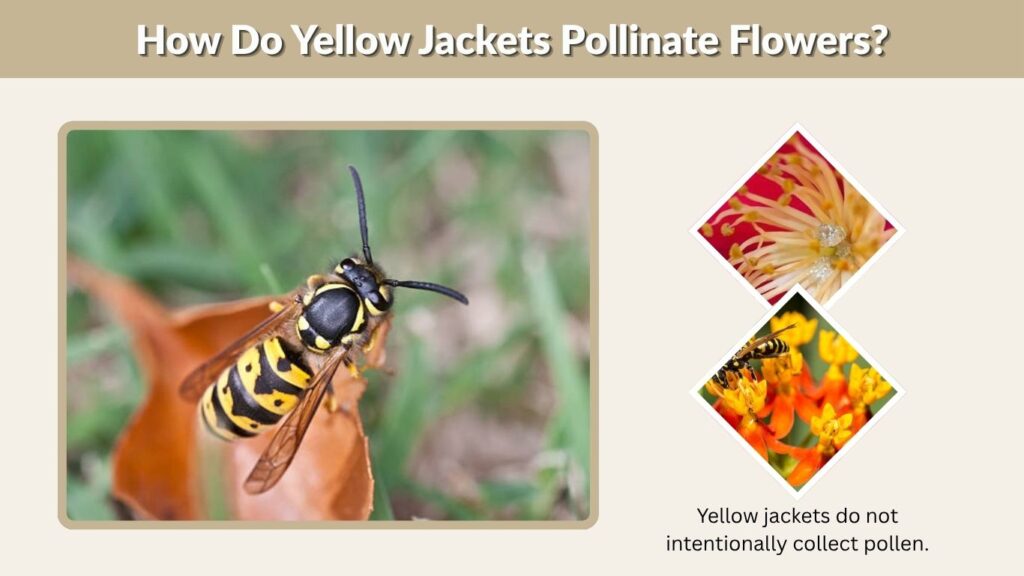
Yellow jackets do not intentionally collect pollen. Pollination occurs as a side effect of nectar feeding.
Visiting Flowers for Nectar
Adult yellow jackets need carbohydrates for energy. They obtain sugar from flower nectar, ripe fruit, tree sap, aphid honeydew, soft drinks, and other sweet substances. Flower visits may become especially noticeable when natural sugar sources are abundant or when colonies need more energy.
Many wasps visit accessible flowers with shallow or exposed nectar because their mouthparts are less suited to reaching nectar inside deep, tubular blossoms. Penn State Extension lists asters, golden Alexander, boneset, fleabane, and rattlesnake master among flowers that commonly attract wasps.
Carrying Pollen Between Blossoms
While feeding, a yellow jacket may brush against pollen-producing anthers. Loose pollen sticks to its legs, head, thorax, or abdomen. The insect can then deposit some of that pollen on the stigma of another flower.
Yellow jackets have fewer dense body hairs than bees, so they normally carry less pollen. Nevertheless, repeated visits by numerous workers can still contribute to the reproduction of flowering plants.
Pollinating in Late Summer and Fall
Yellow jacket activity often becomes more noticeable during late summer and early fall, when colonies reach their largest size. At this time, workers frequently search for sweet foods.
Their visits may provide some pollination to late-blooming plants when the abundance of certain other insects is declining. Yellow jackets are also attracted to overripe apples, grapes, raspberries, and sugar-rich aphid honeydew.
Are Yellow Jackets Good Pollinators?
Yellow jackets can be useful pollinators, but they are generally not as effective as bees.
Bees have several adaptations that make them especially efficient:
- Dense or branched hairs that capture pollen
- Pollen baskets or pollen-carrying hairs in many species
- Frequent movement between flowers
- Active collection of pollen for their larvae
- Strong flower-recognition and foraging behavior
Yellow jackets visit flowers primarily to obtain nectar rather than pollen. Their smoother bodies collect fewer grains, and they may quickly switch from flowers to fruit, prey, carrion, or human food.
Therefore, yellow jackets should be viewed as supplementary pollinators. They add diversity and resilience to the pollinator community, but they do not replace honey bees, bumble bees, solitary bees, butterflies, moths, or other major pollinating insects.
Are Ground Yellow Jackets Pollinators?
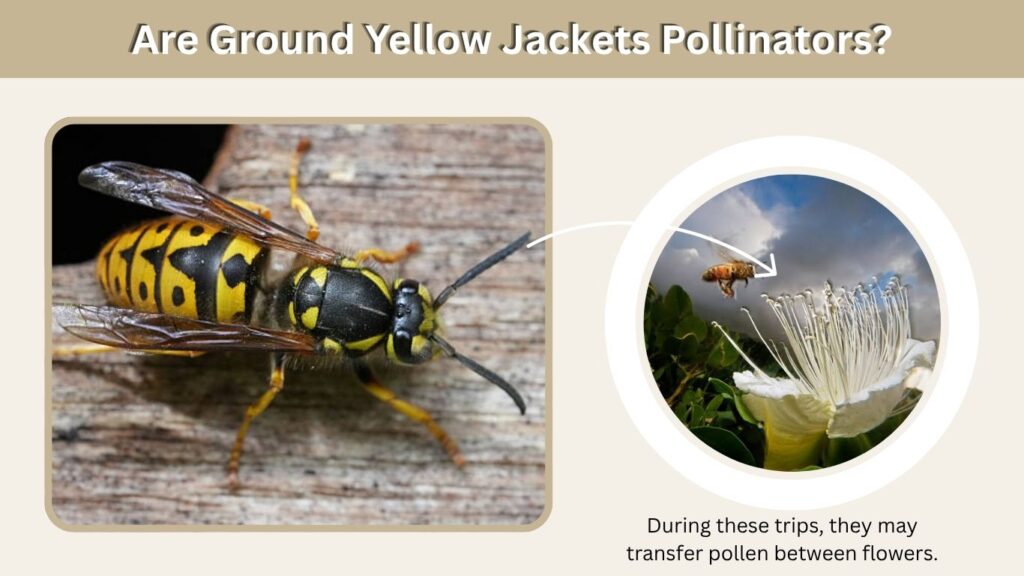
Ground yellow jackets can pollinate flowers just like species nesting above ground. The nest location does not determine whether workers visit flowers.
Many yellow jacket species build underground nests inside abandoned rodent burrows, cavities, or protected spaces. Workers leave the nest during the day to search for nectar, sugary liquids, and insect prey. During these trips, they may transfer pollen between flowers.
A ground nest can contain many workers entering and leaving through one opening. This concentrated traffic distinguishes a yellow jacket colony from solitary ground-nesting wasps, which usually maintain separate individual nest holes.
Although ground yellow jackets may provide pollination and pest control, nests near pathways, playgrounds, doors, gardens, or frequently used lawns can create a serious stinging risk.
Are Eastern Yellow Jackets Pollinators?
Eastern yellow jackets (Vespula maculifrons) are also incidental pollinators. Workers may visit flowers for nectar and accidentally carry pollen between them.
However, their larger ecological contribution may come from predation. Like other social yellow jackets, they capture insects and bring protein back to the colony to feed developing larvae. Their combination of flower visiting and insect hunting allows them to provide more than one ecosystem service.
Other Benefits of Yellow Jackets
Pollination is only part of the yellow jacket’s ecological value.
Natural Pest Control
Yellow jackets hunt a wide variety of insects, including:
- Flies
- Caterpillars
- Beetles
- Other soft-bodied insects
- Insect larvae
- Some garden pests
Social wasps can remove substantial numbers of insects from gardens and natural habitats. University of Minnesota Extension describes yellow jackets and hornets as beneficial predators that consume flies, caterpillars, beetles, and similar prey.
Cleaning Up Organic Material
Some yellow jackets scavenge dead insects, carrion, fallen fruit, and other organic material. This behavior helps recycle nutrients, although it also brings the wasps into contact with garbage cans, outdoor meals, and picnic areas.
Supporting Food Webs
Yellow jackets are eaten by birds, spiders, mammals, reptiles, and other predators. Their presence therefore supports larger ecological food webs, even though people may consider them troublesome around homes.
Are Yellow Jacket Traps Safe for Pollinating Bees?
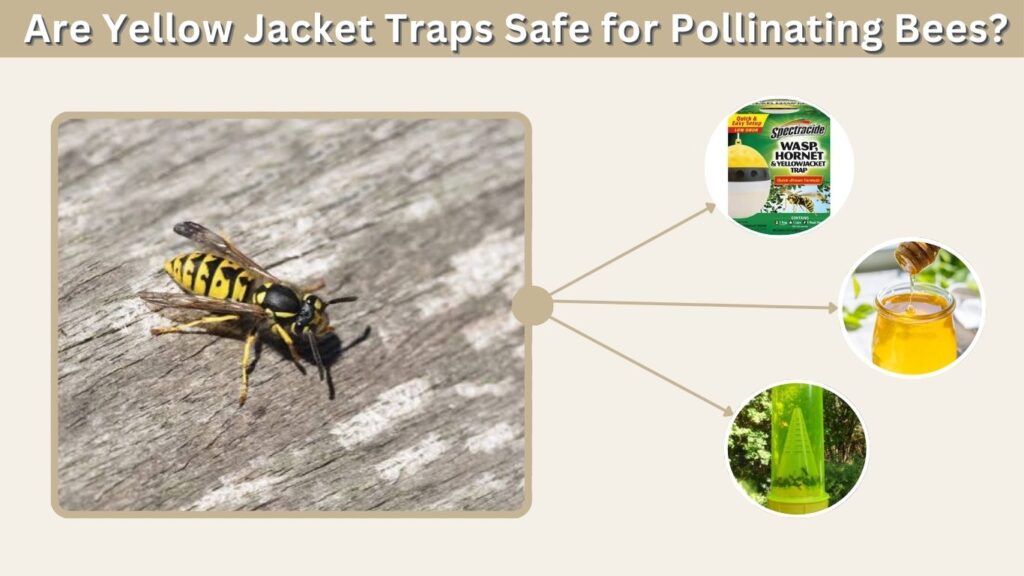
Commercial yellow jacket traps commonly use chemical attractants designed to appeal to certain social wasps. These targeted lures may be less attractive to bees than homemade traps filled with fruit juice, soda, syrup, or other general sugary bait. USDA researchers have developed attractant blends intended specifically for yellow jackets, hornets, and related social wasps.
However, no outdoor insect trap should automatically be considered completely harmless to non-target insects. Studies of wasp traps have found that trap-and-bait combinations can capture native insects as well as their intended targets.
To reduce the risk:
- Choose a commercial lure labeled specifically for yellow jackets.
- Avoid honey, flower-scented bait, or broad sugary mixtures.
- Place traps away from flowering plants.
- Check traps regularly for accidental catches.
- Use traps only where yellow jackets create a real safety problem.
- Never place a trap directly beside a nest entrance.
Traps may reduce the number of workers visiting a small area, but they rarely eliminate an established colony.
Should You Remove Yellow Jackets From Your Garden?
A yellow jacket nest does not always need to be destroyed. A colony located far from people, pets, doors, walkways, or work areas can often be left alone. The wasps may provide both pest control and limited pollination.
Removal is more reasonable when:
- The nest is beside a door or pathway.
- Children or pets regularly use the area.
- Someone nearby has a severe sting allergy.
- Workers are entering a wall or occupied structure.
- Yard work could accidentally disturb the nest.
- The colony repeatedly threatens people.
Do not block an active nest entrance or attempt to dig up an underground colony. Disturbed workers may emerge rapidly and defend the site. A licensed pest-control professional is the safer choice for large, concealed, or dangerously located nests.
FAQs
Do yellow jackets collect pollen?
Yellow jackets do not deliberately gather pollen to feed their young. Nevertheless, pollen can stick to their bodies while they drink nectar. They may then carry it to another flower, causing accidental pollination.
Are yellow jackets important pollinators?
They are beneficial secondary pollinators, but they are usually less important than bees. Their ecological value comes from a combination of limited pollination, insect predation, scavenging, and serving as food for other animals.
Are yellow jackets pollinators like bees?
Yellow jackets and bees can both transfer pollen, but they do so differently. Bees intentionally collect pollen and possess specialized hairs or pollen baskets. Yellow jackets visit flowers mainly for nectar and move pollen unintentionally.
Do yellow jackets pollinate vegetable gardens?
They may pollinate some open, nectar-rich flowers around a vegetable garden. However, their greater gardening benefit is often pest control because workers hunt caterpillars, flies, beetles, and other insects to feed their larvae.
Do yellow jackets make honey?
No. Yellow jackets do not produce or store honey like honey bees. Adults consume nectar and other sweet substances for energy, while workers collect insects and animal protein for the developing larvae inside their colony.