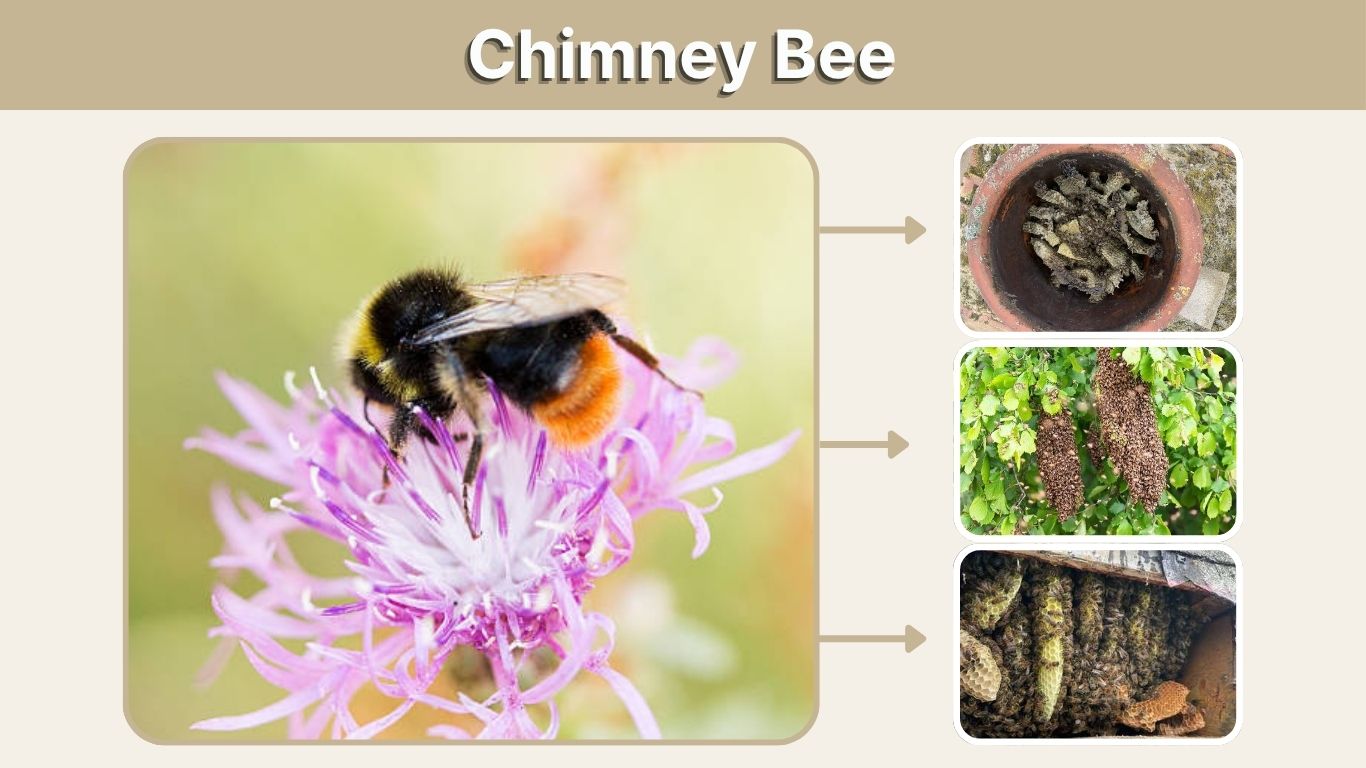
The term chimney bee can describe two very different situations. The Sunflower Chimney Bee (Diadasia enavata) is a solitary native bee that nests in soil and has nothing to do with house chimneys. Homeowners searching for “bees in chimney,” however, are usually dealing with honey bees that have entered a chimney flue or cavity and may establish a permanent colony. Knowing which situation you have is important because native chimney bees usually need no control, while an established honey bee colony may require professional removal.
What Is a Chimney Bee?
True chimney bees are solitary ground-nesting bees, including species in the genus Diadasia. They get their name from the small turret or chimney-like structures that some females build around nest entrances in soil. They are beneficial pollinators rather than structural pests. The best-known example is the Sunflower Chimney Bee, which is strongly associated with flowers in the sunflower family.
Sunflower Chimney Bee Identification
- Scientific name: Diadasia enavata
- Family: Apidae
- Body is robust and noticeably hairy
- Usually brownish or gray-brown
- Roughly 10–15 mm long
- Females gather pollen on their hind legs
- Often seen visiting sunflowers
- Nests individually in the ground
- Several females may nest close together
Although many nests can occur in the same patch of bare soil, each female generally maintains her own nest rather than living in a honey-bee-style colony.
What Do Sunflower Chimney Bees Eat?
Adults drink nectar, while females collect pollen to provision their offspring.
Sunflower Chimney Bees specialize strongly on members of the Asteraceae family. Sunflowers are particularly important, but they may also visit related flowers such as Coreopsis and other composites.
This specialization makes them useful native pollinators in areas where suitable flowers and nesting soil are available.
Why Are Honey Bees in a Chimney?
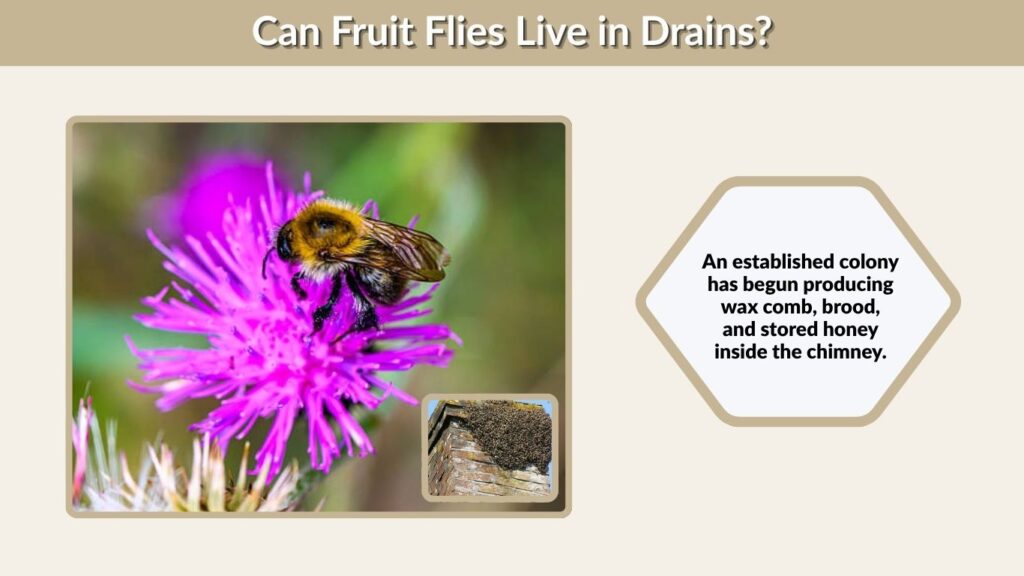
Honey bees naturally search for enclosed cavities when a colony reproduces by swarming. A chimney may resemble the hollow tree cavities they would otherwise use. Scout bees investigate potential nest sites, and if the chimney seems suitable, thousands of workers and a queen may move in. A temporary swarm and an established colony require very different responses.
Swarm vs Established Hive
A swarm is a group of bees traveling with a queen while searching for a permanent home. It may remain temporarily clustered for several hours or days.
An established colony has begun producing wax comb, brood, and stored honey inside the chimney.
Honey bees can occupy structural cavities for years once established, making early professional assessment much easier than dealing with a mature hive later.
Signs of a Bee Hive in the Chimney
Watch for:
- Large numbers of bees around the chimney top
- Bees repeatedly entering the same flue
- Bees appearing inside the fireplace
- Buzzing from the chimney or walls
- Bees entering rooms through vents or gaps
- Wax or honey odors
- Persistent activity lasting more than several days
- Repeated swarming around the chimney
Continuous traffic into one opening is more suggestive of an established nest than a temporary swarm.
Bees or Wasps in the Chimney?
Identification should come before removal. Honey bees and wasps may use cavities in buildings, but they behave differently and require different management. Honey bees are generally hairy and golden-brown, whereas many yellowjackets and similar wasps have smoother bodies with more sharply defined yellow-and-black markings.
Honey Bee Identification
- Hairy body
- Golden-brown coloration
- Dark abdominal bands
- Approximately 1/2 inch long
- Carries pollen on hind legs
- Often numerous around one cavity entrance
Honey bees can sting when defending their colony, so avoid standing directly beside the entrance or trying to open the nest yourself.
Why Identification Matters
If the insects are honey bees, a beekeeper or specialist may be able to relocate the colony.
Wasps require a different approach.
If you cannot confidently identify the insects, take a clear photo from a safe distance and have it identified before attempting treatment. University of Minnesota Extension specifically recommends confirming that structural bees are actually honey bees before deciding on removal.
What to Do if Bees Are in Your Chimney
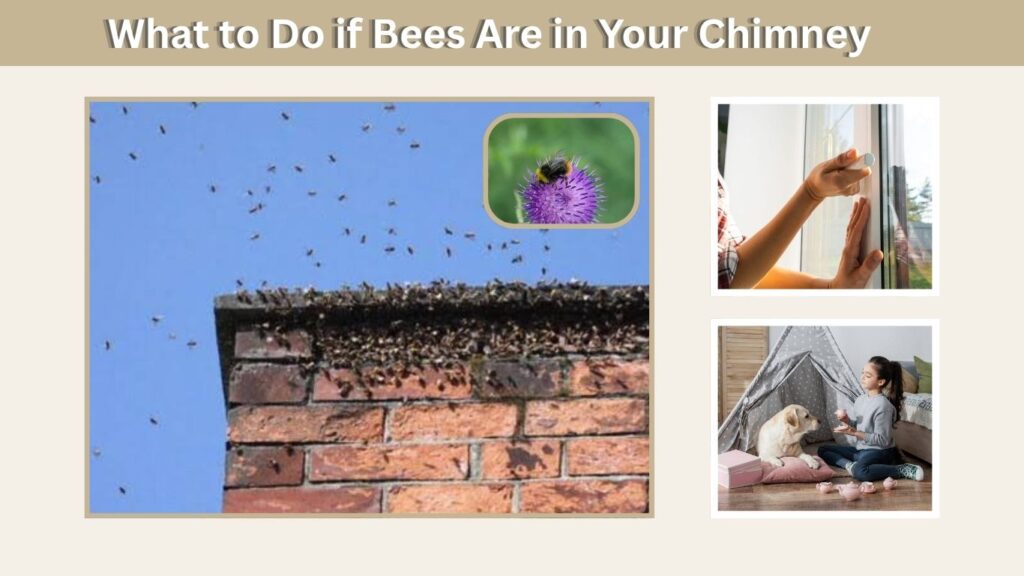
Discovering hundreds of bees around a chimney can be alarming, but DIY treatment can make the situation worse. The safest approach is to keep people and pets away from the entrance, stop using the fireplace, identify the insects, and contact someone experienced with structural bee colonies.
Immediate Steps
- Keep windows near the chimney closed.
- Keep children and pets away.
- Do not block the bee entrance.
- Avoid disturbing the chimney.
- Do not use the fireplace until the situation is assessed.
- Photograph a bee safely if identification is uncertain.
- Contact a beekeeper or structural bee-removal professional.
Never seal a live honey bee colony inside a structure. Bees may search for another exit and can potentially emerge into occupied areas of the house.
How to Remove Bees From a Chimney
Removal difficulty depends on whether the bees have only recently arrived or have already constructed a comb. A newly arrived swarm may sometimes be relocated relatively easily. Once comb, brood, and honey are established deep inside the chimney, access can become much more complicated.
Professional Bee Removal
A professional may need to:
- Determine the colony’s exact location
- Access the chimney safely from the roof
- Remove or relocate adult bees
- Remove wax comb
- Remove stored honey
- Remove brood material
- Clean the nesting cavity
- Inspect the chimney
- Seal suitable entry points afterward
Structural honey bee removal may require both beekeeping and construction skills. Extension guidance emphasizes that all nesting material should be removed because residual honey and comb can attract future swarms, insects, and other pests.
Why You Should Not Just Kill the Bees
Killing the adults does not remove the hive.
Large established colonies can contain substantial amounts of wax and honey. If these materials remain inside a structure, honey can leak or ferment, while wax moths, ants, beetles, and other pests may move into the abandoned comb.
Chemical treatment can also contaminate honey remaining inside the cavity.
Can You Smoke Bees Out of a Chimney?
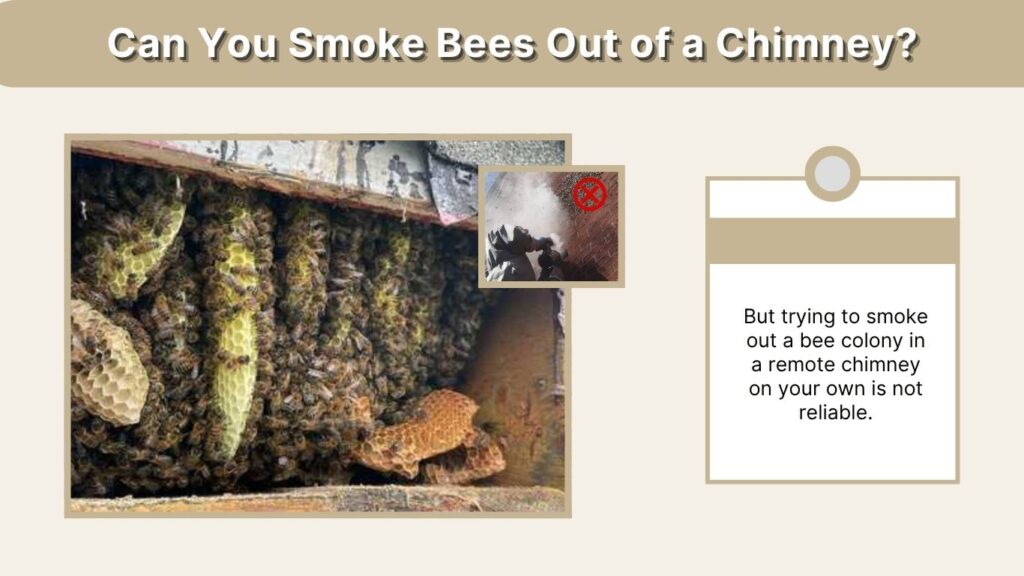
Smoke is an important professional beekeeping tool, but attempting to smoke an inaccessible chimney colony out yourself is unreliable and may create additional problems. Likewise, smoke bombs and improvised insecticidal treatments are poor substitutes for locating and removing the actual colony.
Should You Light a Fire?
Do not light a fireplace fire simply to force bees from a chimney.
An established colony may contain wax comb, honey, and thousands of insects inside the flue. The chimney should be evaluated and cleared before being returned to normal use.
Professional removal is especially important when the location of the comb is unknown.
How Long Will Bees Stay in a Chimney?
The answer depends on whether the bees are swarming or nesting. A temporary swarm may remain only hours or days while scouts search for another cavity. Once a colony accepts the chimney and begins producing comb, however, it can potentially remain there long term.
Temporary Swarm
Swarms often pause while scout bees search for a permanent home. During this phase, honey bees are generally less defensive because they have no established nest to protect.
Established Colony
A colony with comb is unlikely to disappear simply because you wait a few days.
Established honey bee colonies in buildings can persist for years and may produce additional swarms in later seasons.
How to Keep Bees Out of a Chimney
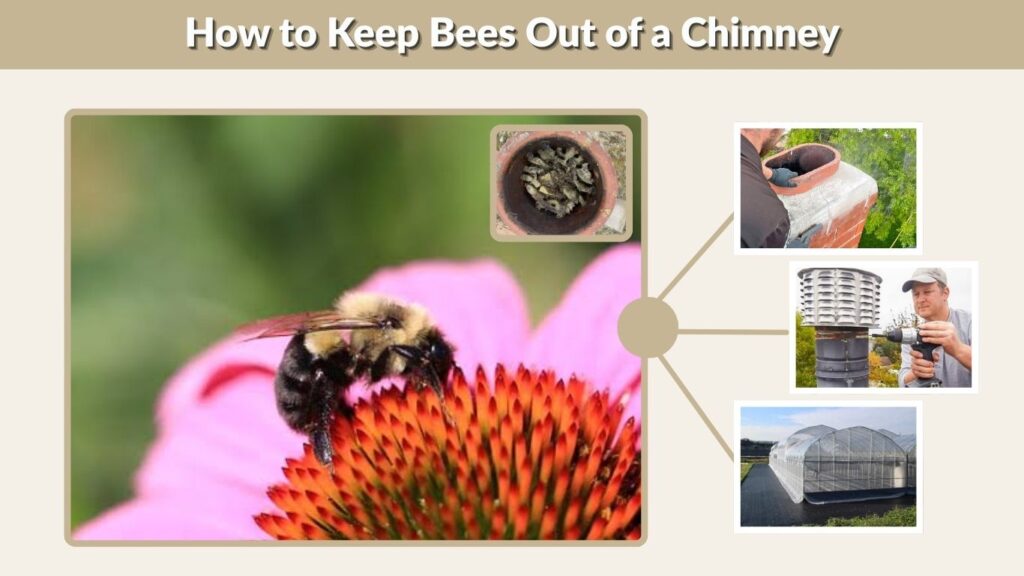
Prevention should begin only after all bees, comb, and honey have been removed. Closing an entrance while bees are still inside can redirect them into other parts of the house. Once removal is complete, preventing access greatly reduces the chance of another swarm using the same cavity.
Bee-Proofing a Chimney
- Install a properly fitted chimney cap.
- Use suitable insect-resistant screening where permitted.
- Repair cracks in chimney masonry.
- Seal unused structural openings.
- Replace damaged caps or flashing.
- Inspect the chimney regularly.
- Remove the old comb completely.
Any cap or mesh must be appropriate for the specific chimney and should not interfere with ventilation or exhaust. A qualified chimney professional can recommend a safe configuration.
How Much Does Chimney Bee Removal Cost?
There is no universal price because chimney construction and colony accessibility vary enormously. Removing a newly arrived swarm may be relatively straightforward, while extracting an established colony from an inaccessible chimney can require roof work, opening structural sections, comb removal, cleaning, and repairs.
What Affects the Cost?
Important factors include colony size, chimney height, roof accessibility, amount of comb, whether structural access is required, and whether repairs are included.
Extension guidance notes that established structural colonies can be expensive to remove because both beekeeping and construction expertise may be required.
FAQs
1. Is a Sunflower Chimney Bee the same as a bee living in a chimney?
No. The Sunflower Chimney Bee (Diadasia enavata) is a solitary ground-nesting native bee. Honey bees found inside household chimneys are a completely different issue.
2. Do honey bees really build nests in chimneys?
Yes. Honey bee swarms search for enclosed cavities and may establish colonies inside chimneys and other building voids.
3. Should I block the chimney entrance when bees are inside?
No. Never seal an active colony inside. Bees may find another route and potentially enter the house.
4. Can I light a fire to get bees out?
It is better not to use the fireplace until the colony and any comb have been professionally assessed and removed.
5. How do I permanently keep bees out of my chimney?
Have the entire colony, honey, and comb removed, clean the cavity, repair openings, and install an appropriate chimney cap or protective screening without restricting proper ventilation.