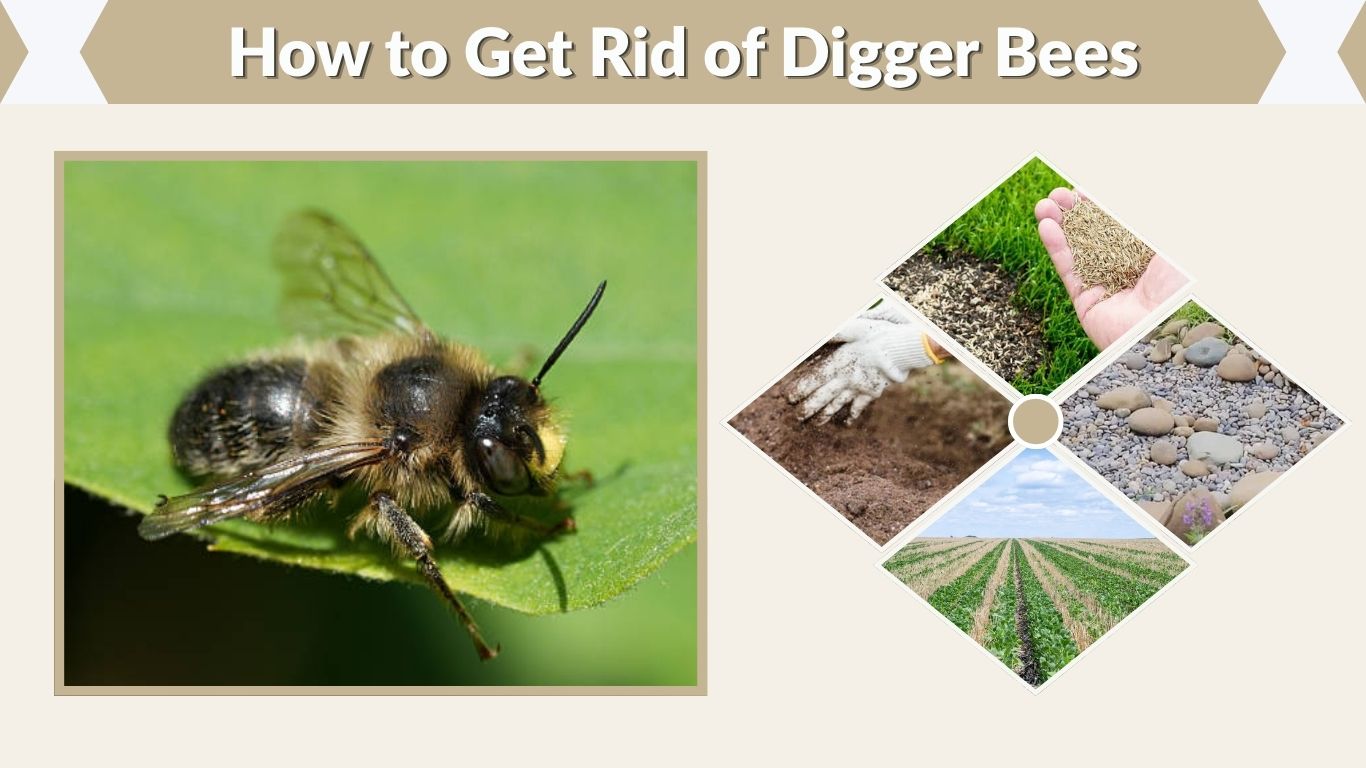
Digger bees can suddenly appear in lawns, gardens, sandy areas, and patches of bare soil, sometimes creating dozens of small holes close together. Although their activity may look alarming, most digger or ground-nesting bees are solitary, beneficial pollinators that rarely sting. In many cases, the best solution is simply to tolerate them until their short nesting season ends. When bees are nesting in a high-traffic or inconvenient area, changing the soil and vegetation is usually the safest long-term way to discourage them.
Should You Get Rid of Digger Bees?
Before trying to remove digger bees, confirm that they are actually solitary ground-nesting bees rather than yellowjackets or another defensive social wasp.
Digger bees generally do not form large defensive colonies. Each female usually excavates and provisions her own underground burrow, although many females may nest beside one another when soil conditions are ideal. Their visible activity often lasts only two to four weeks.
Signs You Have Digger Bees
Common characteristics include:
- Small round holes in the ground
- Loose soil piled around entrances
- Numerous bees flying close to the lawn
- Bees entering separate holes
- Hairy or fuzzy bodies
- Little aggression toward people
- Activity concentrated in sunny, exposed soil
Ground-nesting bees often prefer areas with thin grass, bare soil, and good drainage. Their burrow openings may be around 1/4 inch wide, although dimensions vary among species.
Best Way to Get Rid of Digger Bees
The best long-term solution is habitat modification. Instead of trying to kill individual bees, make the area unsuitable for future nesting.
Digger bees favor accessible soil. Covering bare ground and improving lawn density can encourage females to choose another location the following season.
1. Grow a Thicker Lawn
One of the most effective approaches is to eliminate patches of exposed soil.
You can:
- Overseed thin lawn areas.
- Repair bare patches.
- Encourage healthy grass growth.
- Add appropriate soil amendments.
- Use groundcovers where turf will not grow.
- Apply mulch to suitable garden areas.
University of Maryland Extension recommends maintaining dense, vigorous turf because ground-nesting bees have greater difficulty digging when the soil surface is covered.
This approach takes longer than spraying insects, but it addresses the reason they selected the location.
How to Get Rid of Digger Bees Naturally
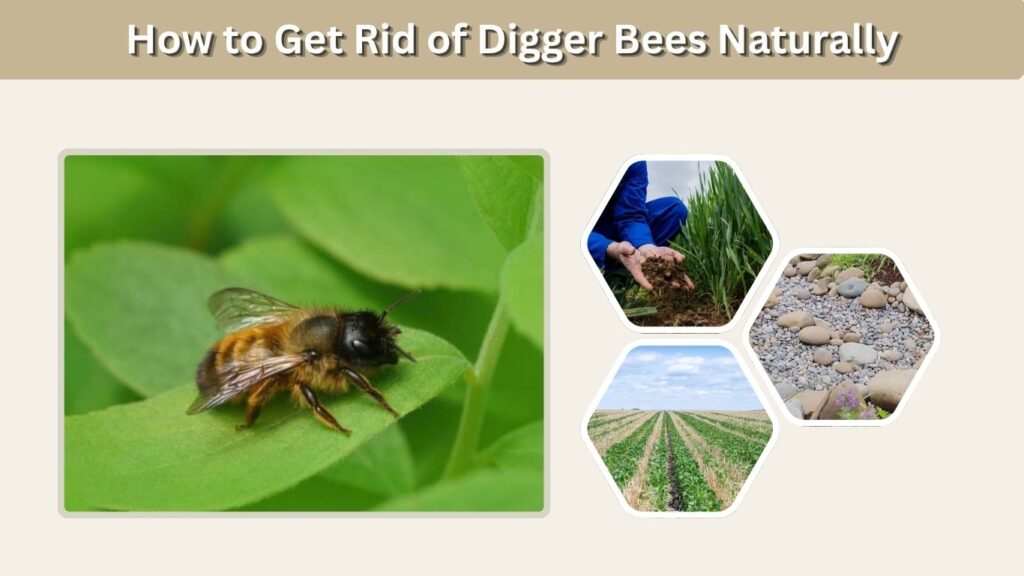
Natural control should focus on changing nesting conditions rather than killing beneficial pollinators.
2. Adjust Soil Moisture
Many ground-nesting bees favor dry, well-drained soil.
Occasionally watering a dry nesting area can make it less attractive to females searching for new nest locations. University of Maryland Extension notes that heavier sprinkler watering may discourage nesting behavior, although excessive watering can damage turf and encourage disease.
Do not continually flood active nests. Instead, use proper lawn irrigation as part of improving overall turf conditions.
3. Cover Bare Soil
Bare soil provides easy access for digging.
Depending on the location, cover exposed patches with:
- Healthy turf
- Suitable groundcover plants
- Mulch in landscaped beds
Colorado State University recommends altering the soil surface and establishing plant cover as long-term approaches where large numbers of digger bees repeatedly nest.
Can You Remove Digger Bees From a Lawn?
Yes, but in most situations actual physical removal is unnecessary.
Adults normally remain active for only a short period before disappearing naturally. The next generation develops underground and may emerge the following year.
Wait Until Their Active Season Ends
If the bees are not creating an immediate safety problem, allowing them to complete their nesting cycle is usually the simplest option.
Try to avoid:
- Digging up active burrows
- Tilling the nesting area
- Pouring chemicals into holes
- Sealing entrances while females are active
- Applying unnecessary lawn insecticides
University of Maryland advises allowing burrows to close naturally because disturbing the soil can destroy developing young underground.
Once activity stops, improve the lawn or cover bare areas to discourage another nesting aggregation.
How to Get Rid of Ground Digger Bees Around Walkways
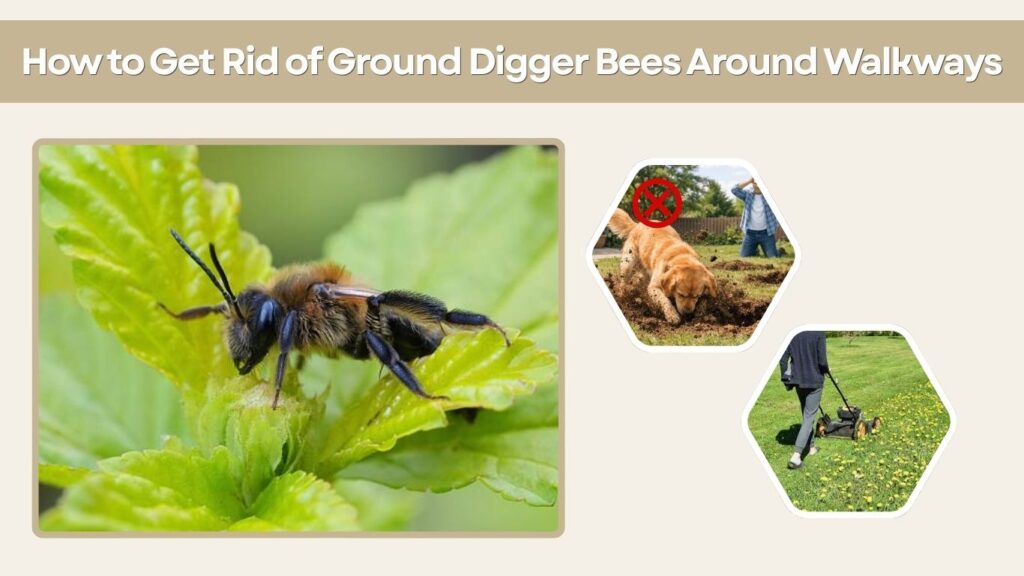
A nesting site beside a doorway, playground, patio, or heavily traveled path can be more concerning than one in an unused corner of a lawn.
Fortunately, solitary digger bees are generally much less defensive than yellowjackets.
Reduce Contact With the Nesting Area
During the short active period:
- Keep children away from dense nesting areas.
- Keep pets from digging at burrows.
- Temporarily redirect foot traffic.
- Mow when bee activity is lower.
- Mark the nesting patch so it is not accidentally disturbed.
After the bees finish nesting, modify the soil surface or establish thicker vegetation.
This allows you to solve the problem without destroying beneficial pollinators.
Will Digger Bees Sting?
Female ground-nesting bees can usually sting, but they rarely do unless handled or trapped.
Males may aggressively-looking hover around nesting areas while searching for females, but male bees do not possess stingers.
Are Digger Bees Dangerous?
For most people, they pose little threat.
Solitary bees do not have a large communal hive filled with workers, honey, and brood to defend. Consequently, they are much less defensive than social yellowjackets.
However, anyone with a serious allergy to bee venom should avoid close contact with unidentified stinging insects and may want professional identification when nests occur near frequently used areas.
Do Home Remedies Get Rid of Digger Bees?
Many online remedies recommend vinegar, boiling water, soap mixtures, gasoline, bleach, or other substances. These approaches can harm bees, plants, soil organisms, pets, or people and may not prevent new bees from nesting in the same suitable soil.
What About Vinegar or Soap?
Spraying individual adults does not address why the bees selected the location.
If bare, dry soil remains available, other females may return or new bees may use the site next season.
Habitat modification is therefore a much better long-term strategy than trying to kill individual bees.
Never pour gasoline, fuel, bleach, or mixtures of household chemicals into bee holes.
Should You Use Insecticide for Digger Bees?
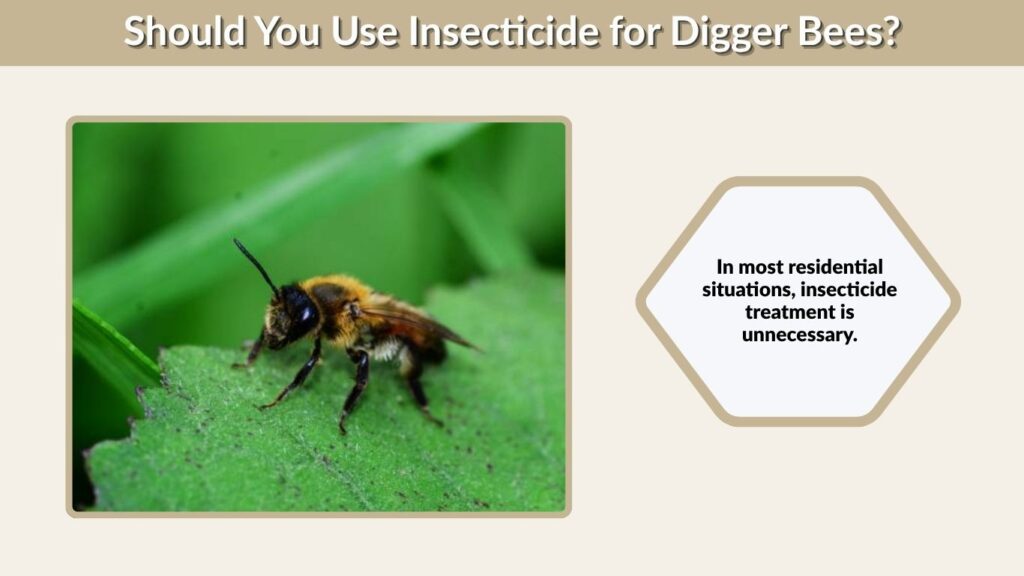
In most residential situations, insecticide treatment is unnecessary.
Ground-nesting solitary bees are important pollinators, and University of Maryland Extension specifically recommends avoiding pesticides when possible. Even products marketed as organic can harm beneficial insects.
Why Spraying May Not Solve the Problem
There may be many separate burrows rather than one central colony.
Colorado State University notes that insecticides can be ineffective for long-term control because multiple nest entrances and brood cells may exist, allowing some developing bees to survive and emerge later.
Changing the nesting habitat provides more lasting results.
Digger Bees vs Yellowjackets
Correct identification is extremely important before approaching underground nests.
Digger Bees
Digger bees are generally:
- Hairy or fuzzy
- Solitary
- Important pollinators
- Unlikely to sting
- Associated with many separate holes
Yellowjackets
Yellowjackets are social wasps. Many workers may enter and exit one underground nest, and they can defend the colony aggressively.
If numerous yellow-and-black wasps repeatedly enter one main hole, do not automatically assume they are harmless digger bees.
Professional identification is appropriate when you are uncertain.
How to Prevent Digger Bees From Returning
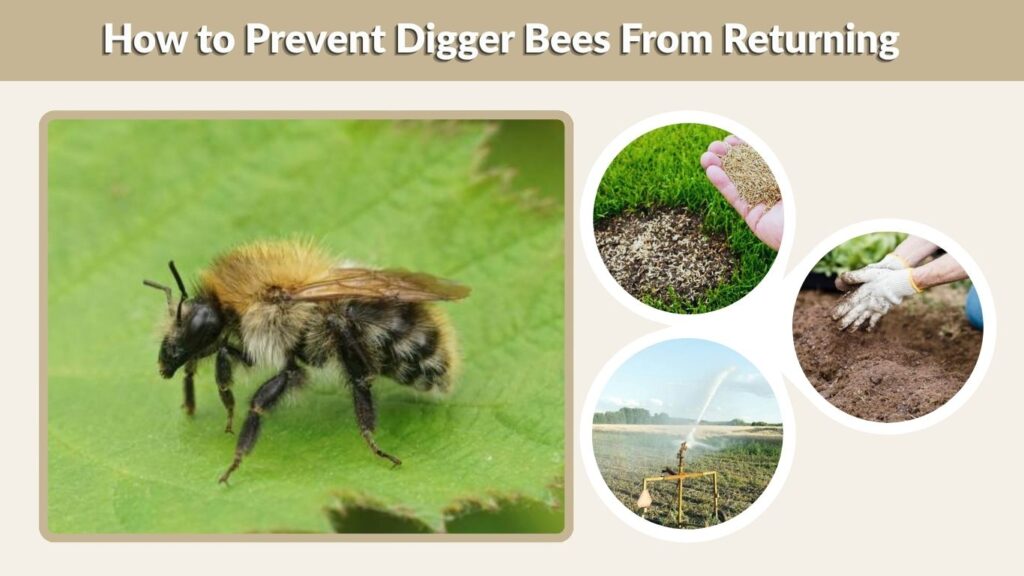
Preventing future nesting is usually easier than trying to remove bees after females have already created burrows.
Long-Term Prevention
Use these approaches:
- Maintain thick, healthy grass.
- Reseed thin areas.
- Cover persistent bare soil.
- Improve poor lawn conditions.
- Use groundcover where grass struggles.
- Change irrigation practices appropriately.
- Avoid repeatedly creating exposed sandy patches.
Ground-nesting bees commonly choose sparse, well-drained areas where soil is easy to access. Removing those conditions makes the site considerably less attractive.
When to Call a Professional
Most digger bee situations do not require pest control. Professional help becomes more reasonable when identification is uncertain or when nesting occurs where people cannot safely avoid the insects.
Consider Professional Help If
- Someone nearby has a severe sting allergy.
- Bees are directly beside a busy doorway.
- The nest is in a children’s play area.
- You suspect yellowjackets rather than solitary bees.
- Insects become defensive when approached.
- Large nesting aggregations repeatedly return to an unavoidable location.
A knowledgeable pest professional can first identify the insect and determine whether control is actually necessary.
FAQs
What is the fastest way to get rid of digger bees?
If there is no immediate danger, allow their brief nesting period to end and then cover bare soil with dense turf, groundcover, or appropriate mulch. Habitat modification provides better long-term control than killing adults.
How do I get rid of digger bees naturally?
Improve lawn density, eliminate exposed soil, and adjust irrigation so the area becomes less attractive for nesting. Avoid toxic home remedies.
Will watering get rid of digger bees?
Regularly moist soil can discourage some ground-nesting bees from choosing a site, but excessive watering can damage grass. It should be used as part of proper lawn management rather than flooding active nests.
Do digger bees come back every year?
They can return when the same bare, well-drained soil remains suitable. Improving vegetation and covering exposed ground reduces the likelihood of repeated nesting.
Should I kill digger bees?
Usually not. Most are valuable native pollinators, seldom sting, and remain visibly active for only a few weeks. When relocation is desirable, changing the habitat is generally the preferred approach.