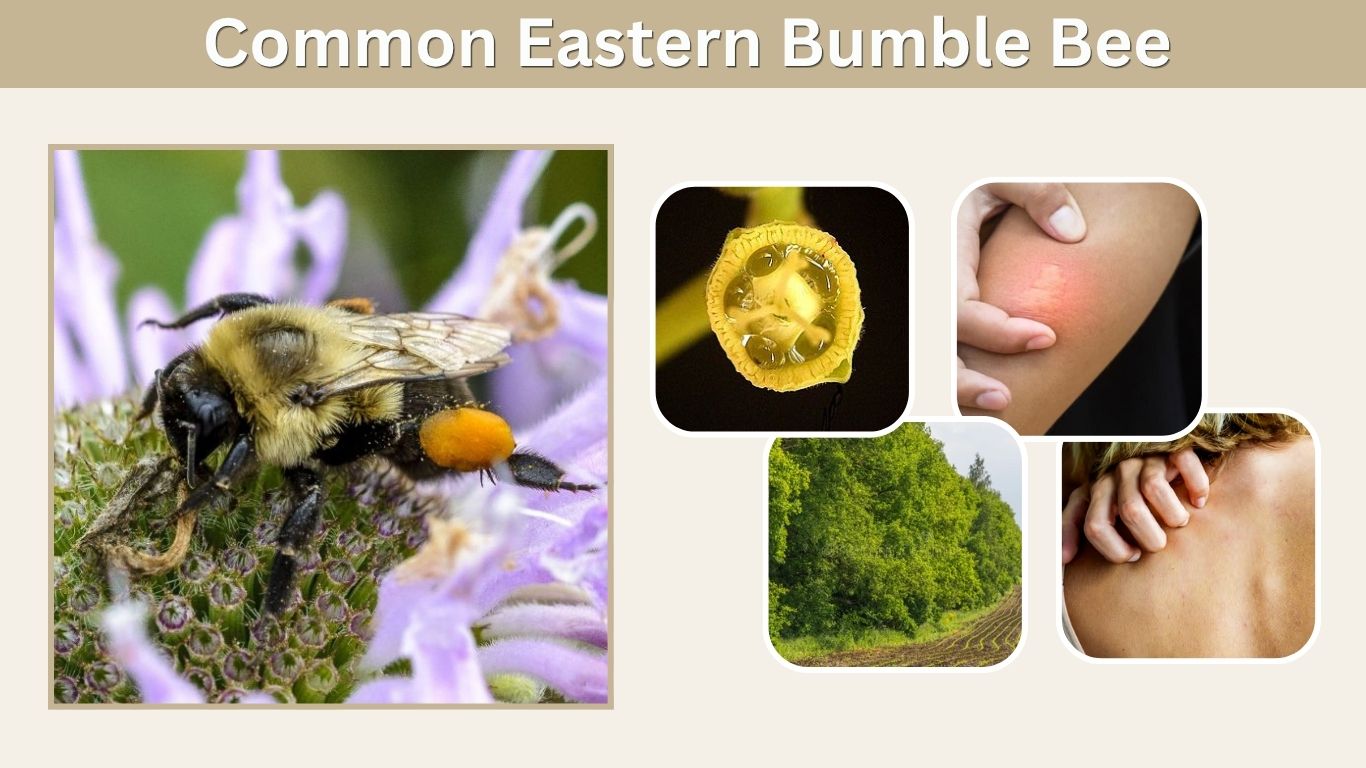
The common eastern bumble bee, Bombus impatiens, is one of the most frequently observed native bumble bees across eastern North America. Its fuzzy black body, yellow thorax, and single yellow abdominal band make it relatively easy to recognize. This adaptable social bee lives in forests, gardens, farms, parks, and urban areas, where it pollinates wildflowers and food crops. Colonies contain a queen, female workers, and males, but only newly produced queens survive the winter.
Common Eastern Bumble Bee Facts
The scientific name of the common eastern bumble bee is Bombus impatiens. It belongs to the order Hymenoptera and family Apidae, which also contains honey bees, carpenter bees, and other bumble bees.
| Feature | Description |
| Scientific name | Bombus impatiens |
| Family | Apidae |
| Order | Hymenoptera |
| Native range | Eastern North America |
| Queen size | Approximately 21–23 mm |
| Worker size | Approximately 9–14 mm |
| Male size | Approximately 12–14 mm |
| Diet | Nectar and pollen |
| Nest type | Usually an underground cavity |
| Colony cycle | Annual |
| Main role | Wildflower and crop pollination |
Common Eastern Bumble Bee Identification
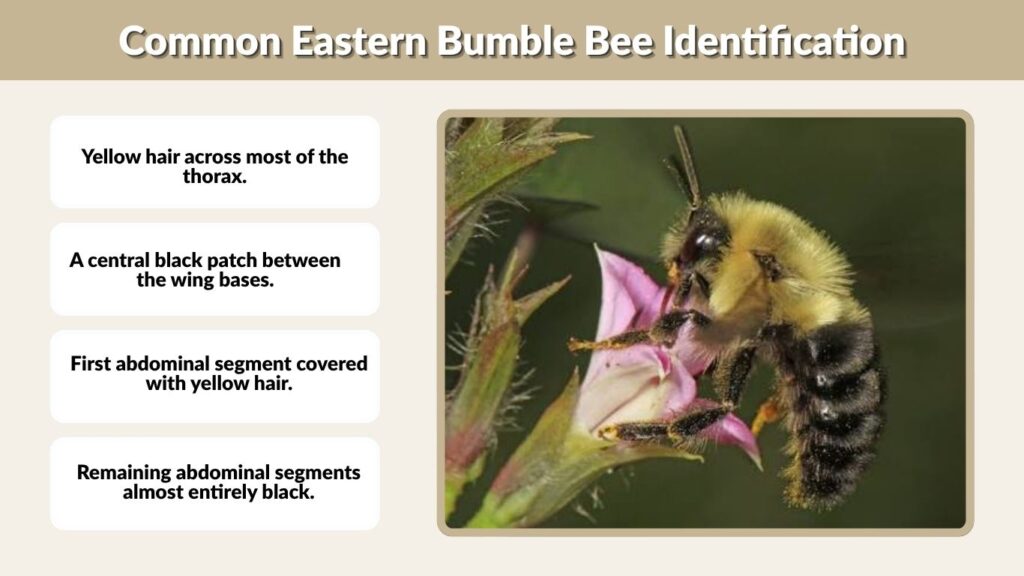
The common eastern bumblebee has a robust body covered with dense hair. Its basic color pattern is simpler than that of many other bumble bee species, which helps with identification.
Physical Appearance
- Yellow hair across most of the thorax
- A central black patch between the wing bases
- First abdominal segment covered with yellow hair
- Remaining abdominal segments almost entirely black
- Black head in queens and female workers
- Yellow facial hair in males
- Four transparent or slightly darkened wings
- Six strong, hairy legs
- Pollen basket on each hind leg of females
- Medium-length, evenly distributed body hair
The yellow hair on the first abdominal segment followed by an otherwise black abdomen is the species’ most useful field mark. The black patch on the thorax may appear rounded or slightly teardrop-shaped.
Common Eastern Bumblebee Face
Female workers and queens normally have mostly black facial hair. Males have a noticeable patch of yellow hair in the middle of the face, sometimes described as a yellow beard or mustache.
The bee has two large compound eyes on the sides of its head, antennae used to detect scents and environmental cues, and strong mouthparts for gathering nectar and handling pollen.
Common Eastern Bumble Bee Size
Size varies greatly according to caste. Queens are the largest members of the colony, while female workers vary considerably because differences in larval feeding affect their adult size.
Queens generally measure 21–23 millimeters, workers approximately 9–14 millimeters, and males around 12–14 millimeters. Queens also tend to have darker wings, while workers generally have clearer wings.
Male vs Female Common Eastern Bumble Bee
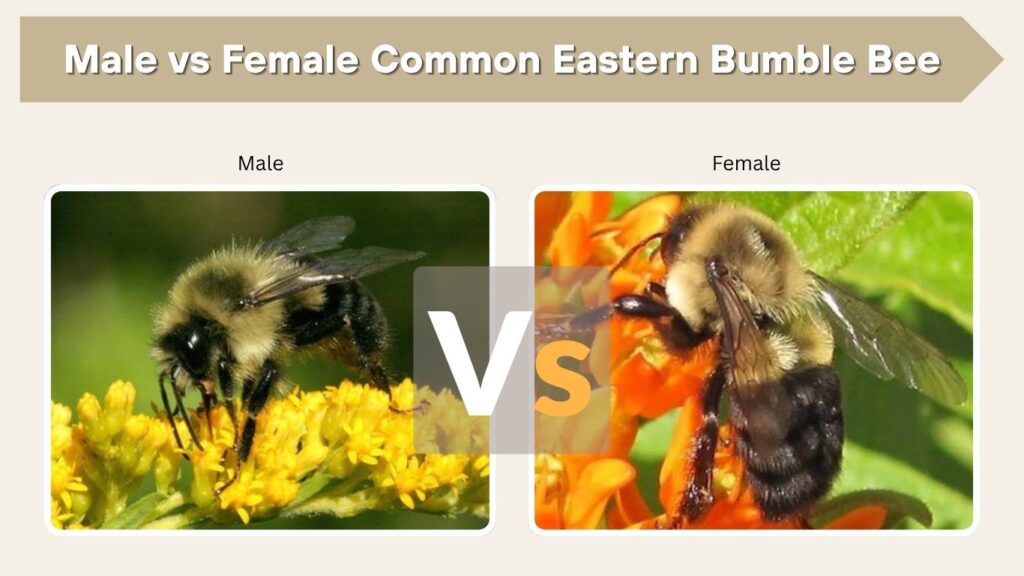
Male and female common eastern bumble bees share the same basic black-and-yellow body pattern, but their faces, legs, size, and behavior differ.
| Feature | Female queen or worker | Male |
| Facial hair | Mostly black | Noticeably yellow |
| Pollen baskets | Present | Absent |
| Sting | Present | Absent |
| Antennal segments | Shorter antennae | Relatively longer antennae |
| Main role | Nest founding, brood care, or foraging | Mating |
| Abdomen | Six visible upper segments | Seven visible upper segments |
| Size | Queens largest; workers variable | Usually larger than small workers |
Female workers collect pollen in smooth, flattened structures called corbiculae, or pollen baskets, on their hind legs. Males do not gather pollen for a colony and therefore lack these specialized baskets.
Common Eastern Bumblebee Queen
The queen is the colony’s largest bee and the only individual that establishes a new nest. A fertilized queen spends winter alone underground before emerging in spring.
After finding a suitable cavity, she gathers pollen and nectar, constructs food-storage pots, lays her first eggs, and warms and feeds the developing brood. The first daughters become workers and gradually take over foraging, nest maintenance, and care of later offspring. The queen then remains mostly inside the nest producing eggs.
Queen vs Worker
Queens and workers are both female and have similar markings. The easiest difference is size: queens may be more than twice as long and considerably heavier than small workers.
A queen also has a relatively broad abdomen and powerful appearance. Early in spring, a large common eastern bumble bee flying low over the ground may be a queen searching for a nest.
Common Eastern Bumblebee Habitat and Range
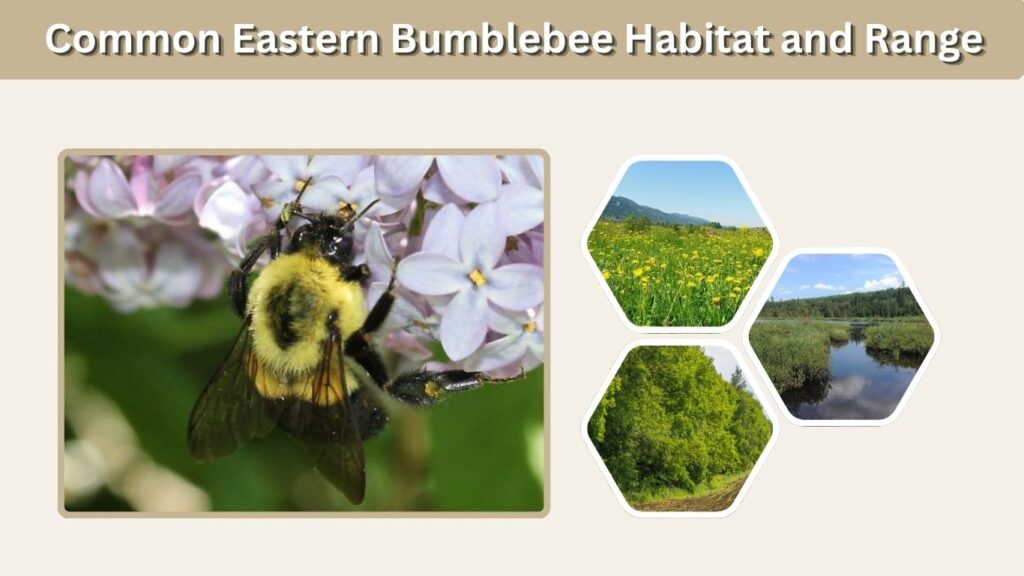
The common eastern bumble bee is widespread across the eastern United States. Its traditional range extends approximately from Maine to the Dakotas and south from Ontario into Florida. Commercial movement has also introduced or established the species in some areas beyond its historical native distribution.
It occupies many habitats, including:
- Deciduous forests and woodland edges
- Prairies and meadows
- Wetlands and marsh edges
- Farms and orchards
- Residential gardens
- Parks and urban landscapes
- Roadsides and other flowering open spaces
Its ability to use varied habitats and visit many flower species may help explain why it remains abundant in landscapes that have become unsuitable for more specialized bees.
Common Eastern Bumblebee Nest
Common eastern bumble bees usually build nests underground in abandoned rodent burrows or similar cavities. Colonies may also occupy leaf piles, spaces beneath wood, hay bales, patios, railroad ties, or other sheltered structures.
The nest contains waxy brood cells and small pots used to store nectar and pollen. Colony size changes throughout the season, beginning with a single queen and eventually growing to hundreds of bees under favorable conditions.
Common Eastern Bumblebee Diet and Pollination
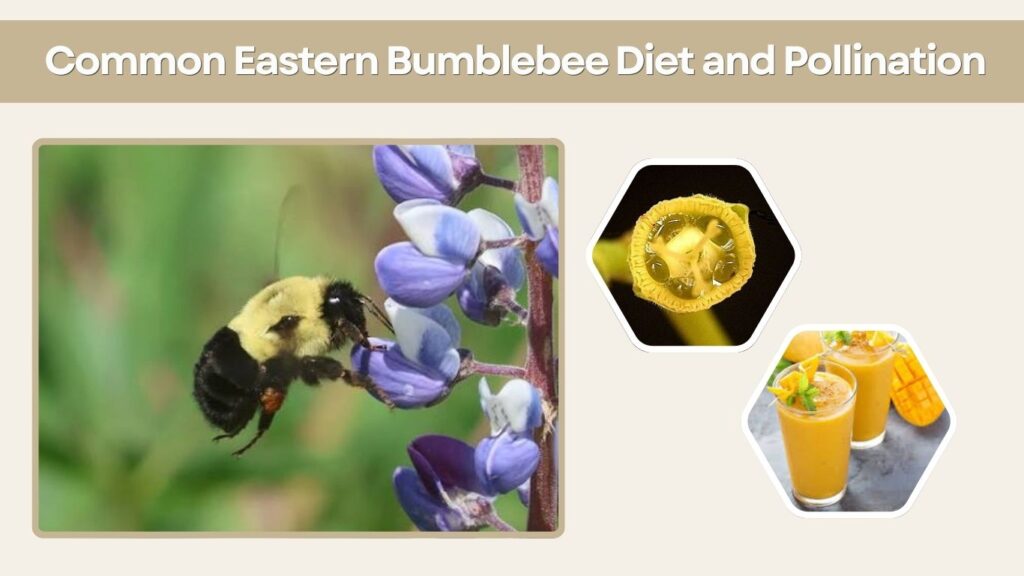
Adult common eastern bumble bees drink flower nectar for carbohydrates and collect pollen as a source of protein, fats, and other nutrients for developing larvae. They are generalist foragers that visit many flowering plants rather than depending on one species.
They frequently visit asters, goldenrods, clovers, sunflowers, blueberries, tomatoes, peppers, squash, pumpkins, and numerous garden flowers. They can also perform buzz pollination, gripping a flower and vibrating their flight muscles to release pollen trapped inside its anthers. This behavior makes bumble bees especially effective pollinators of tomatoes, blueberries, and related crops.
Life Cycle and Lifespan
The colony follows an annual cycle. A queen emerges from winter dormancy in spring, establishes a nest, and raises workers. Later in summer, the colony begins producing males and new queens.
The new queens leave, mate, and locate protected underground places in which to overwinter. The founding queen, workers, and males die by late fall or early winter. Only the newly fertilized queens continue into the following year, spending roughly six to nine months in winter diapause in colder regions.
A worker or male therefore lives for only part of one season, while a successful queen may live for approximately a year, including her long overwintering period.
Does the Common Eastern Bumble Bee Sting?
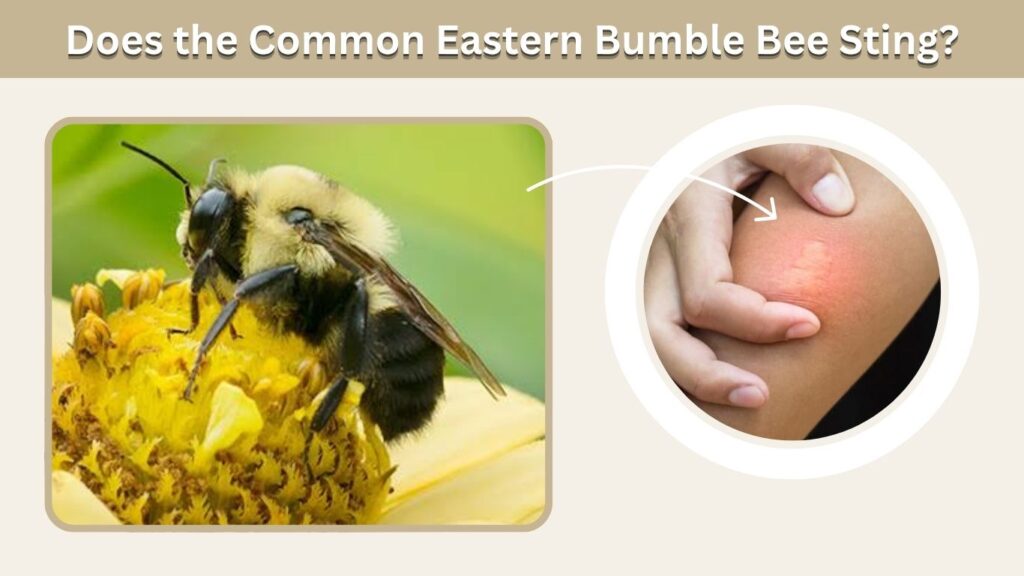
Female workers and queens can sting, but common eastern bumble bees are generally more interested in feeding or escaping than attacking people. Stinging is most likely when a bee is squeezed, stepped on, handled, or defending its nest.
Bumble bee stingers are smooth rather than strongly barbed, allowing a female to sting more than once. Males cannot sting because the stinger is a modified egg-laying structure found only in females.
Avoid blocking a nest entrance, digging near an active colony, or operating vibrating equipment beside it. People with known insect-sting allergies should maintain additional distance and seek emergency care if symptoms of a severe allergic reaction occur.
Common Eastern Bumblebee vs Carpenter Bee
The eastern carpenter bee is often confused with the common eastern bumble bee because both are large, black-and-yellow bees.
A common eastern bumble bee has a densely hairy black abdomen. An eastern carpenter bee usually has a shiny, relatively hairless upper abdomen. Bumble bees generally nest in existing cavities, often underground, while carpenter bees excavate tunnels in wood.
FAQs
Is the common eastern bumble bee rare?
No. It remains one of the most common and widespread bumble bees in much of eastern North America. It adapts relatively well to gardens, farms, suburbs, and disturbed habitats, although local numbers still depend on flowers, nesting spaces, and pesticide exposure.
What do common eastern bumble bees eat?
Adults drink nectar and collect pollen from many wildflowers, garden plants, and crops. Nectar supplies energy, while pollen provides nutrients for growing larvae. They commonly visit asters and goldenrods during late summer.
How can you identify a male common eastern bumble bee?
A male has yellow hair on the center of its face and lacks pollen baskets on its hind legs. It cannot sting and usually appears later in the season, when colonies begin producing reproductive individuals.
Where does the common eastern bumble bee build its nest?
It usually nests underground in an abandoned rodent burrow or another existing cavity. Nests may also occur beneath lumber, in leaf piles, under patios, inside hay bales, or in other dry and protected spaces.
How can you attract common eastern bumble bees?
Grow clusters of pesticide-free native flowers that bloom from spring through fall. Leave some leaf litter, undisturbed soil, old burrows, and sheltered corners available for nesting and overwintering queens. Reducing insecticide use also protects visiting bees and developing colonies.