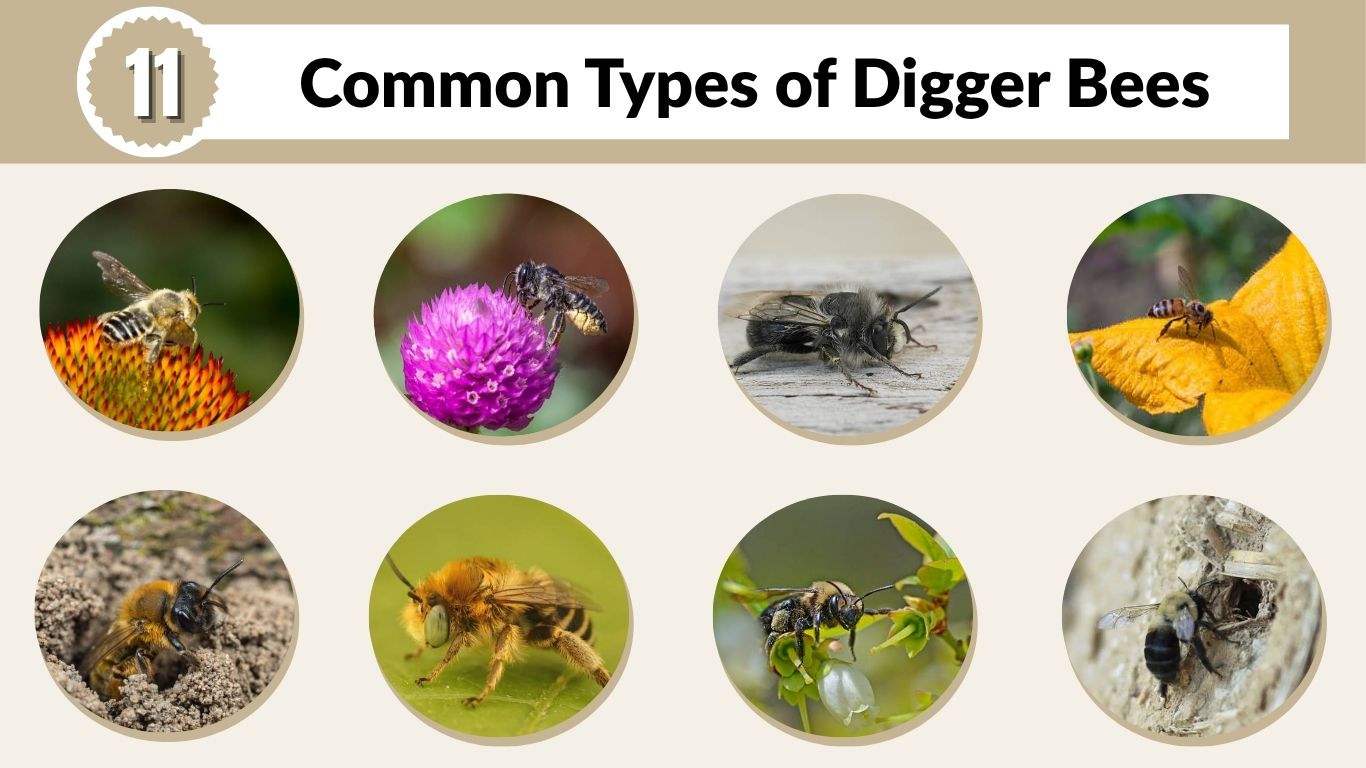
Melissodes digger bees are fascinating native pollinators known for their fuzzy bodies, ground-nesting habits, and long antennae in males. These solitary bees are often seen visiting sunflowers, asters, goldenrods, and other open-faced flowers during the warmer months. Unlike honey bees, they do not live in large colonies or make honey, but they play an important role in pollinating wildflowers and garden plants. Their presence helps support healthy ecosystems by moving pollen from bloom to bloom. Understanding their identification, habitat, behavior, diet, and lifecycle can help gardeners and nature lovers recognize and protect these valuable bees.
1. Long-Horned Digger Bee
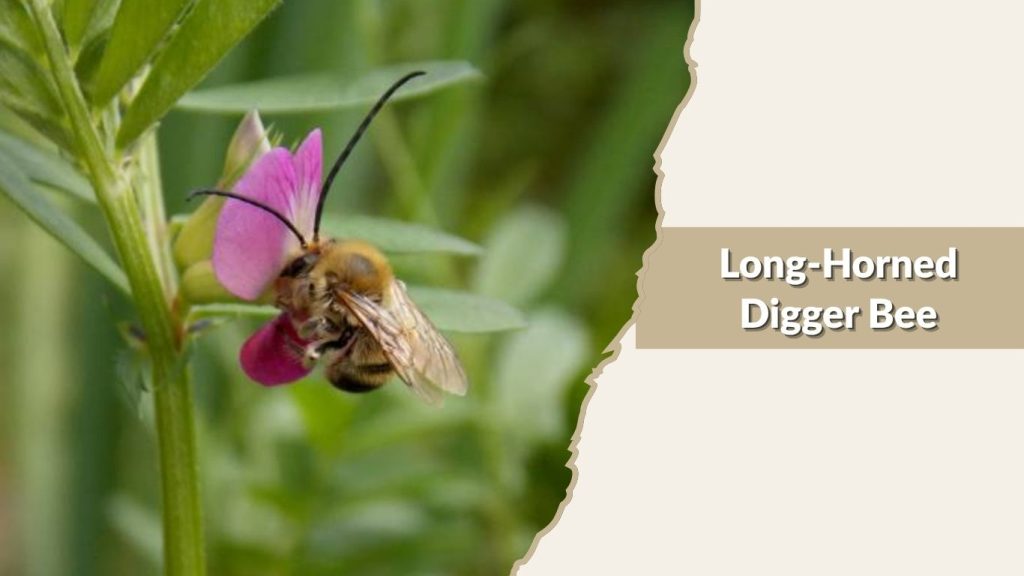
Long-horned digger bees are solitary ground-nesting bees known for their fuzzy bodies and noticeably long antennae, especially in males. They are important native pollinators and are often seen visiting wildflowers, garden blooms, and open sunny areas during warm months.
Identification
- Males have very long antennae that make them easy to recognize.
- Their bodies are usually medium-sized, fuzzy, and bee-like in appearance.
- Many species have yellow or pale markings on the face.
- They often look similar to honey bees but are usually hairier.
- They are commonly seen flying close to flowers or low over the ground.
- Females may appear slightly stockier and usually have shorter antennae than males.
Habitat and Distribution
Long-horned digger bees are commonly found in open habitats where flowering plants are abundant. They may live in meadows, grasslands, gardens, roadsides, woodland edges, and dry sunny areas with loose or sandy soil. Since they nest in the ground, they usually prefer places where the soil is easy to dig and not too heavily covered with grass or mulch.
These bees are found in many parts of the world, with many species occurring in North America. Their exact range depends on the species, but they are most often noticed in warm, flower-rich environments where they can find both nesting sites and reliable pollen sources.
Behavior and Diet
Long-horned digger bees are solitary bees, meaning they do not live in large colonies like honey bees. Each female usually builds and manages her own underground nest. Although several females may nest in the same general area, they do not work together as a true colony.
Their diet mainly comes from nectar and pollen. Adults drink nectar for energy, while females collect pollen to feed their developing young. Many long-horned bees are strong pollinators because they visit flowers frequently and carry pollen on their hairy bodies. Some species prefer certain types of flowers, making them especially important for native plant reproduction.
Lifecycle
The lifecycle of a long-horned digger bee begins when the female digs a tunnel in the soil and creates small nest cells underground. She places a mixture of pollen and nectar inside each cell, then lays an egg on the food supply. After hatching, the larva feeds on this stored food.
The young bee develops underground through the larval and pupal stages. In many species, the adult emerges when temperatures are warm and flowers are available. Males often appear first and search for females near nesting areas or flowering plants. After mating, females begin the nesting process again, continuing the cycle.
2. Chimney Bee
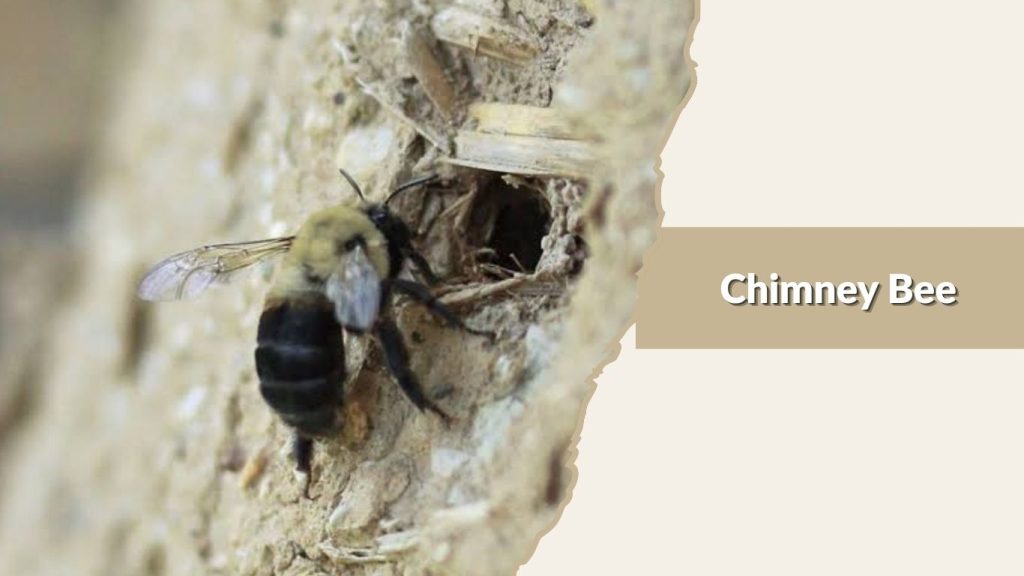
Chimney bees are solitary digger bees known for building small chimney-like mud turrets at the entrance of their underground nests. They are often mistaken for bumble bees because of their fuzzy black-and-yellow bodies, but they are usually smaller, faster-flying, and less aggressive.
Identification
- Usually smaller than a honey bee, with a stout and furry body.
- Often black and yellow, which makes them look similar to small bumble bees.
- Females build noticeable chimney-like mud turrets around nest entrances.
- They are fast flyers and may be seen moving quickly between flowers.
- Their nests are often found close together, forming small nesting groups.
- They are generally non-aggressive and rarely sting unless handled roughly.
Habitat and Distribution
Chimney bees usually prefer firm, well-drained soils, especially clay banks, slopes, road cuts, creek edges, riverbanks, and similar exposed areas. Females dig tunnels into the soil and use the excavated mud to form the chimney-like structure that gives the bee its common name.
They are found across much of eastern North America. Their range includes areas from Texas and Florida northward along the East Coast into Canada. They may appear in both rural and suburban places when suitable nesting soil and flowering plants are available.
Behavior and Diet
Chimney bees are solitary, but they may nest in groups when many females choose the same suitable site. Each female cares for her own nest and offspring, so they do not form a colony like honey bees. Their grouped nesting behavior can make the area look busy, but the bees are not usually defensive.
Their diet comes from nectar and pollen. Adults visit flowers for nectar, while females collect pollen to store in underground nest cells for their young. Because they move from flower to flower, chimney bees help pollinate many wildflowers, garden plants, and native flowering species.
Lifecycle
The lifecycle begins when a female chimney bee digs a tunnel in clay or firm soil. She shapes the excavated mud into a small turret around the entrance, then creates separate brood cells underground. Each cell receives a supply of pollen and nectar before she lays an egg inside.
After the egg hatches, the larva feeds on the stored food and develops underground. It later pupates inside the nest cell and eventually emerges as an adult when conditions are suitable. Males usually search for females near nesting areas or flowers, and fertilized females begin new nests to continue the cycle.
3. Blueberry Digger Bee
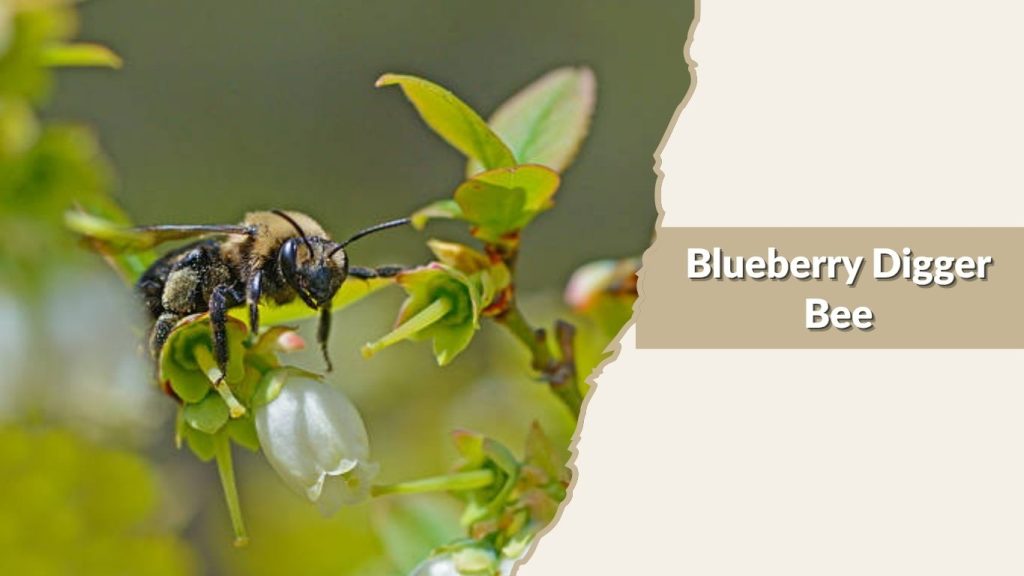
Blueberry digger bees are solitary native bees best known for their close relationship with blueberry flowers. They are important pollinators because they can shake pollen loose from flowers using buzz pollination, making them highly effective visitors to blueberry plants.
Identification
- Medium-sized bee with a fuzzy body.
- Often has a dark body with pale or yellowish hairs.
- Females may carry pollen on their hind legs.
- Commonly seen around blueberry flowers in spring.
- Flies quickly from flower to flower while foraging.
- May look similar to small bumble bees or other native solitary bees.
Habitat and Distribution
Blueberry digger bees are usually found in places where wild or cultivated blueberries grow. They may live near blueberry fields, woodland edges, open forests, gardens, and sandy or well-drained areas. Since they nest in the ground, they need soil that allows females to dig underground tunnels.
They are most commonly associated with eastern North America, especially areas where blueberries are naturally common or commercially grown. Their presence is often highest during the blueberry blooming season, when flowers provide the pollen and nectar they need.
Behavior and Diet
Blueberry digger bees are solitary bees, so each female builds and maintains her own nest. They may nest near one another if the soil is suitable, but they do not form large social colonies. Their activity is usually seasonal and closely linked to the blooming period of blueberry plants.
Their diet consists of nectar and pollen. Adults drink nectar for energy, while females collect pollen to feed their larvae. These bees are especially valuable because they can perform buzz pollination, vibrating blueberry flowers to release pollen more effectively than many other insects.
Lifecycle
The female blueberry digger bee digs a nest in the ground and prepares small brood cells underground. She gathers pollen and nectar, places the food inside each cell, and lays an egg on the stored food supply. Each young bee develops inside its own protected cell.
After the egg hatches, the larva feeds on the stored pollen mixture. It then grows, pupates, and remains underground until it is ready to emerge as an adult. Adults usually appear when blueberry flowers bloom, allowing the next generation to mate, forage, and begin nesting again.
4. Mining Bee
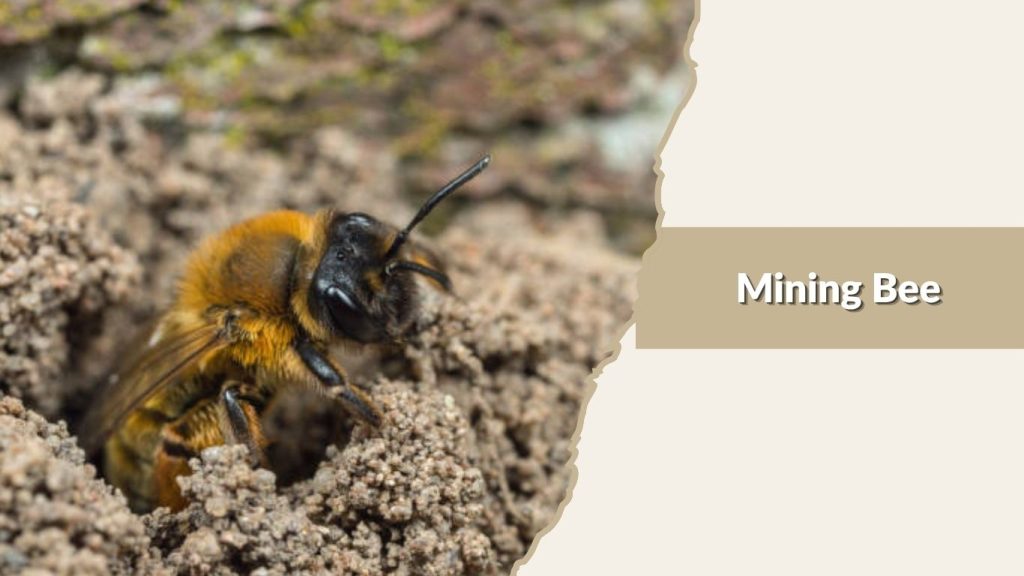
Mining bees are solitary ground-nesting bees that dig tunnels in soil to raise their young. They are among the most common spring bees and are often seen around lawns, gardens, woodland edges, and flowering plants. Although many may nest close together, each female usually manages her own nest.
Identification
- Usually small to medium-sized bees.
- Often have dark bodies with pale, yellowish, or reddish hairs.
- Females may be seen carrying pollen on their hind legs.
- Commonly appear in spring when many flowers begin blooming.
- Often fly low over the ground near nesting sites.
- Nest entrances may look like small holes with loose soil around them.
Habitat and Distribution
Mining bees are found in many open and semi-open habitats. They often live in lawns, meadows, gardens, parks, woodland edges, banks, and dry patches of bare soil. They prefer areas where the ground is easy to dig and where nearby flowers provide enough nectar and pollen.
They are widely distributed in many regions, especially in temperate areas. Different species may prefer different habitats, but most mining bees need two main resources: suitable nesting soil and reliable spring or summer flowers.
Behavior and Diet
Mining bees are solitary, but they may nest in groups when many females choose the same patch of suitable soil. These nesting groups can look active, but the bees are usually gentle and not aggressive. Each female digs her own tunnel, prepares her own brood cells, and collects food for her own young.
Their diet is based on nectar and pollen. Adults drink nectar for energy, while females collect pollen to feed their larvae. Many mining bees are important early-season pollinators because they become active when fruit trees, wildflowers, and garden plants begin to bloom.
Lifecycle
The lifecycle begins when a female mining bee digs a tunnel in the soil. She creates small side chambers underground, fills each one with pollen and nectar, and lays an egg inside. Each egg develops in its own protected cell.
After hatching, the larva feeds on the stored pollen mixture. It then grows, pupates, and remains underground until it is ready to emerge as an adult. Many mining bees complete one generation each year, with adults appearing during the season when their preferred flowers are available.
5. Sunflower Chimney Bee
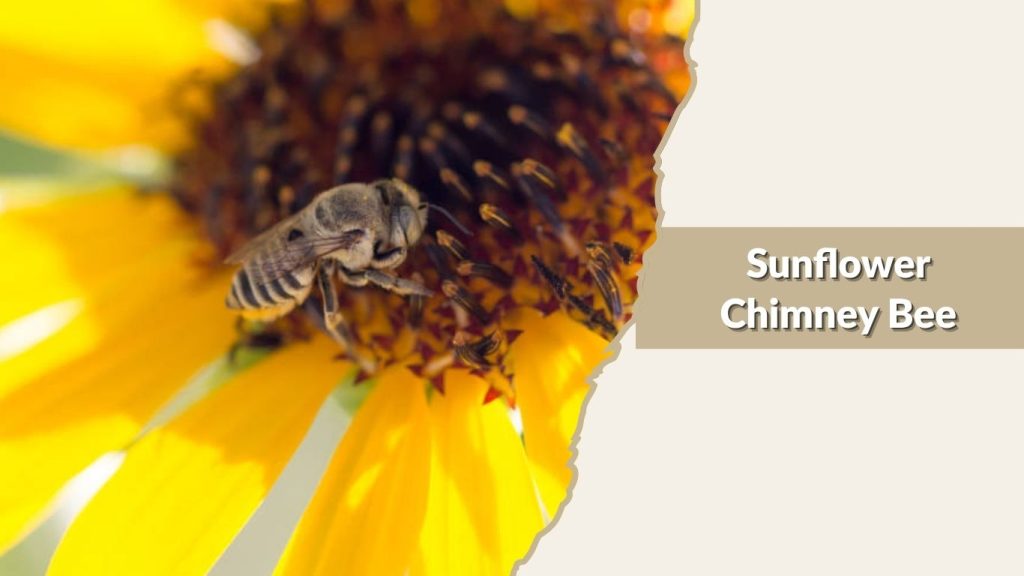
The sunflower chimney bee is a solitary ground-nesting bee closely linked with sunflowers and other plants in the aster family. It is known for visiting broad, daisy-like flowers and for nesting in soil, sometimes creating small chimney-like entrances near the nest opening. This bee is an important pollinator of native and cultivated sunflowers.
Identification
- Medium-sized, hairy bee with a sturdy body.
- Often seen on sunflower heads and other aster-family flowers.
- Females collect pollen on dense hairs on their legs.
- May have a banded-looking abdomen.
- Usually flies during the warm season when sunflowers are blooming.
- Nest entrances may have small chimney-like soil turrets.
Habitat and Distribution
Sunflower chimney bees are commonly found in open areas where sunflowers or related aster-family plants grow. They may live in prairies, grasslands, gardens, field edges, roadsides, and sunny patches with bare or lightly covered soil. Because they nest underground, they need well-drained soil that females can dig into easily.
This bee is found in North America and Central America. In some local areas, it is most noticeable during summer, especially from June to August, when sunflowers and other preferred flowers are in bloom.
Behavior and Diet
Sunflower chimney bees are solitary bees, meaning each female builds and provisions her own nest. However, several females may nest in the same area if the soil is suitable. Like other chimney bees, females may build small turret-like structures around the nest entrance using soil from the tunnel.
Their diet mainly comes from nectar and pollen. They are pollen specialists and are strongly associated with plants in the aster family, especially sunflowers. Females collect pollen to feed their larvae, while adults also drink nectar for energy. Their regular visits to sunflower blooms make them useful pollinators.
Lifecycle
The lifecycle begins when a female digs a tunnel in the ground and prepares brood cells underground. She places a mixture of pollen and nectar inside each cell, then lays one egg on the stored food. Each egg is sealed in its own protected chamber.
After hatching, the larva feeds on the pollen mixture until it is fully developed. It then pupates underground and later emerges as an adult when conditions are warm and flowers are available. The timing of adult activity is closely connected with the blooming season of sunflowers and related plants.
6. Squash Bee
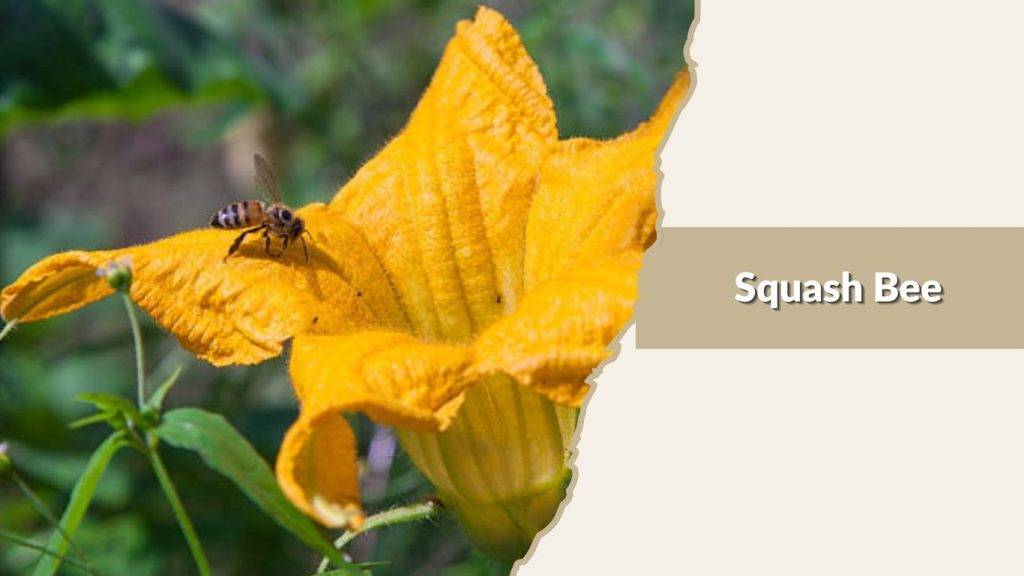
Squash bees are solitary ground-nesting bees best known for pollinating squash, pumpkins, gourds, and other plants in the cucurbit family. They are early-morning foragers and often become active before honey bees, making them especially important for vegetable gardens and farms.
Identification
- Medium-sized bee with a fuzzy body.
- Often pale brown, yellowish, or grayish in color.
- Commonly seen inside squash, pumpkin, or gourd flowers.
- Males may sleep inside wilted squash flowers.
- Females carry pollen on their hind legs.
- Usually active early in the morning when squash flowers are open.
Habitat and Distribution
Squash bees are usually found wherever squash, pumpkins, gourds, and related plants are grown. They may live in vegetable gardens, farms, backyard plots, open fields, and areas with loose or well-drained soil. Since they nest underground, females need bare or lightly covered soil near their food plants.
They are common in many parts of North America, especially in areas where cucurbit plants are cultivated. Their distribution is closely connected to the presence of squash-family plants, because these flowers provide the pollen they rely on for reproduction.
Behavior and Diet
Squash bees are solitary bees, so each female builds her own nest and cares for her own young. They do not live in colonies or produce honey. However, several females may nest in the same garden or field if the soil is suitable and squash flowers are nearby.
Their diet is strongly linked to cucurbit flowers. Adults drink nectar, while females collect pollen from squash, pumpkin, and gourd flowers to feed their larvae. They usually forage very early in the morning, matching the time when squash flowers open and release fresh pollen.
Lifecycle
The lifecycle begins when a female squash bee digs a tunnel in the ground near squash-family plants. She creates small brood cells underground and fills each cell with pollen and nectar collected from cucurbit flowers. After preparing the food supply, she lays one egg in each cell.
The larva hatches and feeds on the stored pollen mixture until it is fully developed. It then pupates underground and remains protected in the soil until the next active season. Adult squash bees usually emerge when squash and pumpkin plants begin flowering, allowing the cycle to begin again.
7. Alkali Bee
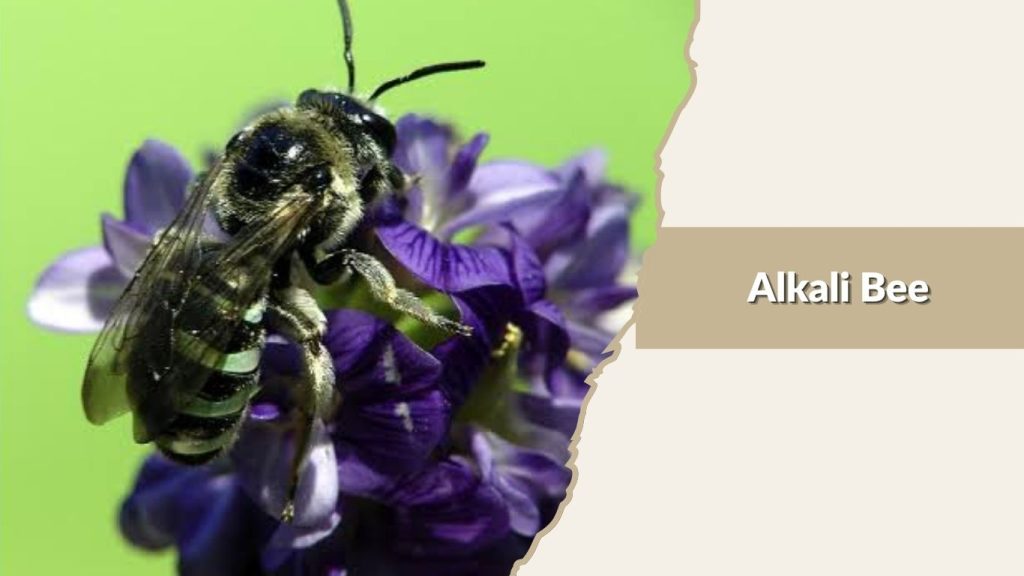
Alkali bees are solitary ground-nesting bees known for their strong pollination role in alfalfa fields. Unlike many bees, they often nest in salty or alkaline soils, which gives them their common name. They are valuable agricultural pollinators and are especially important in areas where alfalfa seed production depends on native bee activity.
Identification
- Medium-sized bee with a dark body.
- Often has pale or light-colored hair bands on the abdomen.
- Females carry pollen on hairs located under the abdomen.
- Commonly seen visiting alfalfa flowers.
- Usually nests in bare, salty, or alkaline soil.
- May gather in large nesting areas, though each female has her own nest.
Habitat and Distribution
Alkali bees are most often found in dry open areas with alkaline or salty soil. They prefer nesting sites where the ground stays firm but moist enough for digging. These places may include flats, field edges, irrigation areas, and managed nesting beds near alfalfa fields.
They are especially known from parts of western North America, where they are used as natural pollinators for alfalfa seed crops. Their distribution depends heavily on the availability of suitable alkaline soil and nearby flowering plants, especially alfalfa.
Behavior and Diet
Alkali bees are solitary, but they often nest in large groups when many females choose the same suitable soil area. Even in these nesting groups, each female digs and provisions her own nest. They are not colony-forming bees and do not have workers or a queen.
Their diet comes from nectar and pollen. Adults drink nectar for energy, while females collect pollen to feed their larvae. Alkali bees are especially effective at pollinating alfalfa because they can trigger the flower structure and release pollen during visits. This makes them highly valuable in alfalfa seed production.
Lifecycle
The lifecycle begins when a female alkali bee digs a nest tunnel in suitable alkaline soil. She creates separate brood cells underground and places a food mixture of pollen and nectar inside each cell. After the food is ready, she lays one egg in each chamber.
The larva hatches and feeds on the stored pollen supply. It then grows, pupates, and remains protected underground until it is ready to emerge as an adult. Adult emergence usually matches the flowering season of alfalfa and other nearby plants, allowing the next generation to mate and continue the nesting cycle.
8. Anthophora Digger Bee
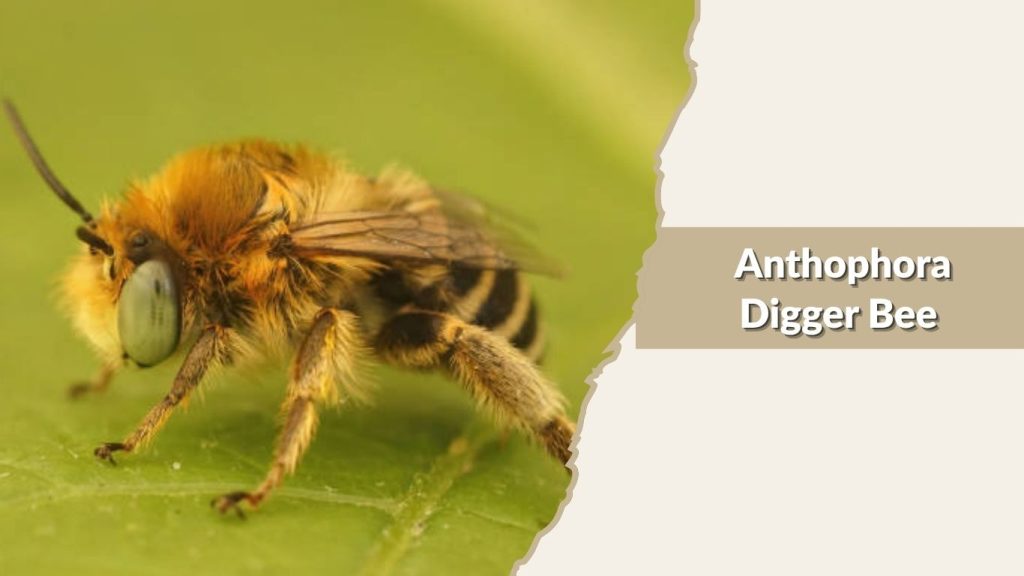
Anthophora digger bees are fast-flying solitary bees that often look similar to small bumble bees. They are known for their hairy bodies, strong flight, and habit of nesting in soil, clay banks, or soft earthen walls. Many species are valuable pollinators of wildflowers, garden plants, and native vegetation.
Identification
- Medium-sized bee with a thick, fuzzy body.
- Often resembles a small bumble bee.
- Usually flies quickly and may hover near flowers.
- Body color may include black, gray, brown, yellowish, or pale hairs.
- Females may carry pollen on dense hairs on their hind legs.
- Often seen near clay banks, bare soil, or flower-rich habitats.
Habitat and Distribution
Anthophora digger bees live in many open and semi-open habitats where suitable nesting sites and flowers are available. They may be found in gardens, meadows, grasslands, woodland edges, roadsides, dry banks, and areas with exposed soil or clay. Some species prefer vertical clay banks, while others nest in flatter ground.
They are found in many parts of the world, including North America, Europe, Asia, and Africa. Their exact distribution depends on the species, but they are generally most common in warm, sunny places with plenty of flowers and accessible nesting soil.
Behavior and Diet
Anthophora digger bees are solitary, meaning each female builds and provisions her own nest. However, several females may nest close together if the site is suitable. They are energetic flyers and often move rapidly between flowers, sometimes hovering briefly before landing.
Their diet consists of nectar and pollen. Adults drink nectar for energy, while females collect pollen to feed their larvae. Because they visit many flowers and have hairy bodies that carry pollen easily, Anthophora digger bees are important pollinators for both wild plants and garden flowers.
Lifecycle
The lifecycle begins when a female digs or prepares a nest tunnel in soil, clay, or a soft earthen surface. She creates small brood cells inside the tunnel and fills each one with a mixture of pollen and nectar. After the food supply is ready, she lays one egg in each cell.
The larva hatches and feeds on the stored pollen mixture. It grows inside the protected nest cell, then pupates underground or within the earthen nest. When conditions are suitable, the adult bee emerges, mates, and the female begins a new nest to continue the cycle.
9. Habropoda Digger Bee
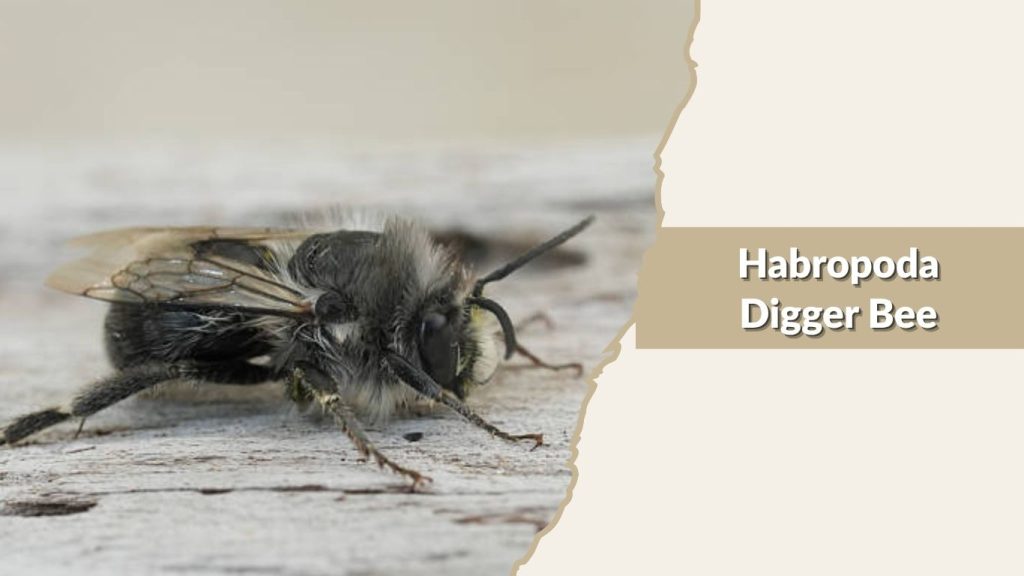
Habropoda digger bees are solitary ground-nesting bees known for their strong flight, hairy bodies, and close connection with certain spring-blooming flowers. Some species are especially important pollinators of blueberries and other native plants. They often appear early in the season when many other bees are less active.
Identification
- Medium-sized bee with a fuzzy, sturdy body.
- Often has dark coloring with pale, gray, yellowish, or brown hairs.
- May look similar to a small bumble bee.
- Flies quickly and can be difficult to follow.
- Commonly seen around spring flowers, including blueberries in some areas.
- Females collect pollen on dense hairs on their hind legs.
Habitat and Distribution
Habropoda digger bees are usually found in open or partly wooded habitats where spring flowers and suitable nesting soil are available. They may live in woodland edges, sandy areas, gardens, meadows, fields, and places near blueberry plants or other preferred flowers. Since they nest in the ground, females need soil that is loose enough for digging.
These bees occur in different parts of North America, with species varying by region. Some are strongly associated with particular habitats, such as sandy soils, coastal areas, or places where their preferred host plants grow. Their activity is often seasonal and closely linked to the blooming period of spring flowers.
Behavior and Diet
Habropoda digger bees are solitary, so each female builds and provisions her own nest. They do not have queens, workers, or honey-producing colonies. However, several females may nest in the same general area if the soil conditions are suitable.
Their diet comes from nectar and pollen. Adults drink nectar for flight energy, while females gather pollen to feed their developing young. Some Habropoda species are excellent buzz pollinators, meaning they vibrate flowers to release pollen. This makes them especially useful for plants like blueberries, which benefit from this type of pollination.
Lifecycle
The lifecycle begins when a female Habropoda digger bee digs a tunnel into the soil and prepares underground brood cells. She fills each cell with a pollen-and-nectar mixture, then lays one egg on the stored food. Each egg develops separately inside its own chamber.
After hatching, the larva feeds on the pollen supply and grows inside the protected nest cell. It later pupates underground and waits until the right season to emerge as an adult. Adults usually appear when their preferred flowers are blooming, allowing them to feed, mate, and begin the next generation.
10. Diadasia Digger Bee
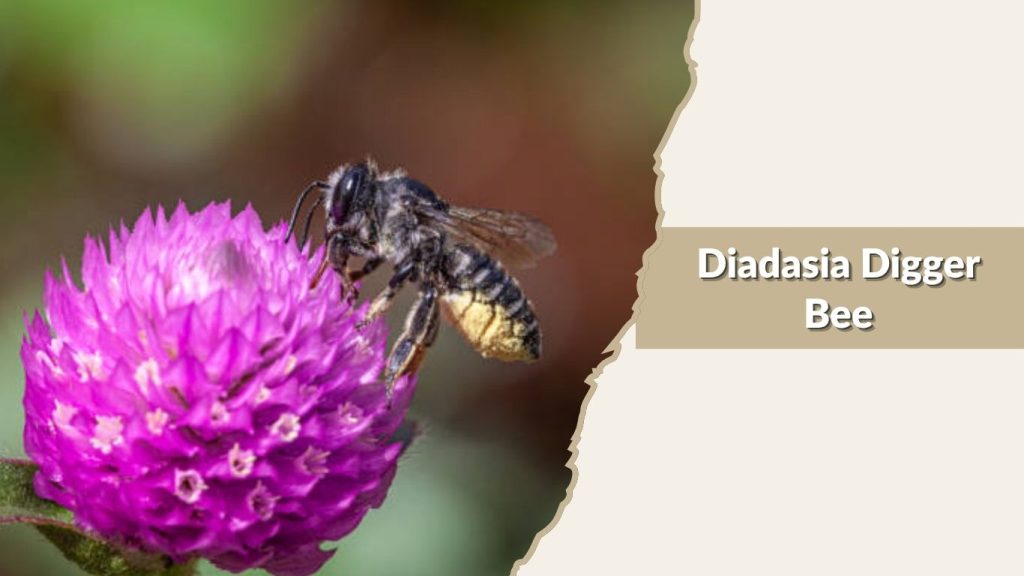
Diadasia digger bees are solitary ground-nesting bees often connected with specific flowering plants such as sunflowers, mallows, cactus flowers, and other native blooms. Many species are pollen specialists, meaning they prefer certain plant groups. Their close relationship with flowers makes them valuable native pollinators in dry, sunny habitats.
Identification
- Medium-sized bee with a hairy, sturdy body.
- Often has pale, gray, yellowish, or brown body hairs.
- May show light bands across the abdomen.
- Commonly seen visiting sunflowers, cactus flowers, mallows, or related plants.
- Females carry pollen on thick hairs on their legs.
- Usually nests in bare or lightly covered soil.
Habitat and Distribution
Diadasia digger bees are commonly found in open, sunny habitats with plenty of native flowers. They may live in deserts, prairies, grasslands, dry fields, roadsides, gardens, and sandy or loose-soil areas. Because they nest underground, females need soil that is easy to dig and not heavily compacted.
These bees are especially common in parts of North America, including dry and warm regions where their preferred flowers grow. Different species may be linked to different plants, so their exact distribution often depends on the availability of suitable flowers and nesting sites.
Behavior and Diet
Diadasia digger bees are solitary bees, so each female builds and provisions her own underground nest. They do not live in colonies like honey bees. However, several females may nest close together if the ground conditions are favorable.
Their diet comes from nectar and pollen. Adults drink nectar for energy, while females collect pollen to feed their larvae. Many Diadasia species are specialist pollinators, visiting certain flower groups more often than others. This makes them especially important for the reproduction of native plants that depend on regular bee visits.
Lifecycle
The lifecycle begins when a female Diadasia digger bee digs a nest tunnel in the soil. She creates separate brood cells underground and places a mixture of pollen and nectar inside each one. After preparing the food supply, she lays one egg in each cell.
The larva hatches and feeds on the stored pollen mixture until it is fully developed. It then pupates inside the underground cell and remains protected until it is ready to emerge. Adult bees usually appear during the blooming season of their preferred flowers, allowing them to feed, mate, and begin the nesting cycle again.
11. Melissodes Digger Bee
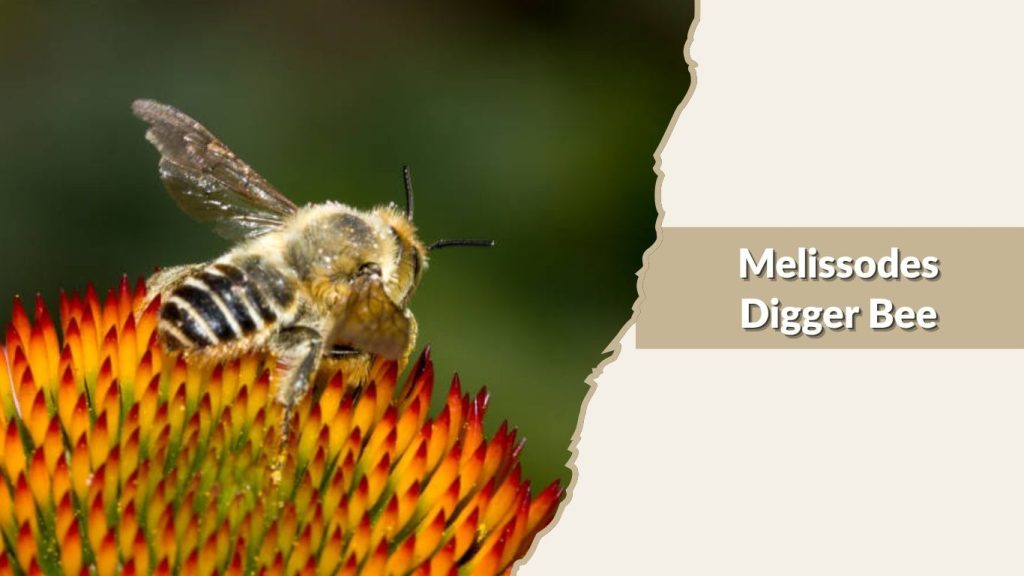
Melissodes digger bees are solitary ground-nesting bees known for their long antennae, especially in males. They are closely related to long-horned bees and are often seen visiting sunflowers, asters, and other open-faced flowers. These bees are active pollinators and are common in many sunny, flower-rich habitats.
Identification
- Medium-sized bee with a fuzzy body.
- Males usually have very long antennae.
- Often has pale, yellowish, gray, or brown body hairs.
- Commonly seen on sunflowers, asters, and other daisy-like flowers.
- Females carry pollen on dense hairs on their hind legs.
- May fly quickly around flowers and low vegetation.
Habitat and Distribution
Melissodes digger bees are commonly found in open habitats with plenty of flowering plants. They may live in meadows, grasslands, gardens, prairies, field edges, roadsides, and dry sunny areas with bare or lightly covered soil. Since they nest underground, females need soil that is suitable for digging.
They are widely distributed in North America, with different species found in different regions. Many are especially noticeable in late summer when sunflowers, asters, and other members of the aster family are blooming.
Behavior and Diet
Melissodes digger bees are solitary bees, so each female creates and provisions her own nest. They do not form colonies or produce honey. However, several females may nest near one another if the soil is favorable and flowers are nearby.
Their diet comes from nectar and pollen. Adults drink nectar for energy, while females collect pollen to feed their larvae. Many Melissodes species prefer flowers in the aster family, making them important pollinators for sunflowers, asters, goldenrods, and related plants.
Lifecycle
The lifecycle begins when a female Melissodes digger bee digs a nest tunnel in the soil. She prepares underground brood cells and fills each one with a mixture of pollen and nectar. After the food supply is ready, she lays one egg in each cell.
The larva hatches and feeds on the stored pollen mixture. It then grows, pupates, and remains protected underground until it is ready to emerge as an adult. Adults usually appear during the flowering season of their preferred plants, allowing them to feed, mate, and begin the next generation.
FAQs
Are Melissodes digger bees dangerous?
Melissodes digger bees are not considered dangerous. They are solitary bees and do not defend large colonies like honey bees or wasps. Females can sting if handled or trapped, but they are usually gentle when left alone. Most of their time is spent nesting, mating, or visiting flowers.
Where do Melissodes digger bees make their nests?
Melissodes digger bees usually make their nests in the ground. Females dig small tunnels in bare or lightly covered soil, often in sunny places near flowers. Each female prepares her own nest and creates separate brood cells underground where her young develop safely.
What flowers do Melissodes digger bees visit?
Melissodes digger bees often visit sunflowers, asters, goldenrods, and other open-faced flowers. Many species are strongly attracted to plants in the aster family. They collect nectar for energy and pollen to feed their larvae, making them useful pollinators for native plants and garden flowers.
How can I identify a male Melissodes digger bee?
A male Melissodes digger bee can often be recognized by its very long antennae. These antennae are much longer than those of females and help separate males from many similar bees. Males are usually seen flying around flowers or searching for females near nesting and feeding areas.
Why are Melissodes digger bees important?
Melissodes digger bees are important because they help pollinate many flowering plants. As they move between flowers, pollen sticks to their hairy bodies and transfers to other blooms. Their visits support wildflower reproduction, garden plant health, and the wider ecosystem that depends on native pollinators.