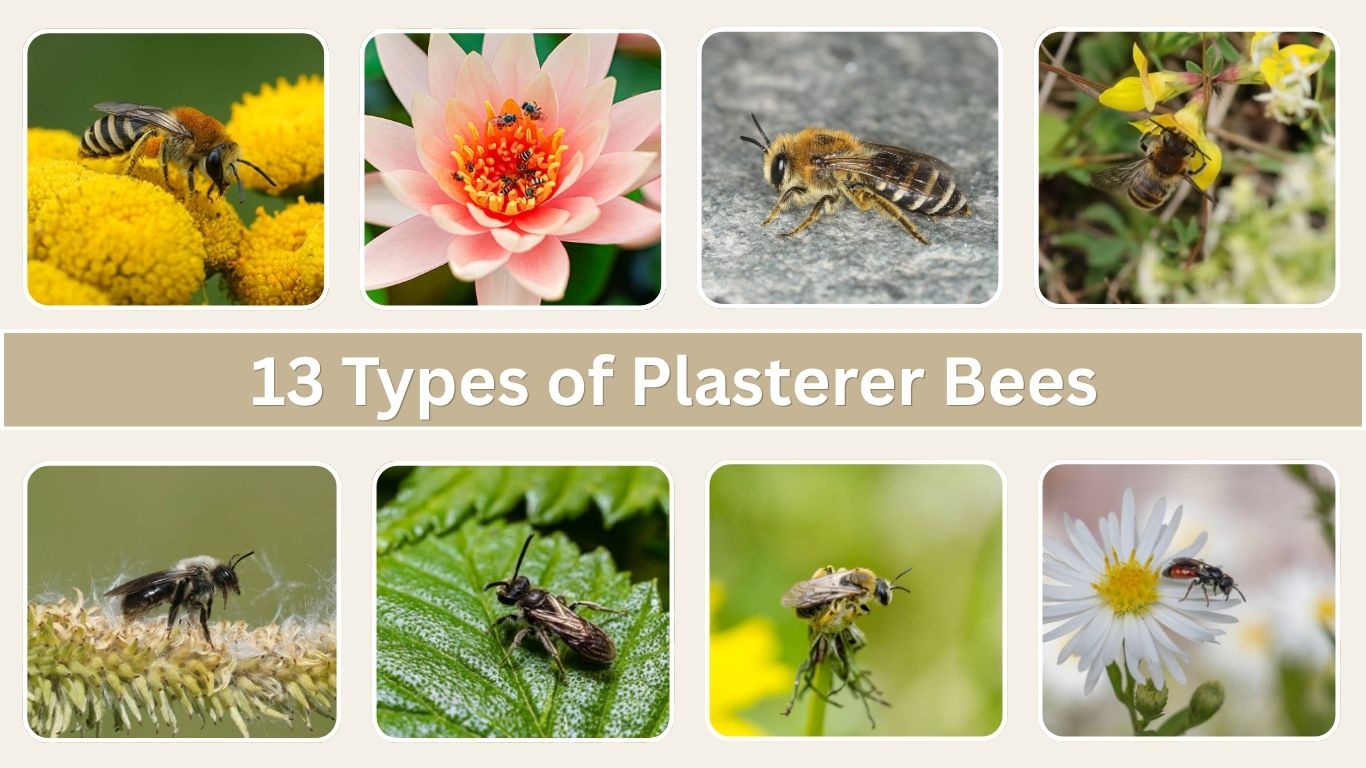
Plasterer bees are solitary bees known for building underground nests and lining their brood cells with a smooth, waterproof material. These bees are often called cellophane bees because of this unique nesting habit. Many species appear in spring or late summer and play an important role in pollinating wildflowers, shrubs, trees, and garden plants.
1. Unequal Cellophane Bee
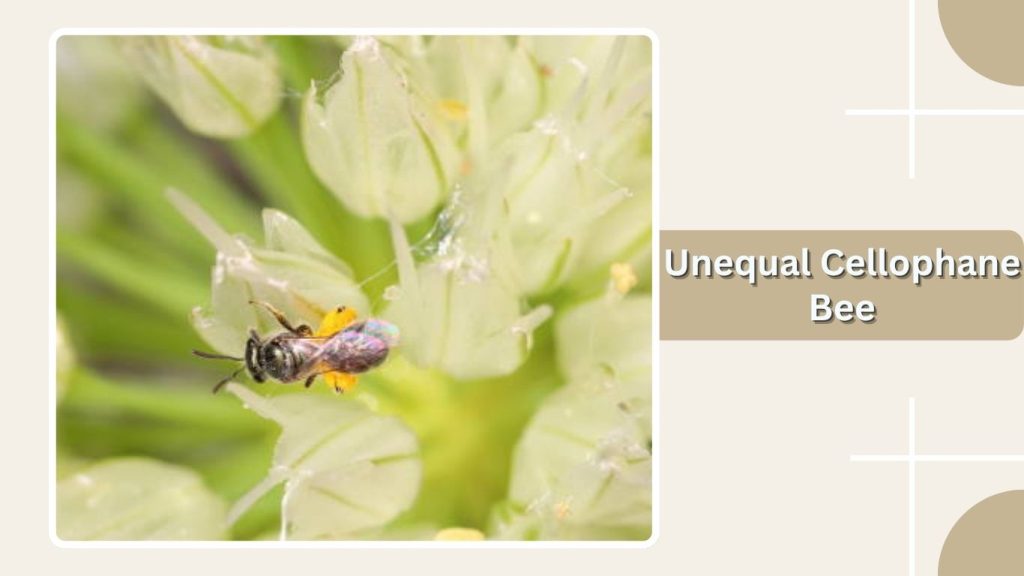
The Unequal Cellophane Bee is an early spring plasterer bee known for its ground nests and shiny, cellophane-like nest lining. It is a solitary bee, but many females may nest close together in sunny, sandy soil.
Identification
- Medium-sized, fuzzy bee with a dark body
- Pale hair on the face, thorax, and legs
- Light bands across the abdomen
- Often seen flying low over lawns or bare soil in spring
- Females carry pollen on hairs on their hind legs
Habitat
The Unequal Cellophane Bee is commonly found in open, sunny places with well-drained soil. Lawns, parks, gardens, paths, cemeteries, and sandy slopes can all provide suitable nesting areas. It often appears in nesting groups, but each female makes and manages her own burrow.
Nesting Behavior
This bee digs underground nests and lines the brood cells with a waterproof secretion. This smooth lining looks like thin cellophane, which is why the bee is called a cellophane bee. The lining helps protect eggs and stored food from moisture, fungi, and soil conditions.
Role in Pollination
The Unequal Cellophane Bee is active early in the season when many other bees are still absent. It visits spring-blooming trees and flowers, including maple, willow, and fruit blossoms. Because it emerges early, it helps support pollination during an important time for native plants and garden trees.
2. Rufous-Backed Cellophane Bee
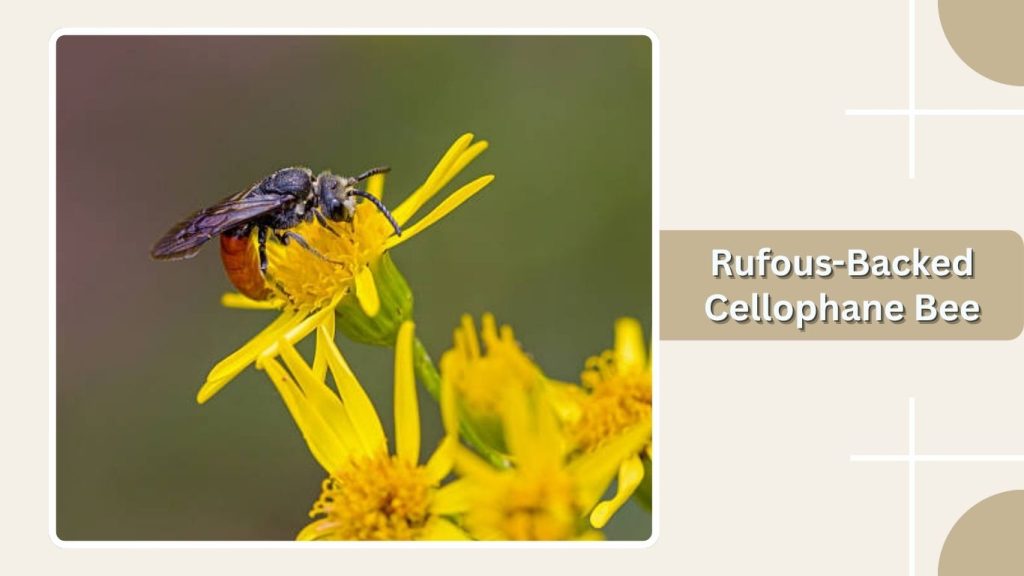
The Rufous-Backed Cellophane Bee is a spring-active plasterer bee often seen in lawns, parks, and open suburban spaces. Like other cellophane bees, it nests in the ground and lines its brood cells with a waterproof, cellophane-like material.
Identification
- Medium-sized solitary bee
- Reddish or rufous hair on the thorax
- Dark abdomen with pale hair bands
- Often found flying close to nesting soil
- Similar to other spring cellophane bees but warmer-toned on the back
Habitat
This bee prefers sunny areas with well-drained soil. It may appear in backyards, lawns, parks, and sandy open spaces. Although each female has her own nest, many females can nest close together, creating noticeable nesting aggregations.
Nesting Behavior
Females dig individual tunnels in the soil and prepare brood cells underground. Each cell is lined with a protective secretion that helps keep moisture away from the egg and stored pollen. This nesting style gives the group its “cellophane bee” name.
Role in Pollination
The Rufous-Backed Cellophane Bee is active in spring and visits early flowers when pollinators are especially important. It helps pollinate spring-blooming plants and supports native plant growth in gardens, parks, and natural areas.
3. Blueberry Cellophane Bee
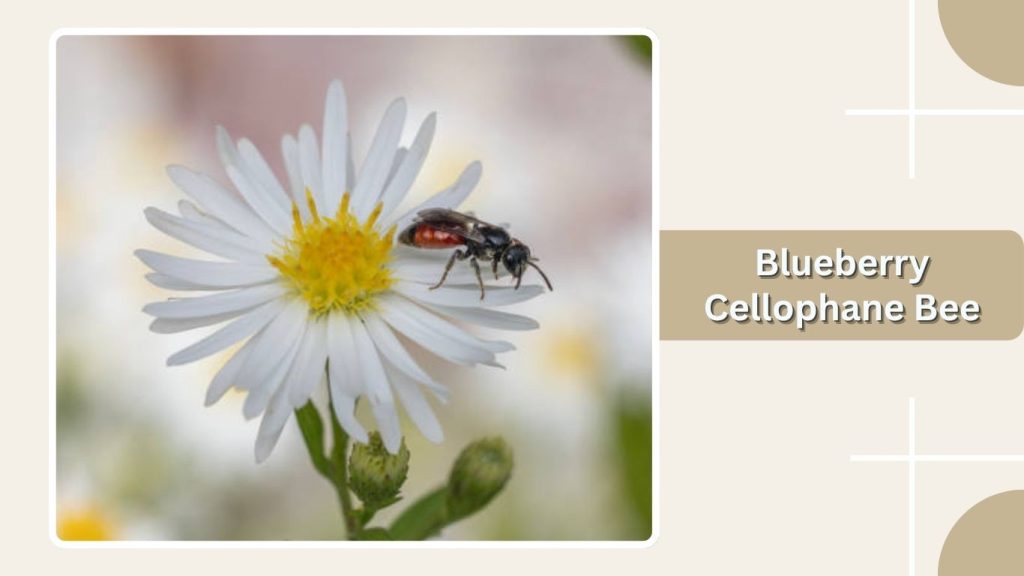
The Blueberry Cellophane Bee is strongly linked with sandy habitats and blueberry plants. It is a solitary ground-nesting bee, but it may form nesting groups when the soil and nearby flowers are suitable.
Identification
- Medium-sized cellophane bee
- Long-looking face due to extended malar space
- Males may look golden or yellowish when fresh
- Females are less hairy than males
- Often found near blueberries and related plants
Habitat
This bee is usually found near sandy soil and ericaceous plants such as blueberry, huckleberry, and bearberry. It prefers warm, open ground with sparse vegetation. Dense grass or shaded soil can make nesting less suitable.
Nesting Behavior
Females build underground nests in sandy areas, often close to host plants. The nest cells are lined with a smooth waterproof layer. The female places pollen and nectar inside each cell before laying an egg.
Role in Pollination
The Blueberry Cellophane Bee is an important visitor of blueberry flowers and other related plants. Its face shape helps it reach into deep, urn-shaped flowers, making it well adapted for this type of spring foraging.
4. Compact Cellophane Bee
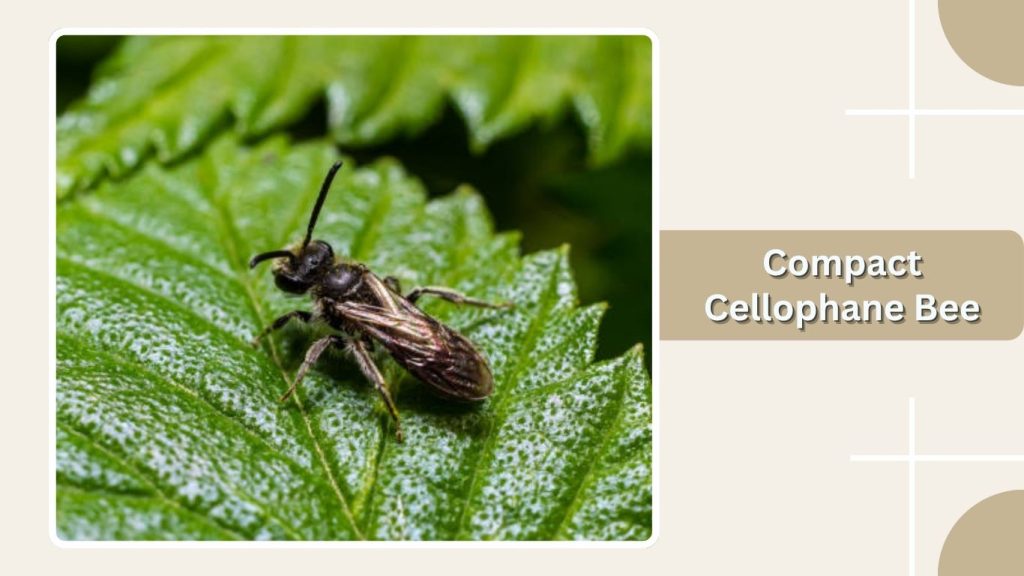
The Compact Cellophane Bee is a solitary plasterer bee found in North America. It shares the classic Colletes nesting habit of using underground burrows and lining its brood cells with a protective, cellophane-like coating.
Identification
- Small to medium-sized ground-nesting bee
- Dark body with pale hair bands
- Fuzzy thorax with light hairs
- Often seen near open soil or flowering patches
- Best confirmed by expert identification because many Colletes look similar
Habitat
This bee uses open habitats with suitable soil for digging. Sandy or loose soil is especially useful because females must create underground tunnels. It may be found in meadows, edges, gardens, and other sunny places with flowers nearby.
Nesting Behavior
Each female makes her own nest. She digs into the ground, forms brood cells, and lines them with a polyester-like secretion. This lining protects the developing young from damp soil and helps preserve the pollen and nectar food supply.
Role in Pollination
Compact Cellophane Bees visit flowering plants for nectar and pollen. By moving between flowers, they transfer pollen and support plant reproduction. Their activity also helps maintain healthy native bee diversity in open landscapes.
5. Shining Cellophane Bee
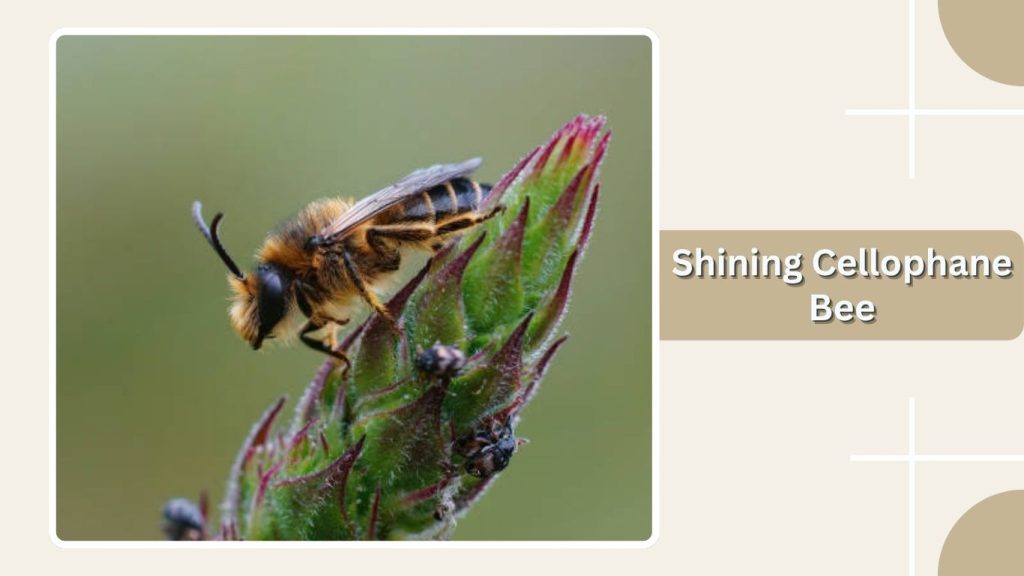
The Shining Cellophane Bee is a North American plasterer bee known from records in the northeastern United States. Like other Colletes bees, it is solitary, ground-nesting, and uses a special lining inside its underground brood cells.
Identification
- Medium-sized cellophane bee
- Dark body with pale hair markings
- May appear somewhat shiny compared with duller bees
- Hair pattern can help separate it from related species
- Expert confirmation is often needed for accurate identification
Habitat
This species is associated with open areas where soil conditions allow underground nesting. Sunny sites with loose or sandy soil are most suitable. Flower-rich areas nearby are important because females need regular pollen and nectar sources.
Nesting Behavior
The female digs a nest below the soil surface and prepares individual brood cells. Each cell receives a waterproof lining made from secretions. This creates a safe chamber for the egg, pollen food, and developing larva.
Role in Pollination
The Shining Cellophane Bee contributes to pollination by visiting wildflowers and other blooming plants. Although it is not as familiar as honey bees, it plays a useful role in supporting native plant reproduction and local pollinator networks.
6. Spine-Shouldered Cellophane Bee
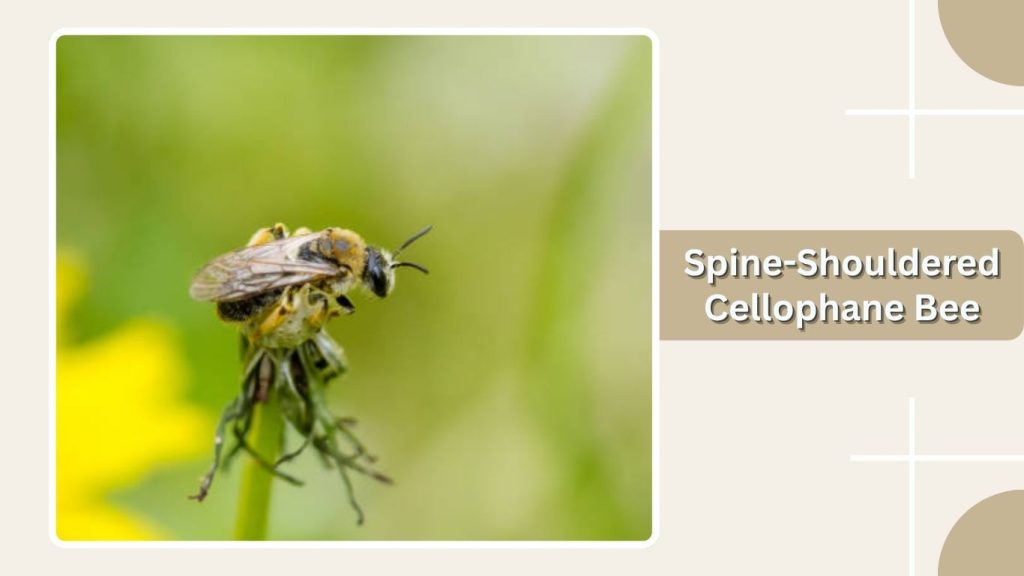
The Spine-Shouldered Cellophane Bee is a relatively large cellophane bee. It is part of the plasterer bee group, known for solitary ground nests and waterproof brood-cell linings.
Identification
- Relatively large cellophane bee
- Coarse dark hair on the thorax
- Dark body with pale abdominal bands
- Active later than many spring species
- Can resemble other fall-flying Colletes bees
Habitat
This bee lives in open areas where nesting soil is available and flowers are nearby. It may occur in meadows, field edges, gardens, and other sunny habitats. Loose or sandy soil is helpful because females must dig their own burrows.
Nesting Behavior
The female creates an underground nest and builds separate brood cells for her offspring. Each cell is lined with a thin waterproof layer. She adds pollen and nectar, lays an egg, and seals the cell so the young can develop safely.
Role in Pollination
The Spine-Shouldered Cellophane Bee visits late-season flowers and helps move pollen between blooms. This makes it useful for plants that flower after many early bees have disappeared. Its activity supports fall pollination in natural areas.
7. Banks’ Cellophane Bee
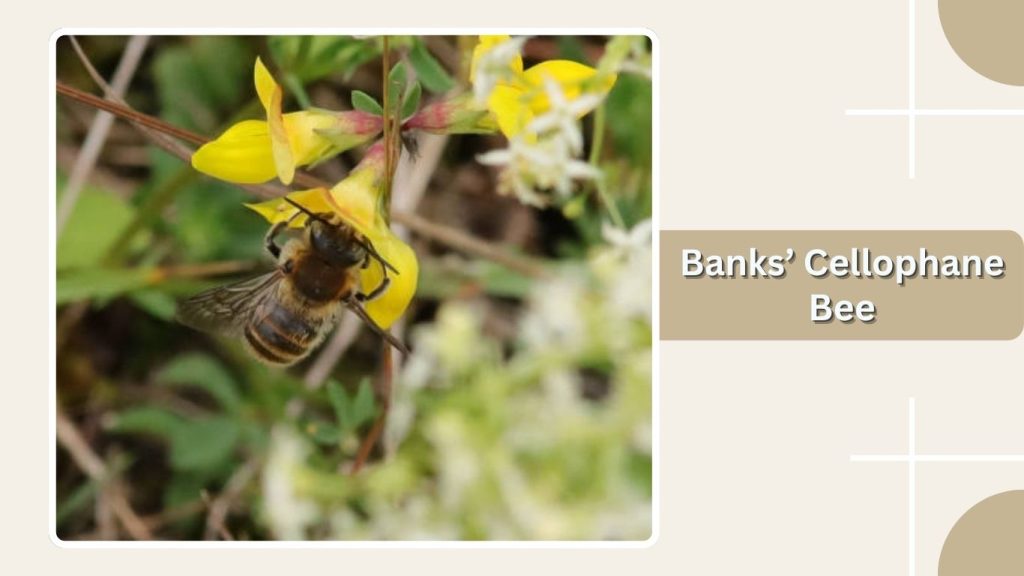
Banks’ Cellophane Bee is a less familiar plasterer bee that has been associated with holly plants. It is a solitary ground-nesting bee and, like other Colletes, depends on suitable soil and flowering plants nearby.
Identification
- Medium-large cellophane bee
- Short body hair
- Pale or white bands on the abdomen
- Best separated by flower association
- Difficult to identify without close examination
Habitat
This bee is linked with areas where holly and suitable nesting soil occur together. Open, well-drained ground is important because females nest underground. Because it is not as commonly observed as some other cellophane bees, local records may be limited.
Nesting Behavior
Females make individual nests in the soil. The underground brood cells are lined with a cellophane-like material that helps protect the young from moisture and decay. Each cell contains food provisions before the egg is laid.
Role in Pollination
Banks’ Cellophane Bee may be important for flowers it regularly visits, especially holly where it is present. By carrying pollen between blossoms, it supports seed and fruit production while also adding to the diversity of native pollinators.
8. Bare Cellophane Bee
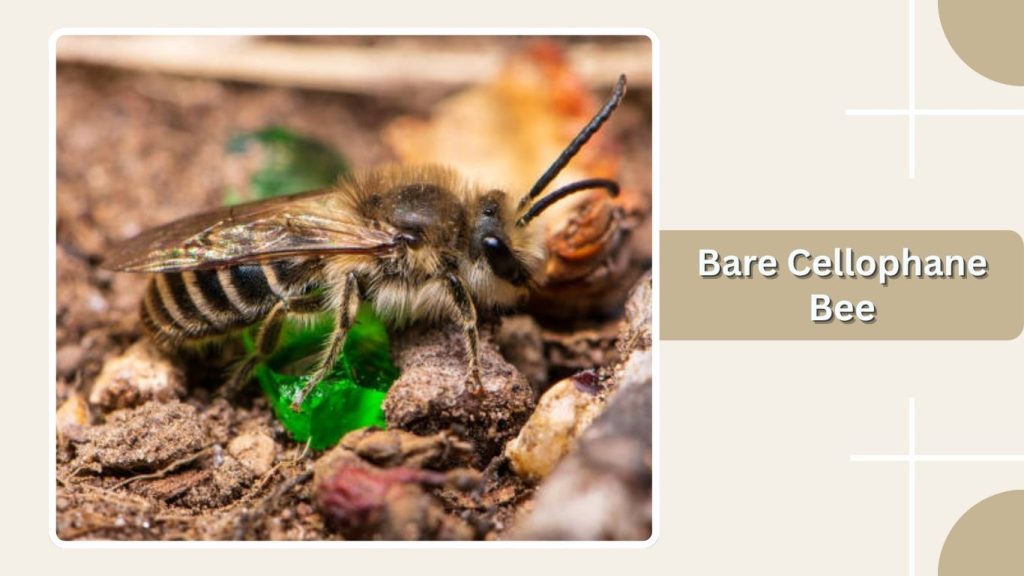
The Bare Cellophane Bee is a solitary plasterer bee with the typical ground-nesting habit of the Colletes group. It is less commonly discussed than some spring species, but it still plays a useful role in native pollination.
Identification
- Medium-sized cellophane bee
- Dark body with pale hair bands
- Less hairy appearance than many related bees
- Often seen near open soil and wildflowers
- Accurate identification may require close examination
Habitat
The Bare Cellophane Bee is usually found in open places where females can dig into the soil. Meadows, sandy patches, field edges, and sunny garden spaces may provide suitable nesting areas. Like other plasterer bees, it needs both nesting ground and nearby flowers.
Nesting Behavior
Females dig individual underground nests and create separate brood cells. Each cell is coated with a smooth waterproof lining. This lining protects the egg, pollen, and nectar from damp soil while the young bee develops safely underground.
Role in Pollination
This bee visits flowers for pollen and nectar, carrying pollen between blooms as it forages. Although it is not a managed pollinator, it helps support wild plant reproduction and adds to the natural diversity of bee species in open habitats.
9. Kincaid’s Cellophane Bee
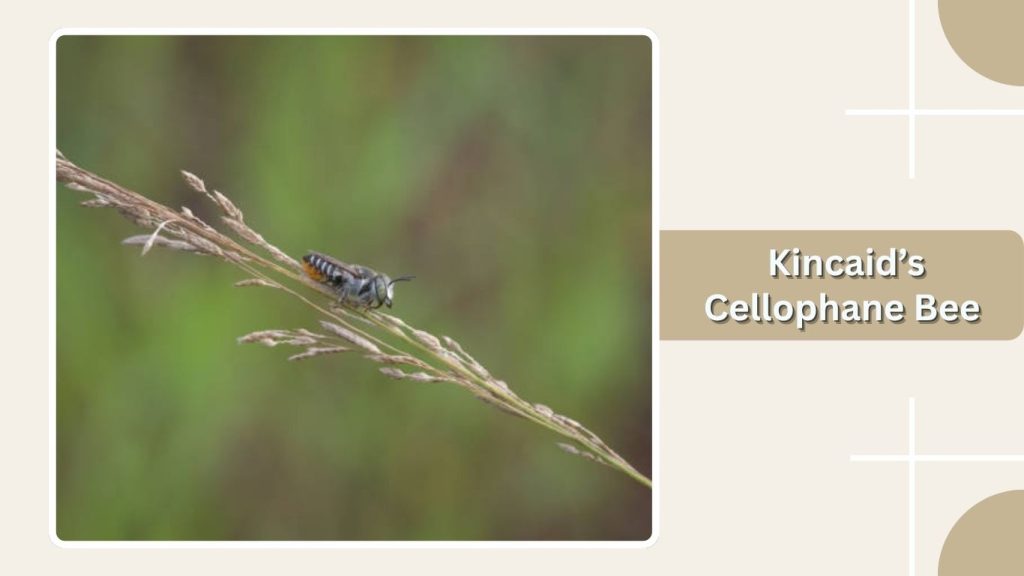
Kincaid’s Cellophane Bee is a native plasterer bee named after the naturalist Trevor Kincaid. Like other cellophane bees, it is solitary, ground-nesting, and known for lining its brood cells with a thin protective coating.
Identification
- Medium-sized native bee
- Dark body with light hair markings
- Pale abdominal bands may be visible
- Often difficult to separate from related Colletes
- Best identified through expert review or specimen study
Habitat
This bee is associated with open habitats where soil is loose enough for nesting. It may occur in natural areas, meadows, sandy sites, or other sunny places with flowering plants nearby. Good nesting soil is especially important for its survival.
Nesting Behavior
The female builds her own nest in the ground. Inside the burrow, she forms brood cells and lines them with a waterproof material. Each cell receives pollen and nectar before an egg is laid, giving the larva food after hatching.
Role in Pollination
Kincaid’s Cellophane Bee contributes to local pollination by visiting flowers during its active season. As it moves from flower to flower, pollen sticks to its body and is transferred to new blooms, helping plants produce seeds and fruit.
10. Heather Colletes
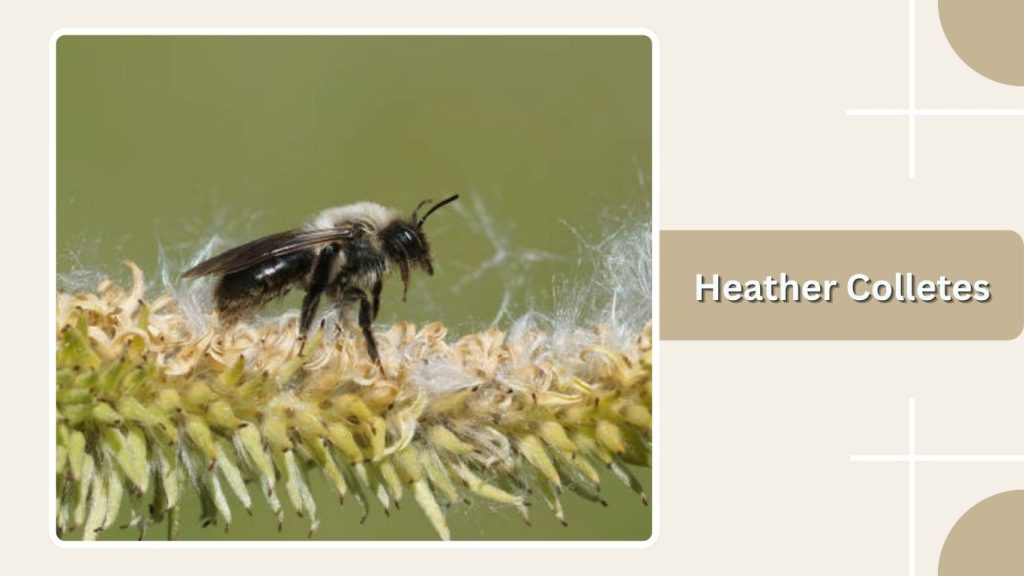
The Heather Colletes is a plasterer bee closely associated with heather and related flowering plants. It is especially known in heathland habitats, where it can be an important late-season pollinator.
Identification
- Medium-sized solitary bee
- Dark abdomen with pale bands
- Fuzzy thorax with brownish hair
- Often found visiting heather flowers
- Most active when heather is blooming
Habitat
Heather Colletes is commonly found in heathlands, moorlands, sandy areas, and open habitats where heather grows. It prefers places with both suitable nesting soil and large patches of preferred flowers. Bare or lightly vegetated soil helps females dig nests.
Nesting Behavior
Females nest in the ground, often in loose or sandy soil. Each female makes her own burrow and prepares brood cells underground. These cells are lined with a waterproof cellophane-like layer that protects the young from moisture and soil conditions.
Role in Pollination
This bee is strongly linked with heather pollination. It collects pollen and nectar from heather flowers and helps transfer pollen between plants. Its activity supports seed production and helps maintain healthy heathland plant communities.
11. Davies’ Colletes
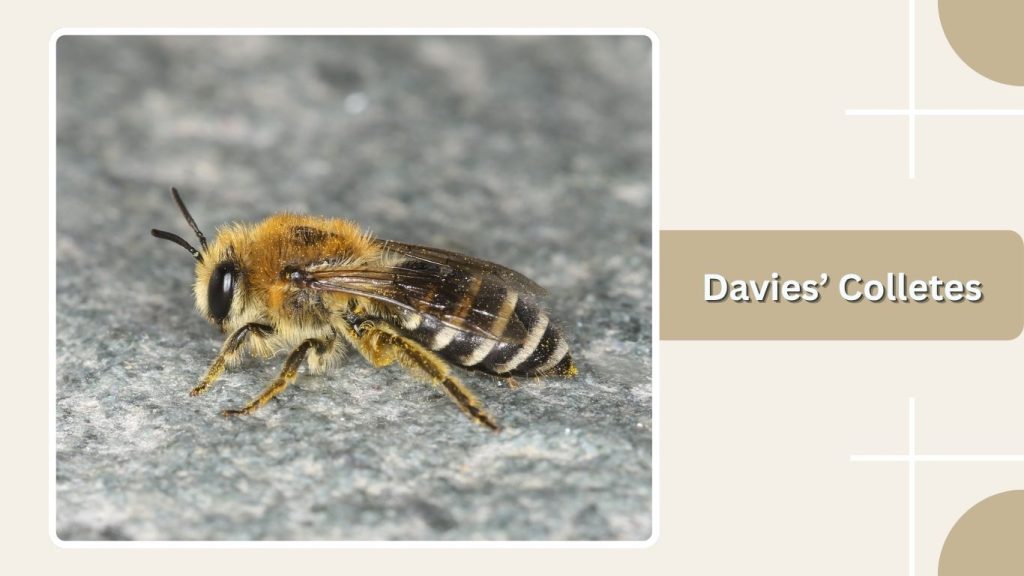
Davies’ Colletes is a small plasterer bee often seen around yellow composite flowers. It is a solitary species, but females may nest near one another when good soil and food sources are available.
Identification
- Small to medium-sized bee
- Dark abdomen with pale bands
- Light brown or grayish hair on the thorax
- Often visits daisy-like yellow flowers
- Males are usually slimmer than females
Habitat
This bee is found in gardens, grasslands, coastal areas, brownfield sites, and open sunny places. It favors habitats with exposed soil for nesting and plenty of flowers nearby. It can adapt well to human-influenced landscapes when nesting conditions remain suitable.
Nesting Behavior
Females dig nests in the ground, walls, banks, or firm soil. Each brood cell is lined with a waterproof secretion. The female fills the cell with pollen and nectar, lays an egg, and seals it so the larva can develop safely.
Role in Pollination
Davies’ Colletes often visits flowers in the daisy family, including ragwort, tansy, and other yellow composites. As it collects pollen, it helps pollinate these plants and supports late-summer flower reproduction in gardens and wild spaces.
12. Ivy Bee
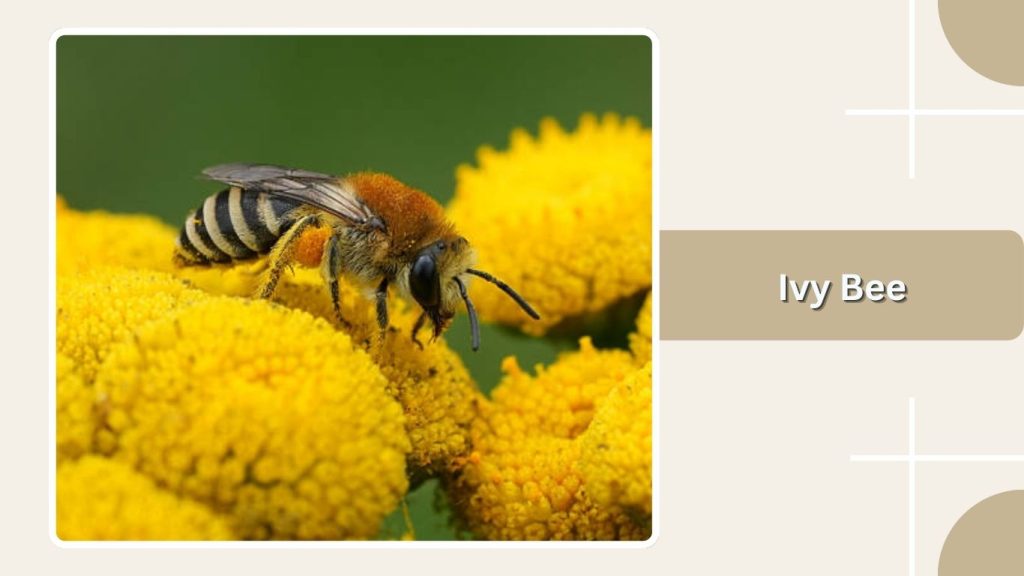
The Ivy Bee is a well-known plasterer bee that appears in late summer and autumn. It is strongly associated with ivy flowers, which provide an important food source when many other plants have finished blooming.
Identification
- Medium-sized bee with bold abdominal bands
- Orange-brown hair on the thorax
- Dark abdomen with pale stripes
- Often seen feeding on ivy flowers
- Active mainly in late summer and autumn
Habitat
The Ivy Bee is commonly found in gardens, parks, hedgerows, coastal cliffs, and open urban spaces where ivy grows. It nests in bare or sandy soil, often in sunny banks or lawns. Large nesting groups can sometimes be seen in suitable places.
Nesting Behavior
Females dig individual nests in the ground and line each brood cell with a waterproof material. Although many females may nest close together, each female works alone. The young develop underground and emerge the following season.
Role in Pollination
Ivy Bee is an important pollinator of ivy flowers. Its late activity makes it valuable because fewer bees are active at that time of year. By visiting ivy, it supports insects, birds, and other wildlife that depend on ivy berries and nectar.
13. Vernal Colletes
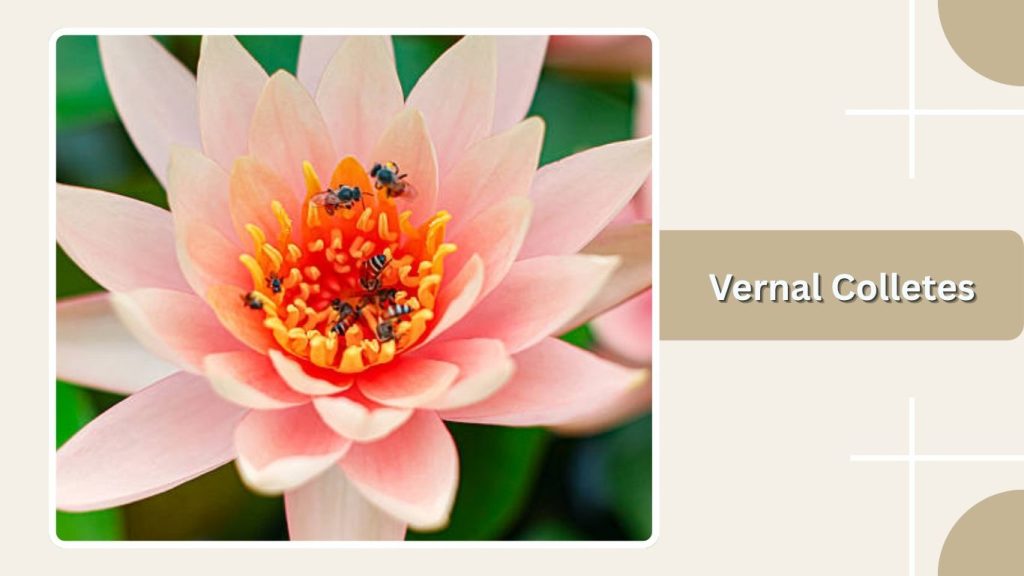
The Vernal Colletes is an early-season plasterer bee that appears in spring. Its name reflects its spring activity, and it depends on open nesting areas and fresh seasonal blooms for food.
Identification
- Medium-sized spring bee
- Fuzzy body with pale hair
- Dark abdomen with light bands
- Often active around willow and early flowers
- Similar to other spring Colletes species
Habitat
This bee prefers open, sunny habitats with loose soil for nesting. It may occur near woodland edges, meadows, riverbanks, gardens, and sandy areas. Early-blooming shrubs and trees nearby are important because adults emerge when flower choices are still limited.
Nesting Behavior
Females make underground nests and prepare individual brood cells. Each cell is lined with a cellophane-like waterproof coating. The female adds pollen and nectar, lays one egg, and seals the cell, allowing the larva to feed and grow below ground.
Role in Pollination
The Vernal Colletes helps pollinate spring flowers, especially early trees and shrubs. Its timing makes it valuable because it is active before many summer bees appear. This supports early plant reproduction and provides balance in seasonal pollinator communities.