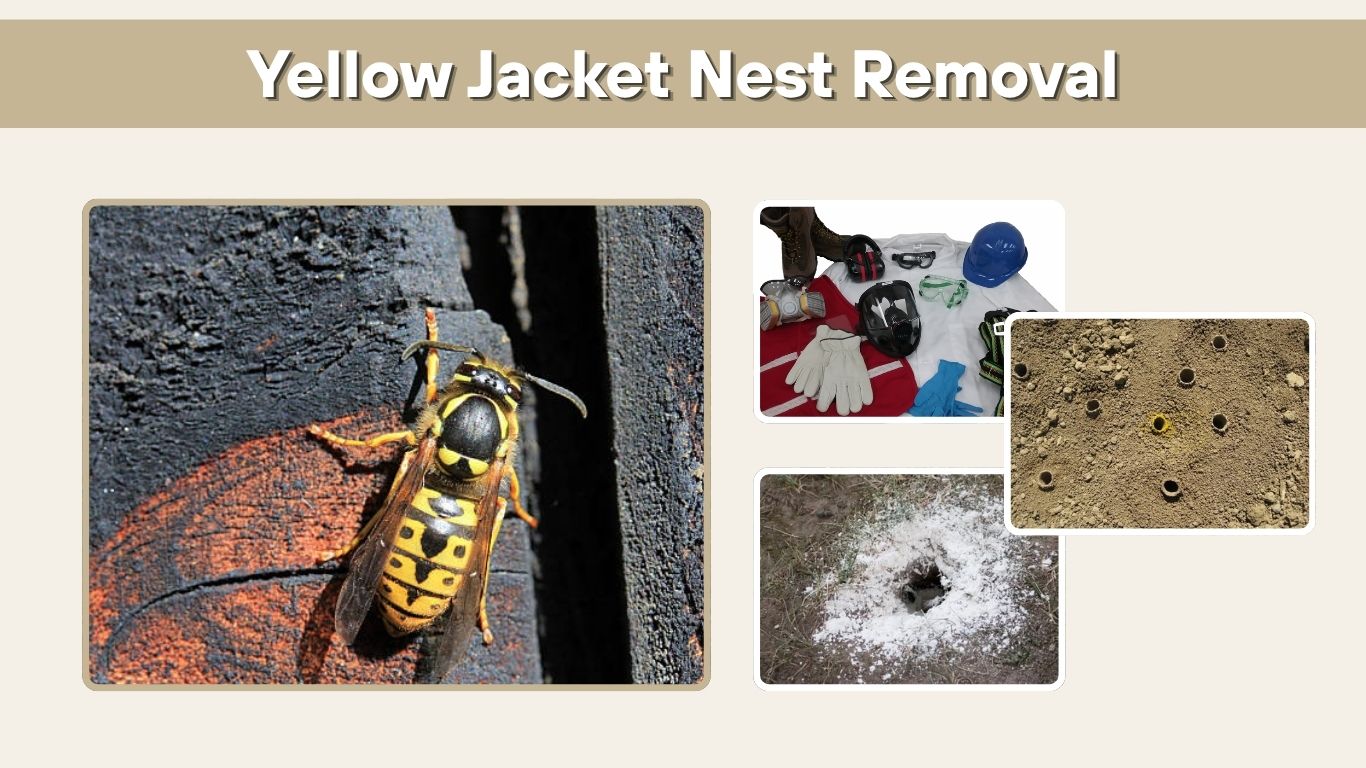
Yellow jacket nest removal can be dangerous because these social wasps aggressively defend their colony and may sting repeatedly. Nests may be underground, beneath decks, inside attics, or hidden within wall cavities. Although a small, accessible nest can sometimes be treated with an appropriately labeled product, large or concealed colonies usually require professional help. The safest removal method depends on the nest’s location, colony size, season, and whether anyone nearby is allergic to insect stings.
Should You Remove a Yellow Jacket Nest?
Not every yellow jacket nest needs immediate removal. A colony located far from people, pets, doors, walkways, gardens, or recreational areas may be left undisturbed. Yellow jackets provide some ecological benefits by hunting insects, but nests near human activity can create a serious stinging hazard.
Removal is generally appropriate when the nest is:
- Beside a doorway, sidewalk, patio, playground, or driveway
- In a lawn that must be mowed
- Under a frequently used deck or porch
- Inside a wall, attic, ceiling, shed, or other structure
- Close to children, pets, or someone with a sting allergy
- Producing frequent yellow jacket activity inside the house
Colonies become larger and more defensive as the season progresses. Yellow jackets can also sting more than once because their stingers are not barbed like those of honey bees.
How to Find and Identify the Nest
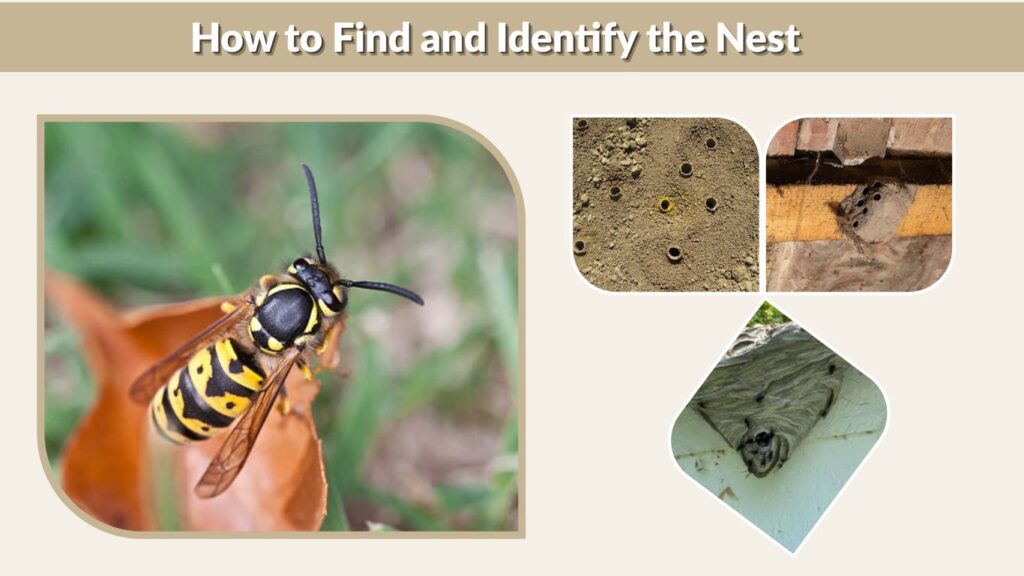
Before attempting control, confirm that the insects are yellow jackets rather than honey bees, paper wasps, or harmless solitary wasps. Yellow jackets have smooth bodies with distinct yellow-and-black markings and are frequently attracted to meat, sugary drinks, garbage, and overripe fruit.
Ground nests
Ground-nesting yellow jackets often use abandoned rodent burrows or other underground cavities. The visible entrance may appear as a small hole surrounded by grass, soil, roots, or landscape debris.
From a safe distance, watch for several wasps repeatedly entering and leaving the same hole. Do not stand directly over the entrance, poke the hole, mow nearby, or attempt to dig up the colony.
Wall and attic nests
A steady stream of yellow jackets entering a gap near siding, rooflines, vents, window frames, utility pipes, or soffits may indicate a concealed nest. Buzzing inside a wall or yellow jackets appearing indoors are additional warning signs.
Hidden nests are especially difficult to control because the visible entrance may be several feet from the colony. Spraying into the opening may fail to reach the nest and can drive agitated wasps farther into the building.
Best Time to Remove a Yellow Jacket Nest
If treatment is necessary, late evening or early morning is generally the least hazardous time because most workers are inside and activity is lower. However, nighttime treatment does not eliminate the risk of multiple stings.
Early spring nests are normally smaller because the colony has only recently begun developing. By late summer and fall, a nest may contain a large population, and defensive behavior is usually stronger.
In colder regions, an out-of-the-way nest may be left until freezing weather ends the colony. Most yellow jacket colonies last one season, although nests can sometimes survive longer in unusually mild climates. Confirm that all flight activity has stopped before approaching the entrance.
How to Remove a Yellow Jacket Ground Nest
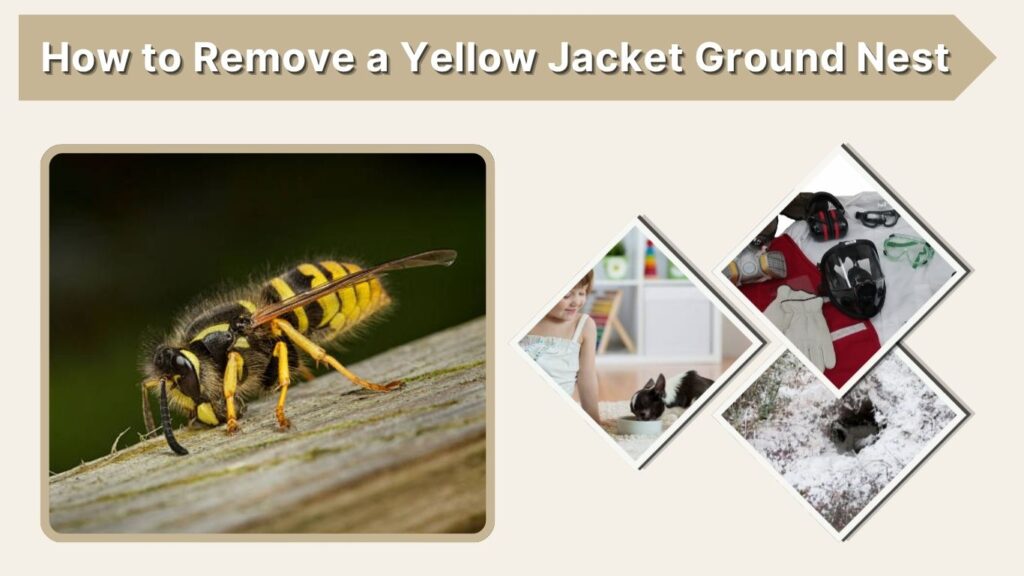
Professional treatment is the safest choice for an underground colony, particularly when the nest is large, beside a building, or located in a busy area.
Basic DIY safety procedure
A homeowner considering DIY yellow jacket nest removal should:
- Keep children, pets, and bystanders indoors.
- Plan an unobstructed retreat route before approaching.
- Wear long trousers, closed shoes, gloves, long sleeves, and head protection.
- Work only during a low-activity period.
- Use only a pesticide specifically labeled for yellow jacket ground nests.
- Follow every application, distance, storage, and disposal instruction on the label.
- Leave the area immediately after treatment.
- Check for continuing activity from a safe distance the following day.
Insecticidal dust labeled for ground-nesting yellow jackets can be more effective than pouring liquid into the hole because an underground chamber may be some distance from the visible entrance.
Do not plug the hole immediately. Surviving workers may dig another exit or emerge somewhere unexpected. Never use gasoline, diesel, fire, bleach, boiling water, or flooding. Gasoline is not an approved yellow jacket treatment and creates poisoning, fire, soil-contamination, and groundwater risks.
Removing a Nest from a Wall, Attic, or Deck
Wall nests, attic nests, and colonies beneath enclosed decks should normally be handled by a licensed pest-control professional.
Never seal an active entrance
Covering the opening while the colony is alive does not trap the wasps safely. It may cause them to chew through drywall or find another route into living areas. The entrance should be sealed only after treatment has succeeded and no activity remains.
Avoid opening the structure yourself
Cutting into siding, drywall, ceilings, or roof materials can suddenly expose the colony. It may also spread pesticide, nest material, and live insects through the building. Professionals can identify the colony’s actual position, apply the correct treatment, verify inactivity, and recommend repairs.
A nest directly beneath an open deck may sometimes be accessible, but a colony inside enclosed framing should be treated like a wall nest.
DIY Removal vs. Professional Service

| Situation | Recommended option |
| Small, accessible outdoor nest | Carefully applied labeled treatment may be possible |
| Underground nest with heavy traffic | Professional treatment |
| Nest inside a wall or ceiling | Professional treatment |
| Nest in an attic, chimney, or high roofline | Professional treatment |
| Large late-season colony | Professional treatment |
| Anyone nearby has a sting allergy | Do not attempt DIY removal |
| Species or nest location is uncertain | Request professional identification |
A professional is also advisable when treatment would require a ladder, when there is no safe escape route, or when the entrance is close to a door or window.
Yellow Jacket Nest Removal Cost
Professional prices vary according to the nest’s size, location, accessibility, treatment method, number of visits, and regional labor rates.
Recent U.S. cost estimates place general professional wasp removal at approximately $300 to $700, with an average near $525. Small, easily accessible nests may cost less, while difficult yellow jacket colonies, structural access, follow-up visits, and repairs can raise the total substantially.
| Cost factor | Why it affects the price |
| Underground location | Specialized dusting and follow-up may be needed |
| Wall or ceiling nest | Inspection and structural access can add labor |
| Large colony | Requires more treatment and protective equipment |
| High or confined location | Increases access difficulty and risk |
| Multiple entrances | Makes complete treatment harder |
| Emergency service | Same-day or weekend visits may cost more |
| Building repairs | Drywall, siding, or ceiling work may be separate |
Ask whether the quote includes inspection, treatment, physical nest removal, follow-up visits, entrance sealing, and structural repairs.
Preventing Future Yellow Jacket Nests
Prevention should begin only after the existing colony has been eliminated. Seal gaps around soffits, siding, vents, utility lines, window frames, and roof edges. Repair damaged screens and fill abandoned animal burrows where appropriate.
Keep outdoor garbage cans tightly closed, clean food spills, remove fallen fruit, bring pet food indoors, and cover sweet drinks. Traps may reduce foraging yellow jackets in a limited area, but they usually do not eliminate an established nest. Place traps away from patios, doors, and gathering spaces so they do not attract wasps toward people.
FAQs
Can I remove a yellow jacket nest without killing them?
Relocating an established yellow jacket colony is rarely practical or safe for homeowners, especially when it is underground or inside a structure. When the nest is far from people, the best nonlethal option is usually to leave it undisturbed and restrict access until seasonal cold ends activity.
What is the best way to remove an underground yellow jacket nest?
The safest option is professional treatment. When DIY control is reasonable, use only a product labeled for underground yellow jacket nests and follow its directions exactly. Do not dig, flood, burn, or pour gasoline into the entrance.
Can I remove a yellow jacket nest during winter?
In cold climates, most colony members die after repeated freezing temperatures. An inactive nest can generally be approached more safely once no flight activity remains. Mild-climate colonies may persist longer, so do not assume the nest is empty based only on the date.
How long does yellow jacket nest removal take?
Treatment may reduce activity within a day, but underground or concealed colonies can require several days and possibly another visit. Do not remove or seal the entrance until repeated observation confirms that no yellow jackets are entering or leaving.
What should I do if I am stung during removal?
Leave the nest area immediately and wash the sting site with soap and water. Apply a cold pack for localized pain and swelling. Trouble breathing, faintness, throat tightness, or hives away from the sting site are medical emergencies requiring immediate emergency assistance.