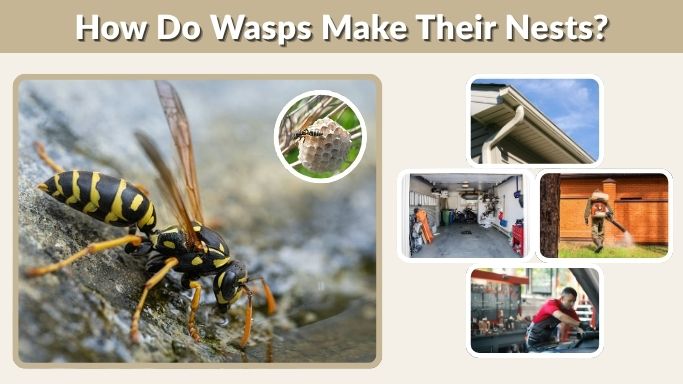
Wasps are skilled builders. They can create strong nests from wood fibers, mud, soil, or plant material depending on the species. Some wasps hang paper-like nests under roofs, while others dig underground or build small mud tubes on walls. Understanding how wasps make their nests helps you identify the type of wasp, know where they live, and stay safe around active colonies.
How Do Wasps Make Their Nests?
Wasps make their nests by collecting natural materials from their surroundings. Many social wasps chew wood into a soft pulp and shape it into thin paper layers. Mud daubers collect wet mud and build small tube-like chambers. Ground wasps dig into soil or use abandoned burrows. Each nest style depends on the wasp species, colony size, and nesting location.
The Basic Nest-Building Process
Most wasps follow a simple but highly organized process when making a nest.
- Finding a safe location
A queen wasp or female wasp first searches for a protected place. This may be under an eave, inside a wall gap, in a tree branch, underground, or on a sheltered surface. - Collecting building materials
Paper wasps and yellowjackets scrape wood from fences, dead trees, cardboard, or plant stems. Mud wasps gather wet soil. Ground wasps may dig or expand existing holes. - Mixing material with saliva
Wasps chew the collected material and mix it with saliva. This turns wood fiber into a soft pulp or helps mud stick together. - Shaping the first cells
The queen or female starts by creating small chambers. These cells hold eggs and later protect larvae. - Expanding the nest
As new workers hatch, they help collect food and building material. The nest grows larger as more cells are added. - Protecting the colony
Social wasps guard their nest strongly, especially when larvae and the queen are inside.
How Do Paper Wasps Make Their Nests?
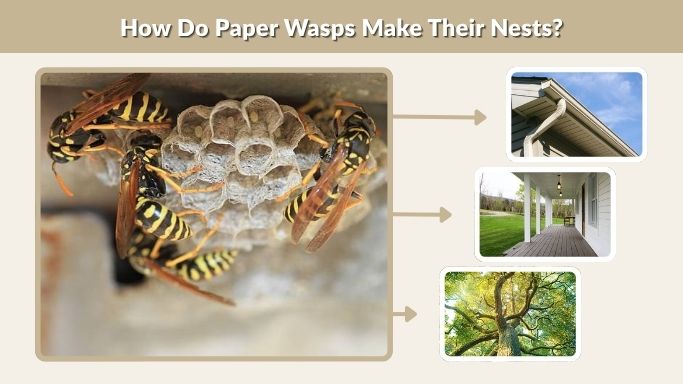
Paper wasps are famous for making umbrella-shaped nests. These nests often hang under roof eaves, porch ceilings, tree branches, sheds, and window frames. Their nests are usually open-faced, meaning you can see the hexagonal cells from below.
Paper Wasps Use Wood Pulp
Paper wasps scrape tiny fibers from dry wood. You may see them on fences, old decks, dead branches, or wooden posts. They use their jaws to shave off a thin layer of wood. Then they chew the wood and mix it with saliva.
This mixture becomes a soft paper-like paste. When the paste dries, it turns into a lightweight but strong material. That is why their nests look like gray or brown paper.
How the Paper Nest Takes Shape
The queen begins with a small stalk called a petiole. This stalk attaches the nest to a ceiling, branch, or wall. Then she builds the first few hexagonal cells around it.
Each cell is shaped like a tiny tube. The queen lays one egg inside each cell. When the eggs hatch, the larvae stay inside the cells while adult wasps feed them.
As the colony grows, worker wasps add more cells. A paper wasp nest can remain small, but some colonies build larger combs with many visible chambers.
How Do Wasps Make Paper Nests?
Not all wasps make paper nests, but social wasps such as paper wasps, hornets, and many yellowjackets do. They use wood fiber and saliva to create a natural paper material. This process is similar to making paper from plant pulp, but wasps do it with their mouthparts.
Materials Used in Paper Nests
Wasps may collect fibers from:
- Old wooden fences
- Tree bark
- Dead branches
- Wooden decks
- Cardboard
- Plant stems
- Weathered outdoor furniture
The color of the nest often depends on the material used. If the wasps collect pale wood, the nest may look light gray. If they use darker wood or bark, the nest may appear brown.
Why Wasp Paper Is Strong
Wasp nest paper is thin but strong because it is built in layers. The saliva helps bind the fibers together. When the layers dry, they become firm and protective.
Some nests also have a papery envelope around the comb. This outer covering protects the colony from rain, wind, temperature changes, and predators. Hornets and some yellowjackets often build enclosed paper nests, while paper wasps usually leave the comb exposed.
How Do Mud Wasps Make Their Nests?
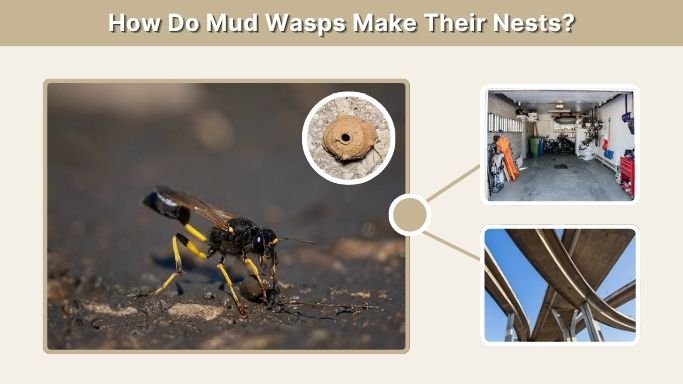
Mud wasps, often called mud daubers, build nests from mud instead of paper. These wasps are usually solitary, meaning one female builds and manages the nest by herself. Their nests are commonly found on walls, under bridges, inside garages, under porches, and on outdoor structures.
Mud Wasps Collect Wet Soil
A female mud wasp looks for soft, wet mud near puddles, streams, gardens, or damp soil. She gathers small balls of mud with her mouthparts and carries them to the nesting site.
She then presses the mud onto a surface and shapes it into a chamber. Over time, she adds more mud until the nest forms a small tube or cluster of cells.
What Happens Inside Mud Wasp Nests?
Mud wasps usually place prey inside each mud chamber. Many mud daubers hunt spiders. After placing the prey inside, the female lays an egg in the chamber and seals it with mud.
When the egg hatches, the larva feeds on the stored prey. Later, it pupates inside the chamber and emerges as an adult wasp.
Mud wasp nests are usually less aggressive than social wasp nests because they do not have a large colony to defend. However, it is still better not to disturb active nests.
How Do Wasps Make Nests in the Ground?
Some wasps make nests underground. These are often yellowjackets, digger wasps, cicada killers, or other ground-nesting species. Ground nests can be hard to notice because the entrance may look like a small hole in the soil.
Ground Wasps Use Soil and Burrows
Ground wasps may build nests in different ways. Some dig their own tunnels, while others use abandoned rodent holes or natural gaps under roots, rocks, or logs.
Social ground-nesting wasps, such as some yellowjackets, can build large underground colonies. They may create paper combs inside a hidden cavity. Solitary ground wasps usually dig smaller tunnels for their eggs.
Signs of a Ground Wasp Nest
You may notice:
- Wasps flying in and out of a hole
- A small soil opening in the lawn or garden
- Increased wasp activity near the ground
- Buzzing from one area
- Wasps becoming defensive when you walk nearby
Ground nests can be dangerous if accidentally stepped on. Yellowjackets are especially defensive and may sting multiple times when disturbed.
Nest Types Made by Different Wasps
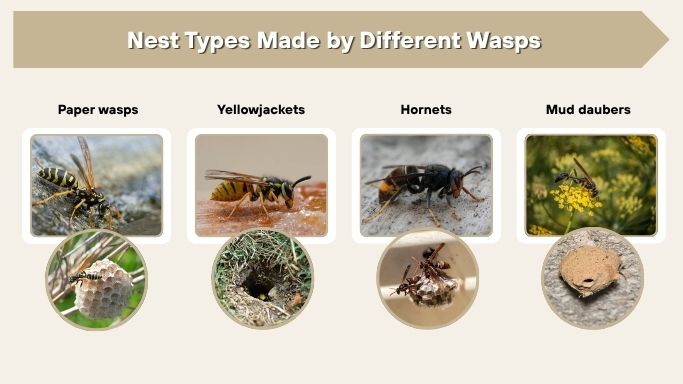
Different wasp species use different materials and building styles. The table below shows the common nest types.
| Wasp Type | Nest Material | Common Nest Location | Nest Appearance |
| Paper wasps | Wood pulp and saliva | Eaves, porches, branches | Open umbrella-shaped comb |
| Yellowjackets | Wood pulp and saliva | Ground holes, walls, attics | Enclosed paper nest |
| Hornets | Wood pulp and saliva | Trees, shrubs, buildings | Large enclosed paper nest |
| Mud daubers | Wet mud | Walls, sheds, garages | Mud tubes or clay chambers |
| Digger wasps | Soil | Lawns, gardens, sandy ground | Small holes or tunnels |
Why Do Wasps Build Nests?
Wasps build nests to protect their eggs, larvae, queen, and colony. A nest is more than a shelter. It is a nursery, food storage area, and defense center.
Main Purposes of a Wasp Nest
A wasp nest helps with several important needs:
- Egg protection: Eggs stay safe inside cells or chambers.
- Larval development: Young wasps grow inside the nest.
- Colony organization: Social wasps use the nest as their central home.
- Temperature control: Paper layers help protect larvae from weather.
- Food storage: Some solitary wasps store prey for their young.
- Queen protection: Social colonies depend on the queen for reproduction.
Without a nest, wasps cannot successfully raise their young. That is why they defend active nests so strongly.
When Do Wasps Start Making Nests?
Most social wasps begin making nests in spring. A fertilized queen survives the winter and becomes active when temperatures rise. She searches for a safe nesting site and starts building the first cells.
Seasonal Nest Growth
In early spring, the nest is usually small. The queen builds alone and lays the first eggs. When workers emerge, they take over nest building and food collection.
During summer, the colony grows quickly. More workers mean faster nest expansion. By late summer or early fall, many wasp colonies reach their largest size.
In colder regions, most worker wasps die when winter arrives. New queens may leave the nest, mate, and find protected places to overwinter. The old nest is usually not reused the next year by the same colony.
Where Do Wasps Build Their Nests?
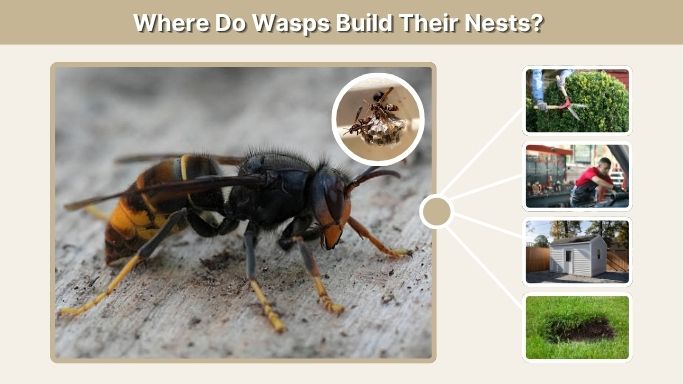
Wasps choose nesting sites that offer protection from weather and predators. They also need access to food, water, and building materials.
Common Nesting Locations
Wasps may build nests in:
- Roof eaves
- Attics
- Wall voids
- Tree branches
- Shrubs
- Garages
- Sheds
- Porch ceilings
- Fence posts
- Ground holes
- Garden soil
- Hollow logs
- Under decks
A good nesting site is usually dry, sheltered, and close to food sources such as insects, nectar, fruit, or human food waste.
How Long Does It Take Wasps to Build a Nest?
The time depends on the species and colony size. A queen can begin a small nest in just a few days. However, a large social wasp nest may take several months to reach full size.
Nest Growth Speed
In spring, nest building is slow because the queen works alone. Once workers hatch, construction becomes much faster. A mature colony may have dozens, hundreds, or even thousands of wasps depending on the species.
Paper wasp nests may stay relatively small. Yellowjacket and hornet nests can become much larger, especially when hidden in walls, trees, or underground cavities.
Do Bees and Wasps Make Their Nests the Same Way?
Bees and wasps do not always make nests the same way. Some bees use wax, while many wasps use wood pulp, mud, or soil. Honey bees build wax combs, but paper wasps build paper combs from chewed wood.
Main Differences Between Bee and Wasp Nests
Bees often focus on storing honey and pollen. Wasps usually build nests mainly for raising young and protecting the colony. Social bees may live in long-term colonies, while many wasp colonies are seasonal.
Bumblebees may nest in ground cavities, while honey bees use wax combs inside tree hollows, hives, or wall spaces. Wasps have more variety in nest materials, including paper, mud, and soil.
Are Wasp Nests Dangerous?
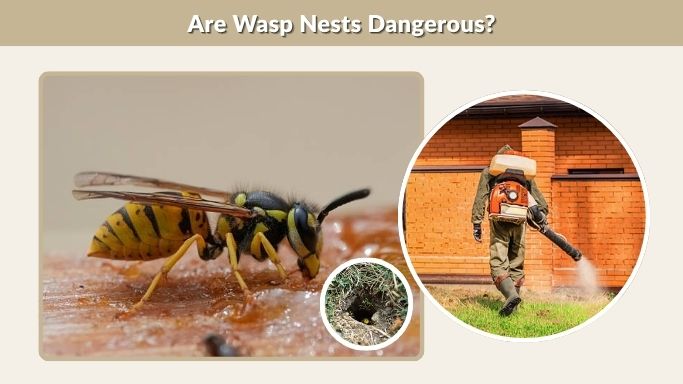
A wasp nest can be dangerous if it is active and disturbed. Wasps may sting to defend their colony. Some species are more aggressive than others. Yellowjackets and hornets are usually more defensive than solitary mud daubers.
Safety Tips Around Wasp Nests
Follow these safety steps if you find a wasp nest:
- Do not hit, shake, or spray the nest without proper knowledge.
- Keep children and pets away from the area.
- Avoid walking near ground nests.
- Do not block a nest entrance, especially in walls.
- Watch for heavy wasp traffic before working outdoors.
- Call a pest control professional for large or hidden nests.
- Seek medical help if someone has an allergic reaction to a sting.
Small inactive nests may not be a major threat, but active nests should be treated carefully.
Should You Remove a Wasp Nest?
You do not always need to remove a wasp nest. If the nest is far from people and not causing problems, it may be better to leave it alone. Wasps help control many insect pests and can also visit flowers.
When Removal May Be Needed
Nest removal may be necessary when:
- The nest is near a doorway
- Wasps are entering the house
- The nest is inside a wall or attic
- Children or pets play nearby
- Someone in the home is allergic to stings
- The colony is large and defensive
- The nest is in a workplace or public area
For large nests, hidden nests, or aggressive colonies, professional removal is the safest option.
FAQs
How do wasps make their nests?
Wasps make nests by collecting materials such as wood fiber, mud, or soil. Paper wasps chew wood and mix it with saliva to form a paper-like pulp. Mud wasps use wet soil to build clay chambers. Ground wasps dig tunnels or use underground cavities for nesting.
How do paper wasps make their nests?
Paper wasps scrape fibers from dry wood, chew them, and mix them with saliva. This creates a soft pulp that dries into strong paper. The queen starts with a small stalk and builds hexagonal cells. Workers later expand the nest as the colony grows.
How do mud wasps make their nests?
Mud wasps collect wet mud from damp soil, puddles, or stream edges. They carry small mud balls to a wall, roof edge, or sheltered surface. Then they shape the mud into tubes or chambers where they place eggs and stored prey for their larvae.
How do wasps make nests in the ground?
Ground wasps may dig tunnels in soil or use abandoned animal burrows. Some social species build paper combs inside underground cavities. Solitary species often create small tunnels for their eggs. A ground nest usually has wasps flying in and out of a small hole.
Do wasps reuse old nests?
Most social wasps do not reuse old nests the next year. A colony usually dies off in winter, except for new queens that overwinter elsewhere. However, some wasps may build near old nesting spots if the location is safe, dry, and protected.