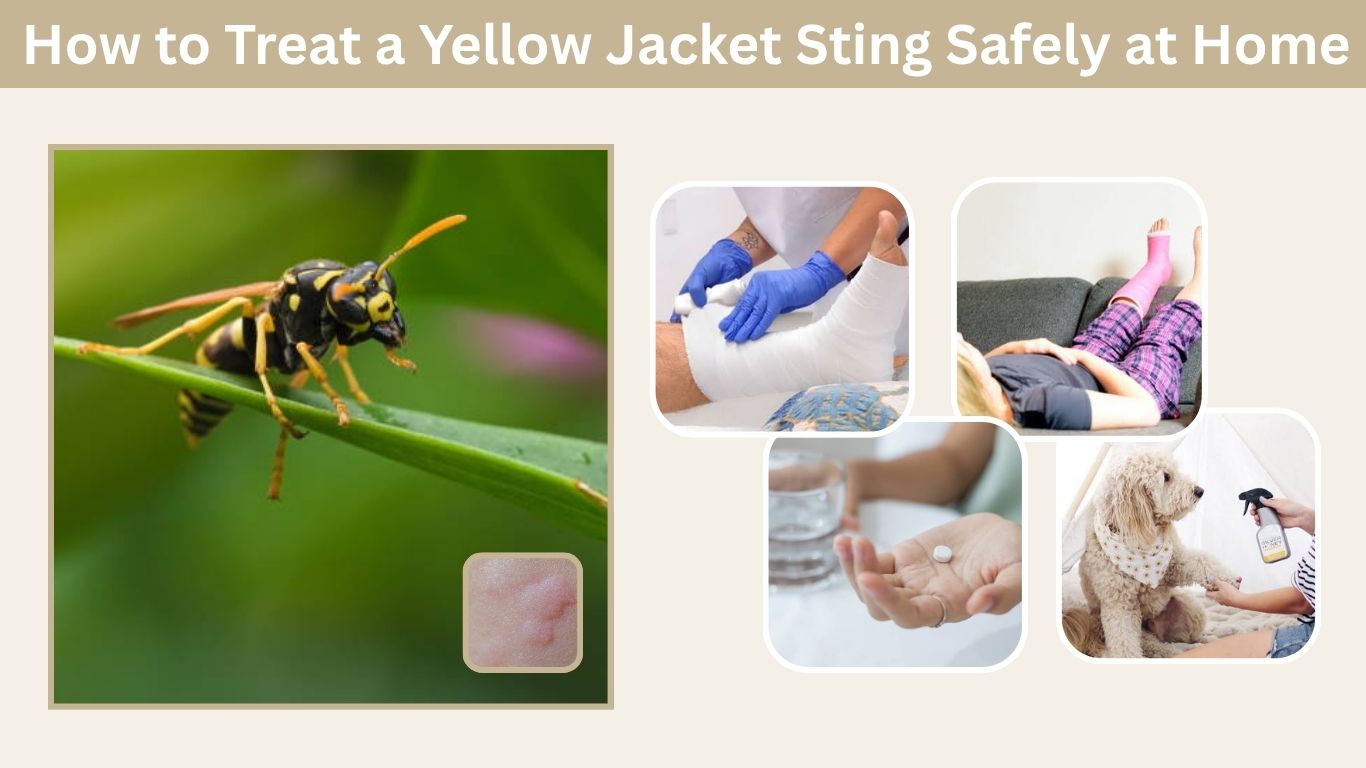
A yellow jacket sting can cause sudden sharp pain, redness, swelling, itching, and burning around the sting area. For most people, it can be treated at home with simple first aid, ice, pain relief, and careful monitoring. However, yellow jacket stings can be dangerous for people with venom allergies, people stung many times, or anyone stung in the mouth or throat. Severe allergic reactions, including trouble breathing or swallowing, need emergency care right away.
What to Do Right After a Yellow Jacket Sting
The first few minutes after a yellow jacket sting are important. Quick treatment can reduce pain, swelling, and irritation. Unlike honeybees, yellow jackets usually do not leave their stinger in the skin. They can sting more than once, so the first step is to move away from the area calmly.
Do not slap or crush yellow jackets near you, because this can make them more defensive. Walk away from the nest or outdoor food area and check the sting site.
Step-by-step first aid
- Move away from the yellow jacket nest or swarm.
- Wash the sting area with soap and clean water.
- Check for a stinger, although yellow jackets usually do not leave one.
- Apply a cold pack wrapped in cloth.
- Keep the area raised if the sting is on an arm, hand, leg, or foot.
- Watch for allergic reaction symptoms.
If there is a visible stinger, remove it gently. Avoid squeezing the skin hard because that may irritate the area more.
How to Treat a Yellow Jacket Sting at Home
Most yellow jacket stings can be treated with home care. The goal is to reduce pain, swelling, and itching while preventing infection.
Wash the sting with soap and water first. Then apply an ice pack for 10 to 20 minutes at a time. Do not put ice directly on the skin because it can cause cold injury. Use a towel or cloth between the ice and your skin.
You can also use over-the-counter pain medicine if you can take it safely. Antihistamines may help with itching and swelling. Hydrocortisone cream, calamine lotion, or an antihistamine cream may also help calm the skin. Poison Control recommends washing the area, using ice for pain and swelling, and considering cortisone cream, antihistamine cream, or an oral antihistamine for itching.
Home treatment options
| Treatment | How it helps |
|---|---|
| Soap and water | Cleans the sting area |
| Ice pack | Reduces pain and swelling |
| Elevation | Helps limit swelling |
| Antihistamine | Helps itching and allergic skin reaction |
| Hydrocortisone cream | Reduces local irritation |
| Pain reliever | Helps soreness and burning pain |
How to Treat Yellow Jacket Sting Swelling
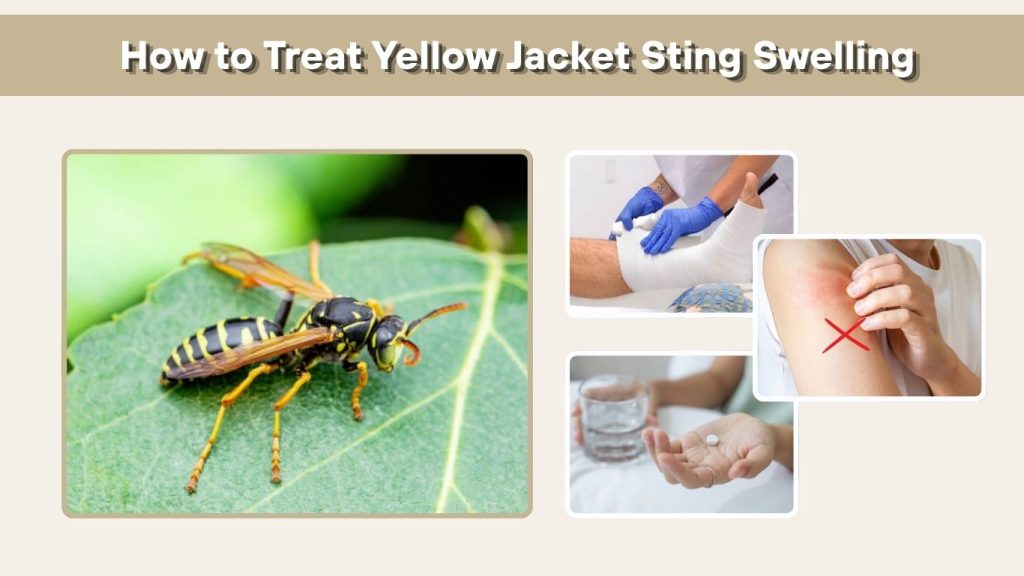
Swelling is one of the most common reactions after a yellow jacket sting. A small swollen area around the sting is normal. It may feel warm, itchy, tight, or sore. Mild swelling often improves within a few hours to a few days.
For swelling, use a cold compress several times a day. If the sting is on your hand, remove rings quickly before swelling increases. If it is on your foot or ankle, avoid tight shoes until swelling improves.
A larger local reaction can cause swelling that spreads beyond the sting area. For example, a sting on the hand may cause the whole hand to swell. This can look scary, but it is not always an emergency unless you also have breathing problems, dizziness, swelling of the face or throat, or other whole-body symptoms.
Tips to reduce swelling
- Apply ice for 10 to 20 minutes at a time.
- Raise the affected area above heart level.
- Avoid scratching the sting.
- Use an oral antihistamine if itching is strong.
- Do not wrap the area too tightly.
- Watch for swelling that keeps spreading.
How to Treat a Yellow Jacket Sting Naturally
Some people search for natural ways to treat a yellow jacket sting. Natural remedies may help soothe mild irritation, but they should not replace emergency treatment for allergic reactions.
A baking soda paste is a common home remedy. Mix baking soda with a small amount of water and apply it to the sting area for a short time. A cool compress is also one of the safest natural options. Aloe vera gel may help soothe itching and burning for some people.
Do not use harsh remedies like bleach, gasoline, alcohol soaks, or strong essential oils directly on the sting. These can irritate the skin and make symptoms worse.
Natural remedies that may help mild stings
- Cold compress
- Baking soda and water paste
- Aloe vera gel
- Oatmeal bath for multiple itchy spots
- Gentle soap and water cleaning
Natural treatment is only for mild symptoms. If the person has trouble breathing, throat tightness, chest tightness, faintness, or swelling of the lips or tongue, use emergency treatment immediately.
How Long Does a Yellow Jacket Sting Hurt?
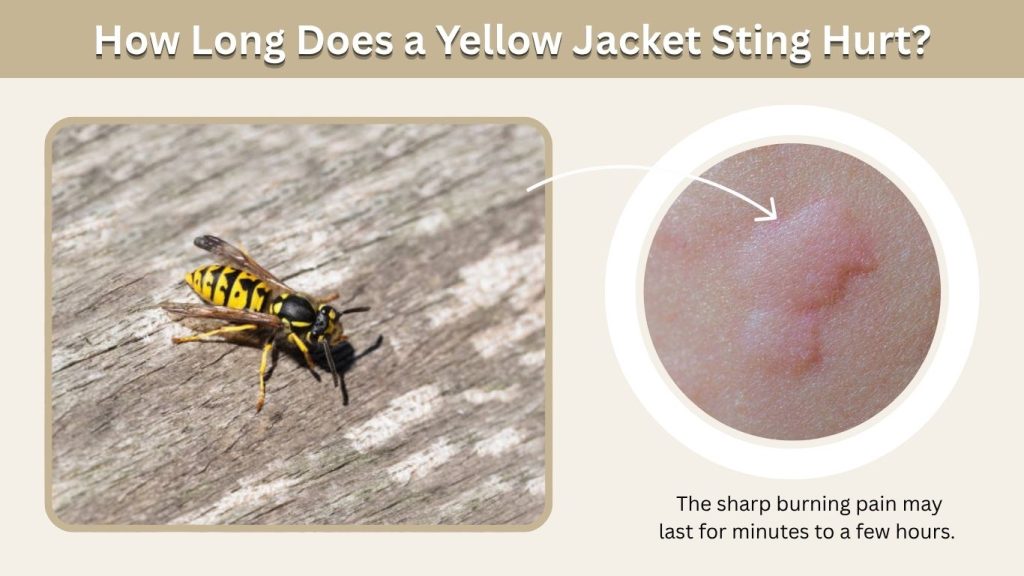
A yellow jacket sting usually hurts right away. The sharp burning pain may last for minutes to a few hours. After that, the area may feel sore, itchy, or swollen for a few days. Cleveland Clinic notes that yellow jacket stings commonly cause pain, redness, swelling, and itching, and that antihistamines and ice usually help mild reactions.
Some people may have stronger swelling that lasts longer. A large local reaction can take several days to improve. If the sting becomes more painful after 24 to 48 hours, feels hot, leaks pus, or has spreading redness, it may be infected and should be checked by a doctor.
Yellow Jacket Sting Allergic Reaction Warning Signs
The most serious risk from a yellow jacket sting is anaphylaxis. This is a severe allergic reaction that can become life-threatening. It can happen within minutes, but sometimes symptoms appear later. Mayo Clinic states that severe allergic reactions to bee or insect stings may include trouble breathing, swollen tongue, trouble swallowing, rash, itching, or chest tightness, and need emergency treatment.
Emergency symptoms
- Trouble breathing
- Wheezing
- Tightness in the throat or chest
- Swelling of the lips, tongue, face, or throat
- Dizziness or fainting
- Fast heartbeat
- Widespread hives
- Nausea, vomiting, or diarrhea
- Confusion or weakness
If someone has these symptoms, call emergency services immediately. If they have an epinephrine auto-injector, use it as directed. Do not wait to see if symptoms improve.
How to Treat a Yellow Jacket Sting in the Mouth
A yellow jacket sting in the mouth, tongue, throat, or lips is more serious than a sting on the arm or leg. Swelling in these areas can affect breathing, even in someone who is not usually allergic.
This can happen when a yellow jacket gets into a soda can, juice bottle, fruit, or outdoor food. If someone is stung inside the mouth, seek medical help quickly, especially if swelling starts.
While waiting for help, the person may suck on ice chips if they can swallow normally. Do not give food or drink if they are having trouble breathing, choking, or swelling rapidly.
How to Treat a Yellow Jacket Sting on a Dog
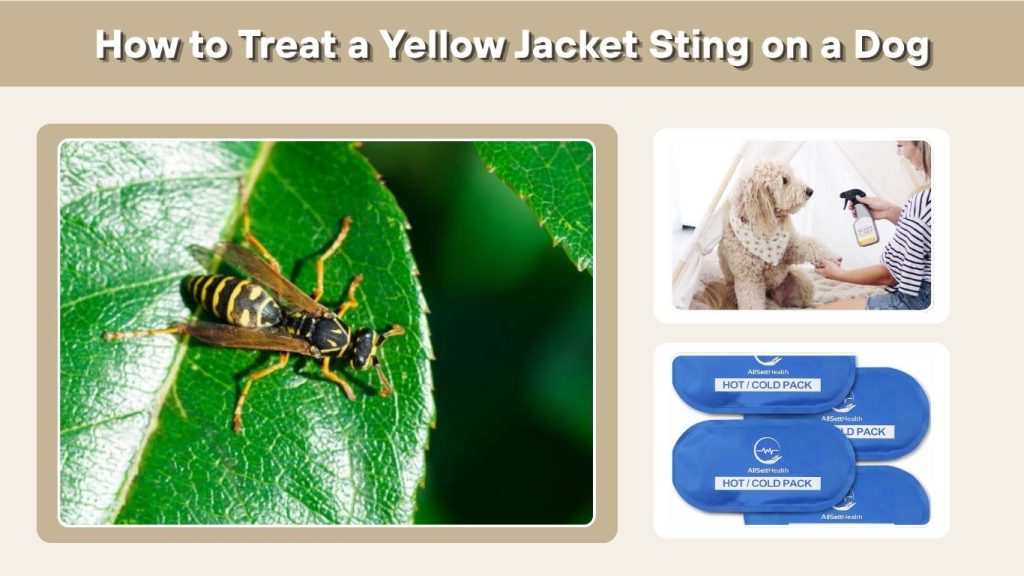
Dogs can be stung by yellow jackets when they sniff grass, dig near nests, or snap at flying insects. A single sting may cause mild swelling, licking, whining, or tenderness. Stings on the face, mouth, or throat can be more dangerous.
VCA Hospitals recommends soothing the sting site with a baking soda and water paste and using an ice pack for about 10 minutes to reduce swelling in dogs.
What to do for a dog sting
- Move your dog away from the insects.
- Check the sting area.
- Apply a cold pack wrapped in a towel.
- Use a baking soda paste on the sting site.
- Watch for vomiting, weakness, facial swelling, or breathing trouble.
- Call a veterinarian if symptoms are serious or your dog was stung many times.
Do not give human medication to a dog unless a veterinarian tells you the correct type and dose.
When to See a Doctor
Most yellow jacket stings do not need a doctor. But medical care is important if symptoms are severe, unusual, or getting worse. Multiple stings can also be dangerous because more venom enters the body.
Get medical help if:
- The sting is in the mouth, throat, or near the eye.
- Swelling is spreading quickly.
- Pain gets worse instead of better.
- The area becomes hot, red, or filled with pus.
- The person has fever or chills.
- There are many stings.
- The person has a history of insect sting allergy.
- Any signs of anaphylaxis appear.
For mild stings, home treatment is usually enough. For allergic reactions, mouth stings, or severe swelling, do not rely on home remedies.
FAQs
How do you treat a yellow jacket sting at home?
Wash the area with soap and water, apply a cold pack, keep the area raised, and use an antihistamine or pain reliever if needed. Watch for allergic reaction symptoms.
How do you treat swelling from a yellow jacket sting?
Use ice, elevation, and an antihistamine if you can take one safely. Remove tight jewelry near the sting area. Seek medical care if swelling spreads fast or affects the face, mouth, or throat.
Can you treat a yellow jacket sting naturally?
Yes, mild stings may be soothed with a cold compress, baking soda paste, aloe vera, or an oatmeal bath. Natural remedies should not be used for severe allergic reactions.
What should you do for a yellow jacket sting in the mouth?
A sting in the mouth or throat needs urgent medical attention because swelling can block breathing. Use emergency care if there is throat swelling, trouble swallowing, or breathing difficulty.
How do you treat a yellow jacket sting on a dog?
Move the dog away from the insects, apply a cold pack, and use a baking soda paste on the sting area. Call a veterinarian if your dog has facial swelling, vomiting, weakness, breathing trouble, or multiple stings.