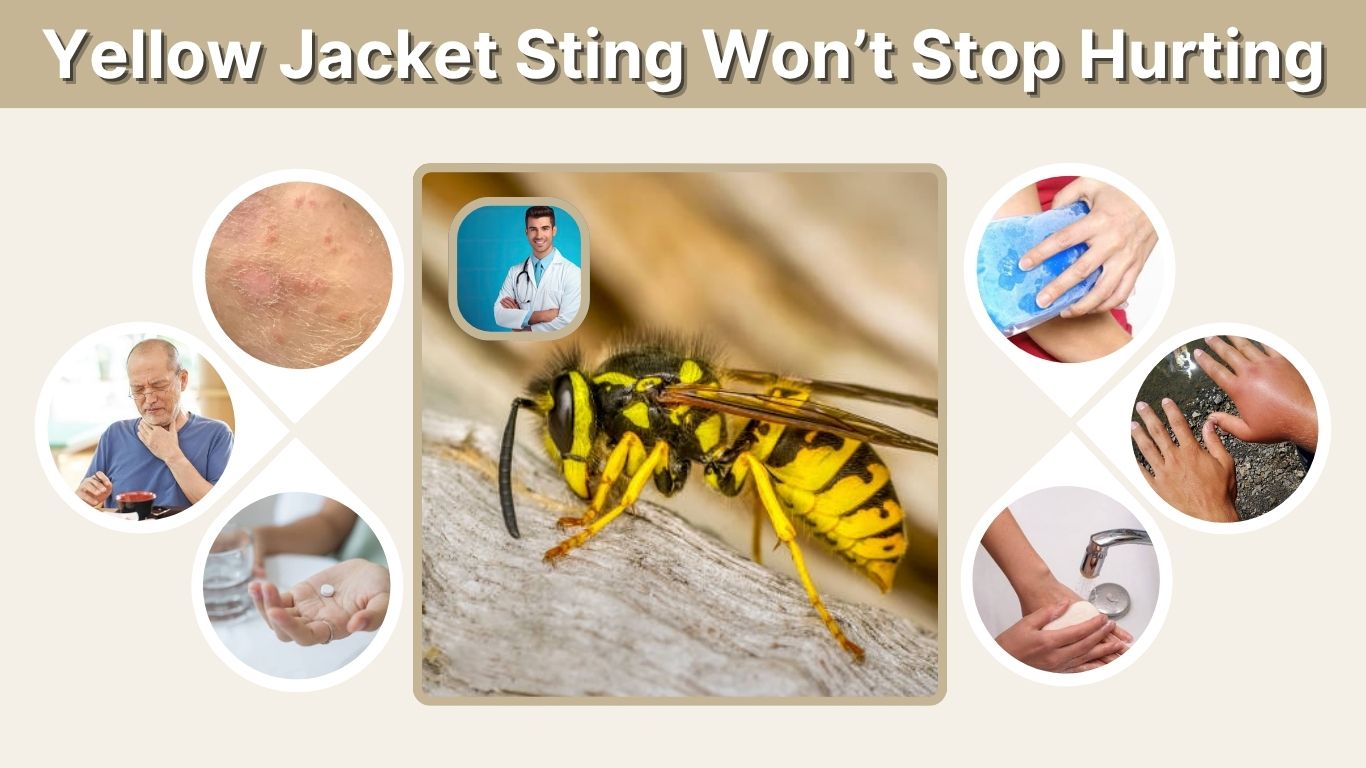
A yellow jacket sting can hurt a lot because yellow jackets inject venom into the skin. The pain often starts as a sharp burning feeling, followed by redness, swelling, warmth, itching, and tenderness. In many mild cases, the worst pain improves within a few hours, but soreness, swelling, and itching can last longer. If a yellow jacket sting won’t stop hurting, it may be due to normal venom irritation, a large local reaction, repeated stings, scratching, infection, or an allergic reaction. The key is knowing what is normal, what home treatment can help, and when to seek medical care.
Why Does a Yellow Jacket Sting Hurt So Much?
Yellow jackets are wasps, not bees. Their stings can feel more painful than many common insect bites because the venom irritates skin tissue and triggers the immune system. The body responds by sending blood flow and inflammatory cells to the area, which causes swelling, heat, redness, and pain.
Unlike honeybees, yellow jackets usually do not lose their stinger after one sting. That means they can sting more than once. Multiple stings can cause more venom exposure and stronger pain. Cleveland Clinic notes that yellow jacket stings commonly cause pain, swelling, redness, and itching, and home care often includes washing the area, applying ice, and using medicines such as antihistamines, hydrocortisone cream, or calamine lotion.
Normal Pain vs. Concerning Pain
Some pain after a yellow jacket sting is normal. The area may burn, throb, or feel sore when touched. Mild swelling may also make the skin feel tight and painful.
However, pain becomes more concerning when it keeps getting worse, spreads widely, comes with pus or fever, or appears with symptoms like trouble breathing, dizziness, throat swelling, or widespread hives.
How Long Should a Yellow Jacket Sting Hurt?
For many people, the sharp burning pain is strongest right after the sting. It may ease within a few hours, while swelling and itching may continue for a day or more. Mayo Clinic explains that most bee or wasp-type stings can be treated at home, but multiple stings or allergic reactions may become medical emergencies.
A sting can still feel sore the next day, especially if it is on a sensitive area such as the finger, hand, foot, ankle, face, or near a joint. Swelling can stretch the skin, which may make the sting feel painful even after the initial burning fades.
Common Timeline
| Time After Sting | What May Be Normal |
|---|---|
| First few minutes | Sharp burning pain, redness, swelling |
| First few hours | Throbbing, tenderness, itching |
| 24–48 hours | Swelling may peak or feel tight |
| 2–5 days | Itching and mild soreness may slowly fade |
| After several days | Pain should usually be improving |
If the pain is not improving at all, or if it is getting worse after 24–48 hours, you should pay closer attention.
Reasons a Yellow Jacket Sting Won’t Stop Hurting
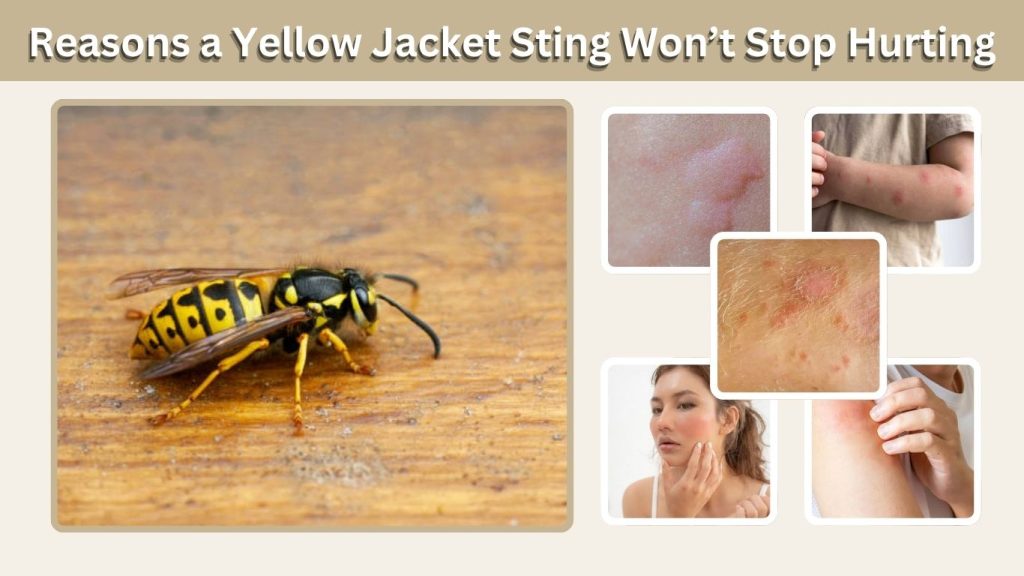
Lingering pain can happen for several reasons. Some are mild and expected, while others need medical care.
1. Venom Irritation
The most common reason is simple venom irritation. Yellow jacket venom causes inflammation, and inflammation causes pain. The area may remain sore, warm, red, and itchy while your body breaks down the venom and heals.
This type of pain should gradually improve. It may be annoying, but it should not cause spreading redness, pus, fever, or severe illness.
2. Large Local Reaction
Some people develop a large local reaction. This means swelling spreads beyond the sting site but stays in the same general area. For example, a sting on the finger may cause the whole hand to swell. A sting on the ankle may cause swelling across the foot.
A large local reaction can be painful because the skin becomes tight. It can also itch intensely. This does not always mean a life-threatening allergy, but it can be uncomfortable and may need medical advice if swelling is severe.
3. Sting on a Sensitive Area
A sting on the hand, finger, foot, face, lip, ear, or near the eye may hurt more than a sting on a less sensitive area. These areas have many nerve endings, and swelling has less room to spread.
A finger sting, for example, may throb because swelling presses against tight skin. A foot sting may hurt when walking because pressure keeps irritating the area.
4. Scratching or Skin Irritation
Itching can lead to scratching, and scratching can make the sting hurt longer. It can break the skin, increase inflammation, and raise the risk of infection.
If the sting hurts more after scratching, cover it lightly, use a cold compress, and try an anti-itch treatment instead of rubbing or picking at the skin.
5. Infection
Infection is less common than a normal venom reaction, but it can happen. Bacteria may enter through the sting puncture or through scratched skin. Mayo Clinic’s first-aid guidance says to see a healthcare professional if swelling gets worse, the site shows signs of infection, or you do not feel well.
Possible infection signs include increasing pain, spreading redness, warmth, pus, red streaks, fever, or swelling that gets worse instead of better after the first couple of days.
6. Allergic Reaction
An allergic reaction can cause symptoms beyond the sting site. The American College of Allergy, Asthma & Immunology lists insect sting allergy symptoms such as pain, redness, swelling, flushing, hives, itching, and, less commonly, anaphylaxis.
A local allergic reaction may cause major swelling near the sting. A severe allergic reaction, or anaphylaxis, can affect breathing, circulation, skin, and digestion. This is an emergency.
What to Do When the Sting Still Hurts
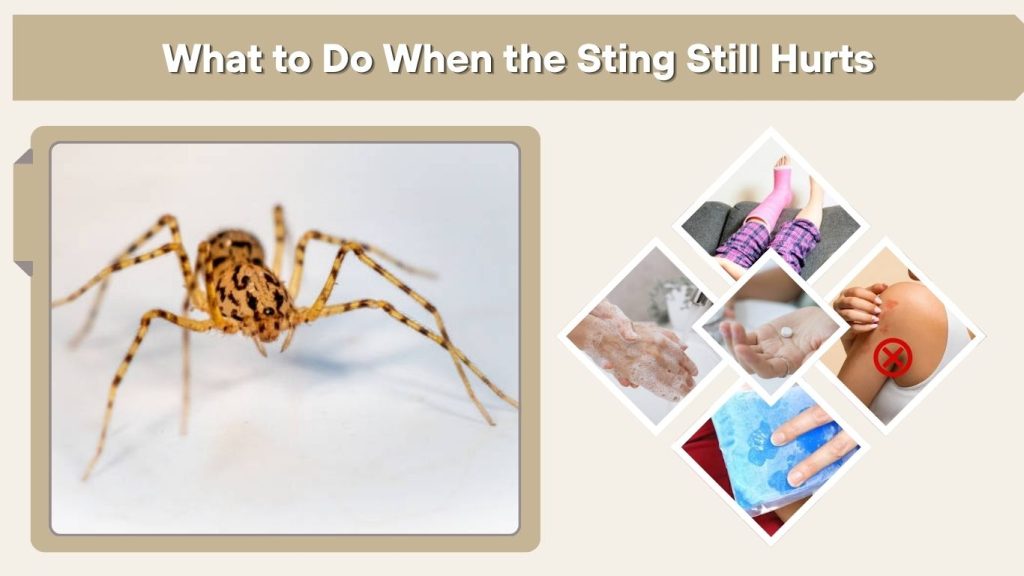
If you do not have emergency symptoms, you can use simple home care to reduce pain and swelling.
Step 1: Wash the Area
Clean the sting site with soap and water. This helps reduce the chance of infection, especially if the skin has been scratched. Pat it dry gently.
Step 2: Use a Cold Compress
Apply a cold pack wrapped in a thin cloth for 10–20 minutes. Do not put ice directly on the skin. Cold can reduce pain, swelling, and itching. Cleveland Clinic also recommends cold compresses for bug bites and stings to relieve swelling and pain.
You can repeat this several times a day, especially during the first 24–48 hours.
Step 3: Elevate the Area
If the sting is on your hand, arm, foot, or leg, raise it above heart level when resting. Elevation can help reduce swelling and tightness.
Step 4: Use Pain Relief If Safe
Over-the-counter pain relievers may help. Ibuprofen can reduce pain and inflammation, while acetaminophen can reduce pain. Follow the label directions. Avoid ibuprofen or other NSAIDs if a doctor has told you not to use them, especially if you have stomach ulcers, kidney disease, blood thinner use, certain heart conditions, or pregnancy-related restrictions.
Step 5: Treat Itching
Itching can make pain worse because it encourages scratching. Hydrocortisone cream, calamine lotion, or an oral antihistamine may help. Use products according to the label. Ask a pharmacist or healthcare professional before giving medicine to young children or if you take other medications.
When Pain Means You Should Get Medical Help
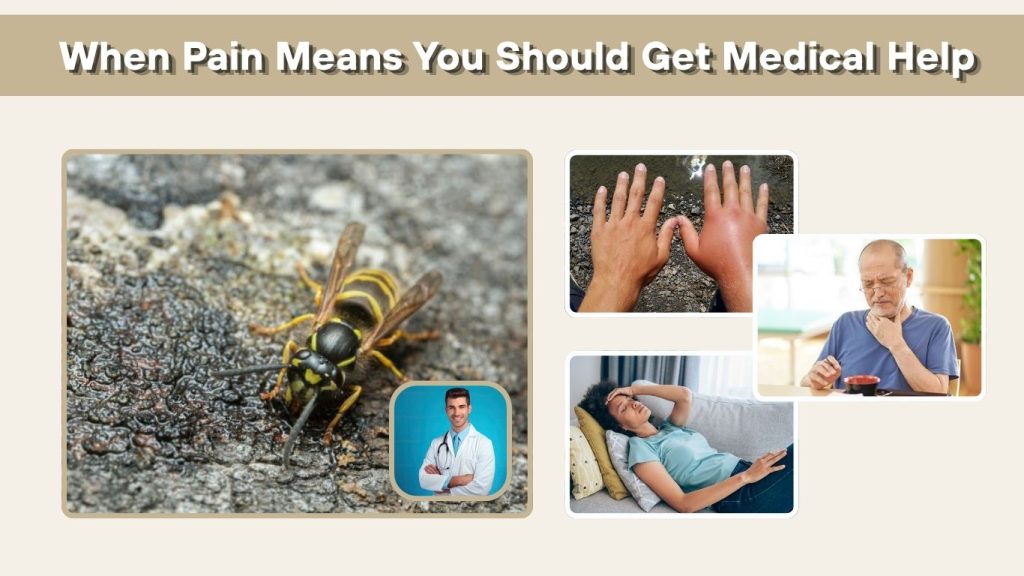
Do not ignore a sting that is getting worse. Pain that continues can be normal for a short time, but certain symptoms need medical care.
Get Emergency Help Immediately If You Have
- Trouble breathing
- Wheezing or chest tightness
- Swelling of the tongue, lips, face, or throat
- Dizziness, fainting, or confusion
- Widespread hives or flushing
- Vomiting, diarrhea, or stomach cramps with other allergic symptoms
- A known severe allergy to wasps, bees, hornets, or yellow jackets
- Many stings at once
The AAAAI explains that anaphylaxis from stinging insects may include symptoms such as hives, throat or tongue swelling, difficulty breathing, dizziness, stomach cramps, nausea, or diarrhea, and severe cases can involve shock or loss of consciousness.
Call a Doctor If You Notice
- Pain that keeps getting worse after 24–48 hours
- Swelling that continues to spread
- Pus, drainage, or red streaks
- Fever or chills
- Severe pain near a joint
- Sting near the eye, mouth, or throat
- Numbness, unusual weakness, or severe throbbing
- Symptoms that are not improving after several days
What Not to Do
Avoid cutting the sting site, squeezing it hard, applying harsh chemicals, or using dirty tools to dig at the skin. Yellow jackets usually do not leave a stinger behind, so aggressive digging may cause more injury.
Do not scratch the area, even if it itches. Scratching can make the pain last longer and may lead to infection. Also, do not ignore whole-body symptoms just because the sting mark looks small.
Could the Stinger Still Be Inside?
Yellow jackets usually keep their stinger and can sting repeatedly, so a retained stinger is not common. However, if you are not sure whether the insect was a yellow jacket or a honeybee, check the site. If you see a stinger, scrape or remove it gently. Then wash the area.
If something is deeply embedded, very painful, or difficult to remove, do not dig into the skin. A healthcare professional can examine it safely.
How to Sleep When the Sting Hurts
Nighttime can make sting pain feel worse because there are fewer distractions. Before bed, wash the area, apply a cold compress, and elevate the limb if possible. Use an anti-itch cream or pain reliever if safe for you. Covering the area with a light bandage may help prevent scratching while sleeping.
If the pain is severe enough to keep you awake all night, or if the area looks worse by morning, consider calling a healthcare professional.
FAQs
Why does my yellow jacket sting still hurt hours later?
It may still hurt because venom causes inflammation in the skin. Swelling, tightness, and itching can continue after the first sharp pain fades.
Is it normal for a yellow jacket sting to hurt the next day?
Yes, mild soreness the next day can be normal, especially if the sting is on the hand, foot, finger, or another sensitive area. However, pain should gradually improve.
Why is my yellow jacket sting getting more swollen?
Swelling can increase during the first 24–48 hours. But if swelling keeps spreading, becomes very painful, or comes with fever, pus, or red streaks, seek medical care.
What helps yellow jacket sting pain fast?
Wash the area, apply a cold compress for 10–20 minutes, elevate the area, and use an over-the-counter pain reliever if safe. Anti-itch treatments can also help prevent scratching.
When should I worry about yellow jacket sting pain?
Worry if the pain is worsening after 24–48 hours, there are signs of infection, the sting is near the mouth or eye, you were stung many times, or you have symptoms of an allergic reaction such as trouble breathing, throat swelling, dizziness, or widespread hives.