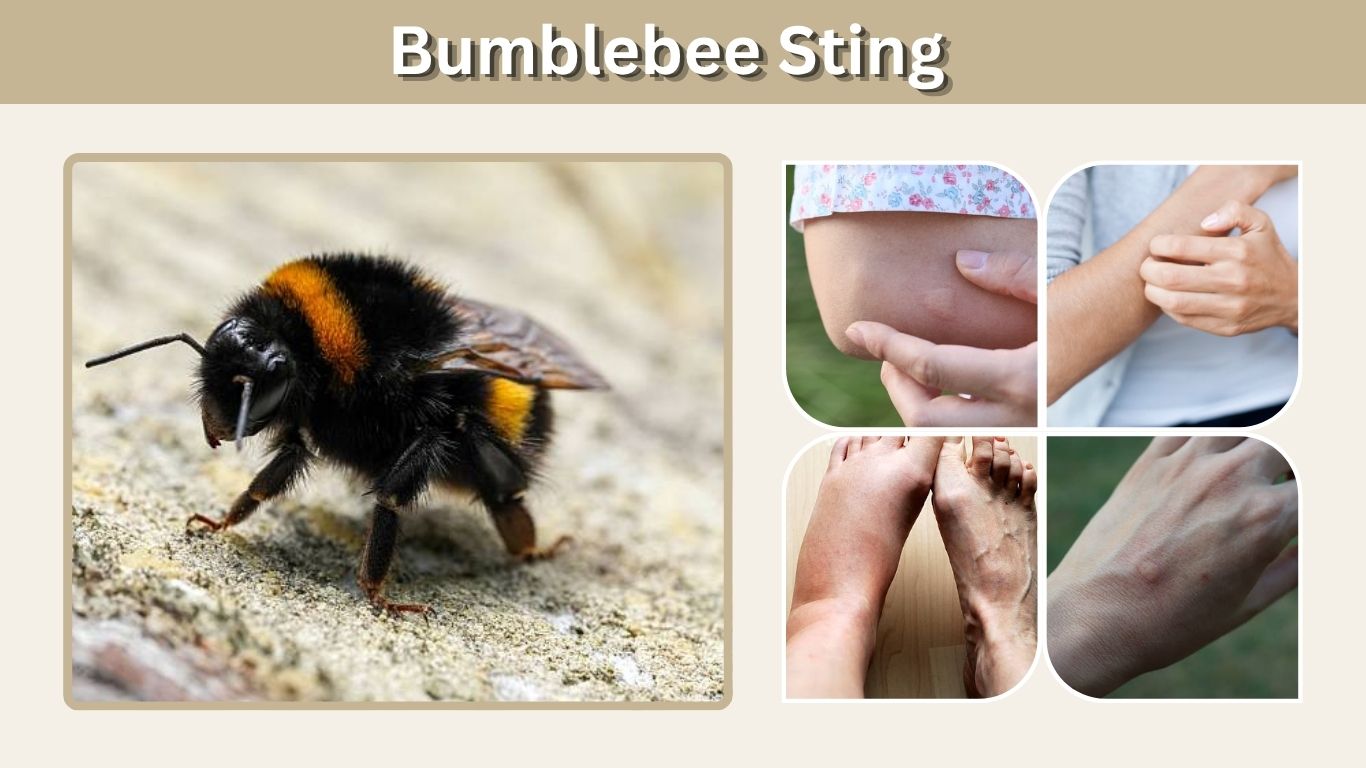
A bumblebee sting can cause sudden sharp pain, redness, itching, and swelling around the affected area. Fortunately, bumblebees are generally docile insects and usually sting only when they feel threatened or when their nest is disturbed. Unlike honey bees, female bumblebees can sting more than once because their stinger does not normally remain lodged in human skin. Most reactions are mild and improve with basic home care, but a severe allergic reaction requires immediate emergency medical attention.
Can a Bumblebee Sting You?
Yes, bumblebees can sting people, although they generally prefer to avoid confrontation. They are important pollinators and usually spend their time visiting flowers rather than attacking humans. Stinging is primarily a defensive behavior that may occur if a bee is trapped, handled, stepped on, or feels that its nest is threatened.
Do All Bumblebees Have Stingers?
No. Only female bumblebees have functional stingers.
This includes:
- Worker bumblebees
- Queen bumblebees
- Female cuckoo bumblebees
Male bumblebees do not have stingers and therefore cannot sting people.
Does a Bumblebee Sting or Bite?
When someone experiences a painful defensive encounter with a bumblebee, it is normally a sting rather than a bite.
Bumblebees do have mandibles that they use for activities such as manipulating materials and flowers. However, their primary defensive weapon against people is the female’s stinger.
Therefore, a painful red spot appearing immediately after contact with a bumblebee is much more likely to be a sting.
What Does a Bumblebee Sting Look Like?
A typical bumblebee sting produces a localized skin reaction around the point where venom enters the body. The appearance can vary depending on the person’s sensitivity and where the sting occurred. Some people develop only a small red bump, while others experience more noticeable swelling extending beyond the immediate sting site.
Common Bumblebee Sting Symptoms
A normal local reaction may include:
- Sudden burning or sharp pain
- Redness around the sting
- A raised bump
- Mild to moderate swelling
- Warmth around the affected area
- Itching
- Tenderness
Pain is usually most noticeable immediately after the sting, while itching and swelling may persist longer.
Bumblebee Sting Swelling
Some swelling is a normal response to insect venom. It may remain concentrated around the sting or gradually spread into the surrounding tissue.
For example, a sting on a finger may cause part of the hand to swell. A larger local reaction can sometimes last several days without necessarily representing life-threatening anaphylaxis.
However, rapidly developing symptoms elsewhere in the body, especially breathing or throat symptoms, require urgent attention.
Does a Bumblebee Sting Hurt?
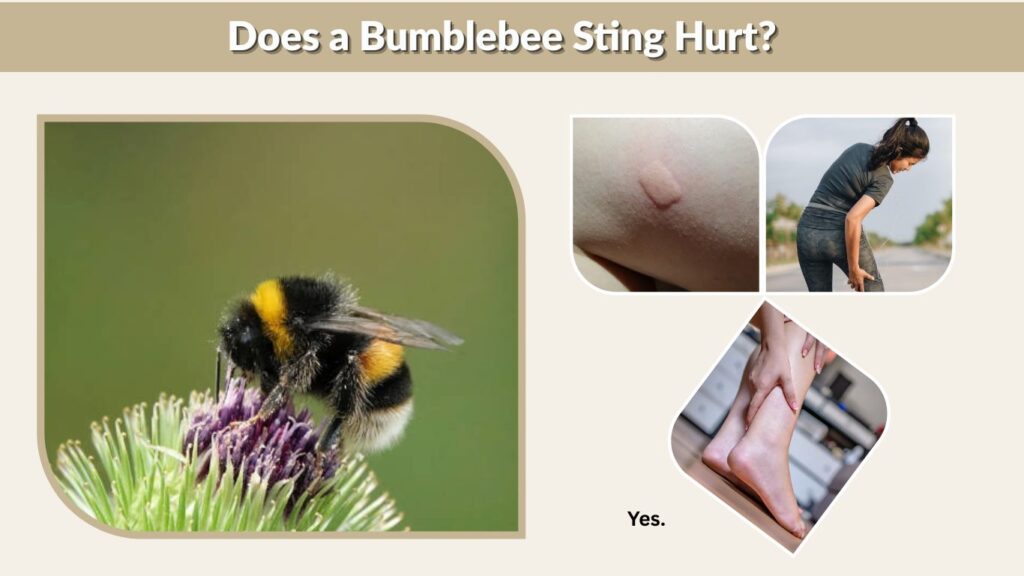
Yes. A bumblebee sting can be quite painful because venom is injected through the stinger. People commonly describe the initial sensation as sharp, hot, burning, or piercing. The strongest pain usually occurs around the moment of the sting before gradually becoming soreness, itching, or tenderness.
How Painful Is a Bumblebee Sting?
There is no single reliable pain score that applies to every bumblebee sting. The experience depends on several factors, including the species involved, sting location, number of stings, and individual sensitivity.
A sting on sensitive areas such as the face, fingers, or feet may feel considerably more painful than one on less sensitive skin.
Pain intensity also does not reliably indicate whether someone will develop an allergic reaction.
How Many Times Can a Bumblebee Sting?
One important difference between bumblebees and worker honey bees is that bumblebees can sting more than once.
Their stinger can normally be withdrawn after penetrating skin, allowing the same female to sting repeatedly. The University of Minnesota Extension notes that bumblebees can sting multiple times because they can pull their stinger back out without seriously injuring themselves.
Does a Bumblebee Die After Stinging?
Usually, no.
A bumblebee does not normally die simply because it has stung a person. Its stinger is different from the strongly barbed stinger of a worker honey bee.
A worker honey bee may leave its stinger embedded in mammalian skin and suffer fatal injury while pulling away. Bumblebees can normally withdraw theirs and survive.
Can a Bumblebee Stinger Stay in Your Skin?
A bumblebee stinger does not usually remain behind after a sting.
If you notice an obvious stinger embedded in the skin after what you believed was a bumblebee encounter, the insect may have been another type of bee, particularly a honey bee.
Regardless of species, if a visible stinger remains, it should be removed promptly.
How to Treat a Bumblebee Sting
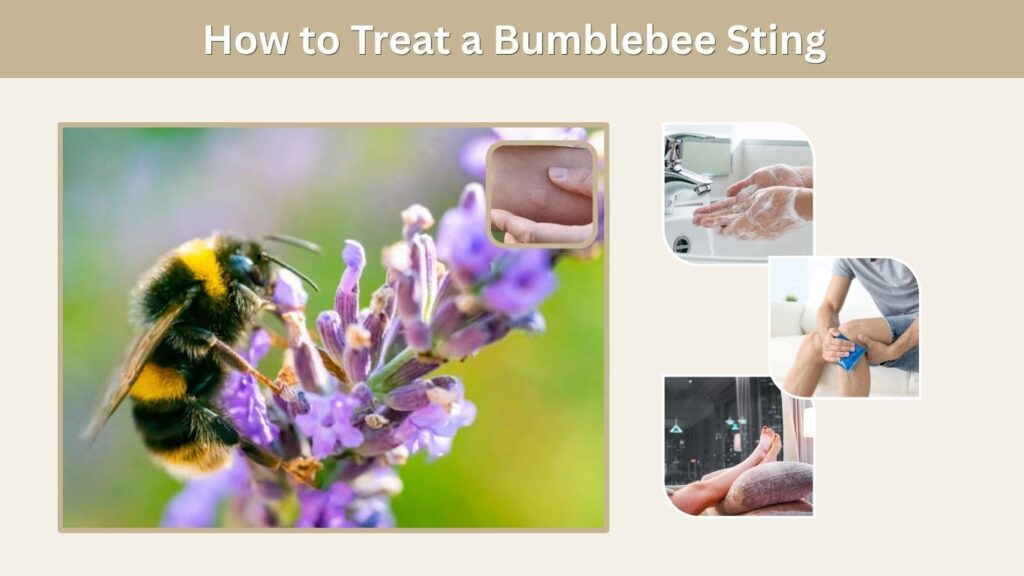
Most uncomplicated bumblebee stings can be managed with basic first aid. The goals are to clean the area, reduce discomfort and swelling, and watch for signs of an allergic reaction. Symptoms should gradually improve rather than becoming progressively more severe.
Bumblebee Sting Treatment at Home
For a mild sting:
- Move away from the bee or nest area.
- Check the skin for a visible stinger.
- Wash the area with soap and water.
- Apply a cold pack wrapped in cloth.
- Keep the affected area elevated when practical.
- Avoid scratching the sting.
- Consider an appropriate pain reliever if needed.
- Ask a pharmacist about an antihistamine or suitable anti-itch treatment if itching or swelling is troublesome.
Cold treatment can help reduce pain and swelling, while scratching should be avoided because damaged skin can increase irritation and the risk of infection.
How Long Does a Bumblebee Sting Last?
The immediate sharp pain often decreases relatively quickly, but redness, tenderness, itching, or swelling can remain for several hours or days.
A larger local reaction may take longer to settle.
Seek medical advice if symptoms continue worsening, the area becomes increasingly painful or hot, pus develops, or there are signs that the skin has become infected.
Allergic Reaction to a Bumblebee Sting
A severe allergic reaction is much more serious than ordinary swelling around the sting. Anaphylaxis can develop rapidly and may become life-threatening, so recognizing systemic symptoms is important.
Signs of a Severe Allergic Reaction
Emergency warning signs can include:
- Difficulty breathing
- Wheezing
- Tightness in the throat
- Swelling of the lips, mouth, tongue, or throat
- Trouble swallowing
- Widespread hives
- Severe dizziness
- Confusion
- Fainting or collapse
If these symptoms appear after a sting, seek emergency medical help immediately. If the person has been prescribed an epinephrine/adrenaline auto-injector for severe allergies, it should be used according to their emergency plan.
When Else Should You Seek Medical Help?
Medical assessment may also be appropriate after numerous stings, a sting inside the mouth or throat, significant worsening swelling, persistent symptoms, or signs of infection.
People who previously experienced a serious systemic reaction to bee or wasp venom should discuss future sting precautions and allergy management with a healthcare professional.
Bumblebee Sting vs Honey Bee Sting
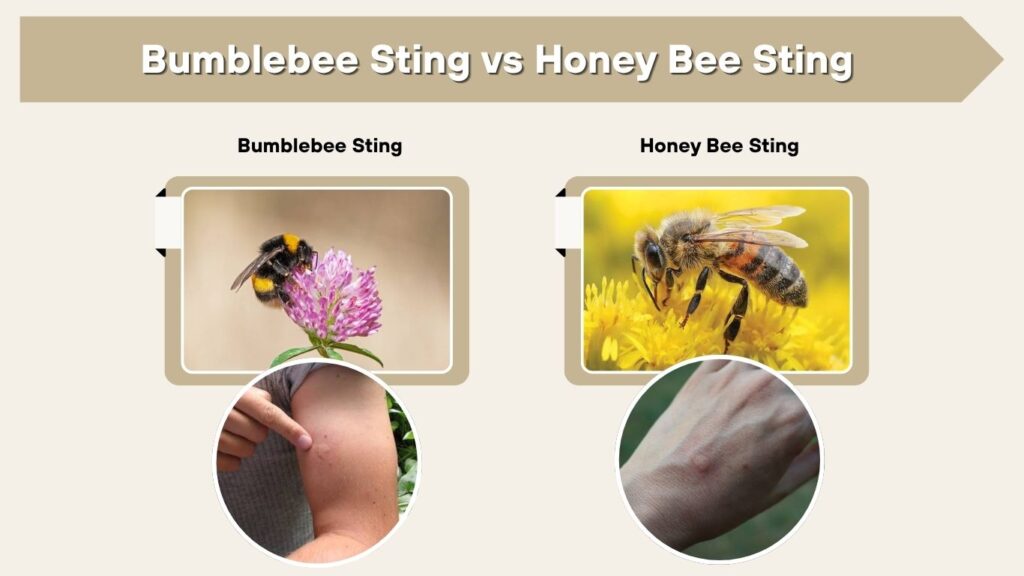
Both insects can produce painful venomous stings, but their stingers behave differently.
| Feature | Bumblebee | Worker Honey Bee |
| Can females sting? | Yes | Yes |
| Can males sting? | No | No |
| Stinger usually stays in your skin? | No | Often |
| Can I sting repeatedly? | Yes | Usually no after stinging mammalian skin |
| Usually dies after stinging? | No | Often |
This difference explains why searching the skin for a stinger is more important after a honey bee sting. Bumblebees can typically withdraw their stingers and sting again.
How to Avoid Bumblebee Stings
The easiest way to prevent bumblebee stings is to avoid threatening or trapping the insects. Bumblebees are generally not aggressive toward humans and usually sting defensively rather than pursuing people without reason.
Simple Prevention Tips
- Do not grab or squeeze bumblebees.
- Avoid walking barefoot near flowering plants.
- Do not disturb an active bumblebee nest.
- Move calmly when a bee flies nearby.
- Check drinks and food when eating outdoors.
- Wear shoes while gardening.
- Be careful when mowing near known nests.
- Give bees feeding on flowers enough space.
If a bumblebee lands on you, sudden swatting may increase the chance of provoking defensive behavior.
FAQs
Can a bumblebee sting more than once?
Yes. Female bumblebees can sting repeatedly because their stinger normally does not become stuck in human skin. Unlike a worker honey bee, a bumblebee can generally withdraw the stinger without suffering fatal injury.
Do male bumblebees sting?
No. Male bumblebees do not have stingers and cannot sting. Queens and female workers have stingers but generally use them only defensively when they feel threatened or when their nest is disturbed.
Are bumblebee stings dangerous?
Most cause only temporary pain, redness, itching, and swelling. However, bee venom can trigger a severe allergic reaction in susceptible people. Breathing difficulty, throat or tongue swelling, fainting, or widespread allergic symptoms require immediate emergency care.
What should I put on a bumblebee sting?
Wash the area with soap and water and use a wrapped cold pack to reduce pain and swelling. A pharmacist can advise whether an antihistamine or suitable anti-itch treatment is appropriate for troublesome itching or swelling.
Does a bumblebee leave its stinger behind?
Usually not. Bumblebees can normally pull their stinger back out and may sting more than once. If an obvious stinger remains embedded in the skin, remove it promptly and consider that the insect may instead have been a honey bee.